August 12, 2026
Densho staff members, Caitlin Oiye Coon and Jennifer Noji, were honored to attend, present, and conduct interviews at the 2026 Jerome Rohwer Pilgrimage in Little Rock, AR, earlier this summer. In this photo essay, Jennifer Noji shares reflections on the multi-day pilgrimage, including the on-site visits to Rohwer and Jerome, as well as Densho’s oral history interviews with former incarcerees and descendants.

The 2026 Jerome Rohwer Pilgrimage, which took place in Little Rock, AR, from May 20–23, was the second pilgrimage organized by the Jerome Rohwer Committee, an all-volunteer group composed mainly of incarceration survivors and descendants. This year’s theme “Yuzuru,” or “Pass It On”—which closely parallels the meaning of “Densho” (to pass on to the next generation)—wove a connecting thread across all three days of programming, including the activities led by Densho.

On the first evening of the pilgrimage, John Nishio, Jerome Rohwer Committee Board Chair and CEO, welcomed attendees to Little Rock. He offered an overview of the days ahead, acknowledged the many people and groups who made the program possible, and explained what “Yuzuru” meant to him personally, both as a Jerome descendant and a pilgrimage organizer. John shared some of these reflections in the printed program:
“Each of us carries stories, names, and histories that have been entrusted to us. In sharing them with one another across generations, we help ensure they continue to live. The stories we share and the new ones we create together inspire us to Always Remember—not just as words, but as something we practice together.”

The theme “Yuzuru” perfectly encapsulated the pilgrimage’s activities, which emphasized intergenerational sharing, uplifting survivors’ voices, learning in community, and—to use John’s words—”practicing” remembrance together.
Standing on Sacred Grounds and Honoring Our Ancestors
For those of us who carry this history—whether through our own memories or through stories passed down by family—there is something visceral and irreplicable about standing on the actual ground where incarceration took place. No photograph or archival document can fully replace the experience of walking the same soil, breathing the same air, and feeling, however faintly, the presence of everyone who had been here before us.
While my own grandparents and relatives had not been incarcerated at Jerome or Rohwer, most of the other pilgrimage attendees had personal connections to the sites. As we walked through fields, over grounds that had once been used to incarcerate over 17,000 innocent civilians, our footsteps were heavy with the weight of past memories and present concerns.
Returning to Rohwer
Our first stop was the historic site of the Rohwer concentration camp, where the restored monuments and headstones of the camp cemetery are among the only remnants of the camp. It was deeply moving to see the headstones of people who had died in camp, particularly those of the children.

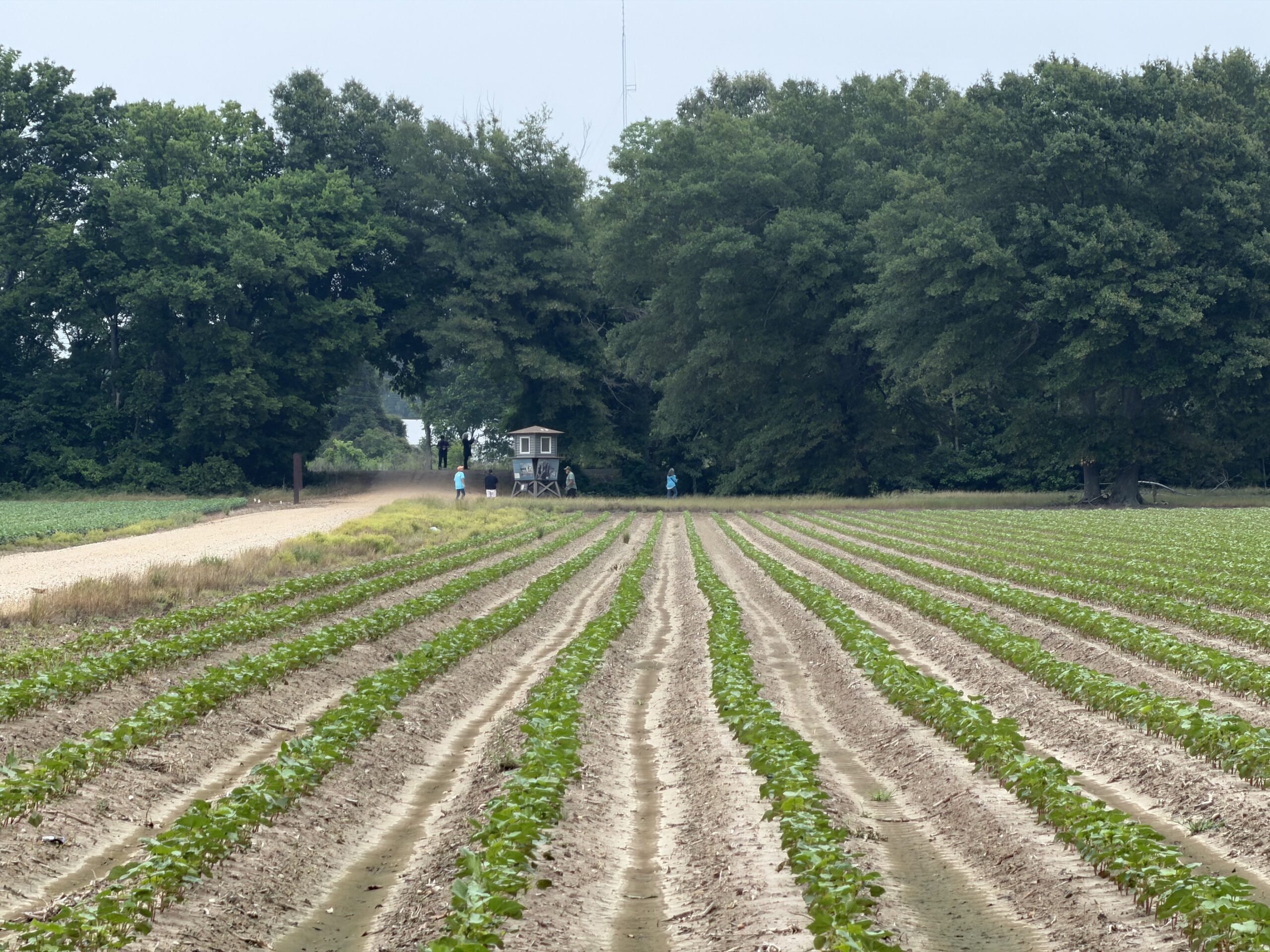
While paying our respects to those who lay here, we could, in the distance, just make out a small replica guard tower—a reminder of the injustice and loss that the site represents.

I was especially moved watching former incarcerees and descendants pause at particular headstones and monuments. I wondered if they recognized some of the names inscribed upon them.

Two of the cemetery’s monuments, including one erected in 1945, are dedicated specifically to Japanese American veterans. Many attendees lingered by them, some no doubt thinking of loved ones who had served. These monuments offered a poignant reminder of the grave injustice and dark irony of Japanese Americans fighting for a country that had incarcerated their own families.


Returning to Jerome
After visiting Rohwer, we traveled 30 miles to the historic site of the Jerome concentration camp. There we gathered around the “Jerome Relocation Center” memorial, paying homage to all those who had been incarcerated at Jerome and the other wartime camps.

From there, we walked across the grounds, looking at remnants of the camp’s historic hospital smokestack, which loomed on the horizon, as well as the camp’s old water tank.


While the land showed few traces of the wartime incarceration, I knew that all of us there were united by a collective commitment to making this history visible for our own community and others. We would ensure that the incarceration, along with its lessons, would not be forgotten.
Connecting with Jerome and Rohwer Survivors and Descendants
Perhaps one of the most important and special aspects of the Jerome Rohwer Pilgrimage, as with other pilgrimages, was the opportunity to connect with and learn from former incarcerees. These pilgrimages offer precious space for survivors and elders to share stories that are often carried alone. By listening to their stories, attendees, especially younger generations, can gather personal insight into a past that many of them (including myself) seek to better understand. This experience of sharing and receiving is healing for all involved.
Notably, many survivors shared not only memories of the past, but also reflections on the present. As Jerome survivor Ross Harano shares: “Beyond storytelling, we must also make meaning of our difficult history, to ensure that what happened to us does not happen again. This is our legacy.”


Densho Oral History Interviews
Another deeply meaningful way I connected with Jerome and Rohwer survivors was through Densho’s oral history interviews. With the support of Densho Archives Director Caitlin Oiye Coon, and fellow interviewer Susie Ling, we conducted interviews with twelve individuals, including eight former incarcerees. Speaking with someone as they revisit some of the hardest and most formative chapters of their life is a profound responsibility; serving as a Densho interviewer is undoubtedly one of the greatest privileges of my life.


Learning Our Collective History in Community
Overall, the pilgrimage’s programming was thoughtfully planned and engaging, featuring presentations that illuminated the complex histories of Jerome and Rohwer, as well as the broader WWII incarceration experience.
Densho’s presentation focused on some of the lesser-known facts about Jerome and Rohwer, highlighting distinct stories and experiences at each camp. We also explored several primary sources related to the sites, including oral history clips, photographs, and letters from Densho’s archives.

The pilgrimage also featured a rich lineup of other presentations and talks, covering topics such as Nikkei farmers, the detention of Issei at Angel Island, and resettlement in Chicago, as well as a genealogy workshop and two film screenings. In addition to formal presentations and programs, our learning continued through other interactive pilgrimage activities, including a visit to the Jerome-Rohwer Interpretive Museum & Visitor Center in McGehee, where attendees could explore photographs, artifacts, and historical records.


Additionally, and perhaps most importantly, we also learned from each other. We learned from former incarcerees and descendants sharing memories over meals, from community partners who have spent years preserving this history, and from fellow attendees processing what they were seeing and hearing, some for the first time. This is one of the most important aspects of pilgrimages: connecting with others who also want to learn about our shared history and, therein, forming new, unexpected, and deep relationships.


While we so often hold our heaviest memories and emotional burdens to ourselves, pilgrimages like this one offer space for being vulnerable and open, for absorbing new stories and experiences, and for letting oneself be informed by others, while informing them in turn. This special reciprocal environment, defined by mutual giving and sharing, ultimately leaves everyone feeling fuller, more understood, and more connected.


—
By Jennifer Noji, Densho Senior Development & Communications Manager.
We are grateful to John Nishio and the Jerome Rohwer Committee, who worked diligently to plan and execute this multi-day program. And a special thanks to Brad Shirakawa for sharing his incredible photos with us.