This page brings together a curated set of Densho resources to accompany MS NOW’s podcast Rachel Maddow Presents: Burn Order—a six-episode narrative podcast released in December 2025 exploring the WWII decisions and policies that led to the forced removal and incarceration of Japanese Americans. This page includes blog posts by scholars and community members, a listening guide with historical insights and resources, as well as archival materials featured in the podcast. These materials are designed to deepen understanding of the histories discussed in the podcast and to provide pathways for further learning. Together, they offer listeners an opportunity to engage more critically with the podcast, dive deeper into the history, and hear community members’ perspectives connecting past injustices with current events.
Densho's Listening Guide to "Burn Order"
This guide provides additional historical context for each episode, highlighting overlooked stories and details, addressing omissions and errors, and recommending resources for further learning. The guide also links to various Densho Encyclopedia articles that offer more information.
Blog Posts on "Burn Order"
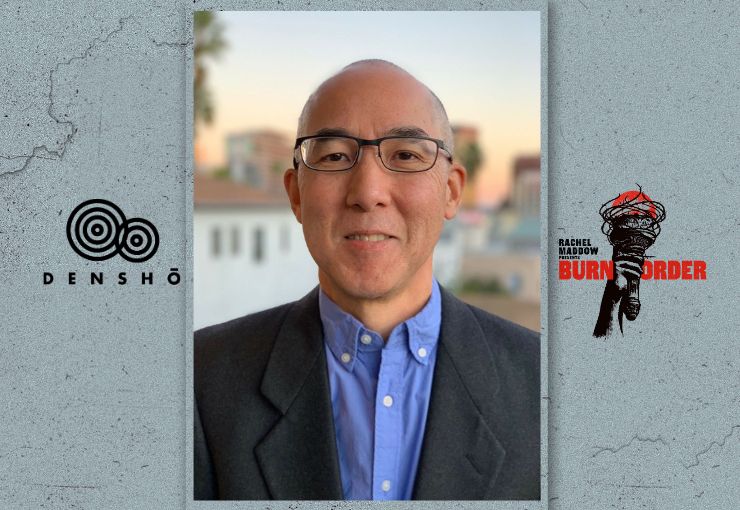
"Burn Order": The Latest Retelling of the WWII Incarceration Story
Densho Content Director Brian Niiya describes "Burn Order" as the latest retelling of the Japanese American exclusion and incarceration story to draw a large mainstream audience. He explores how the podcast is a generally well-executed production that can serve as a good introduction to the topic for the uninitiated, many perhaps drawn to the story by current events. He also addresses how the show has struck a chord with many Japanese Americans, who are excited to have this story told in times that can feel bleak.
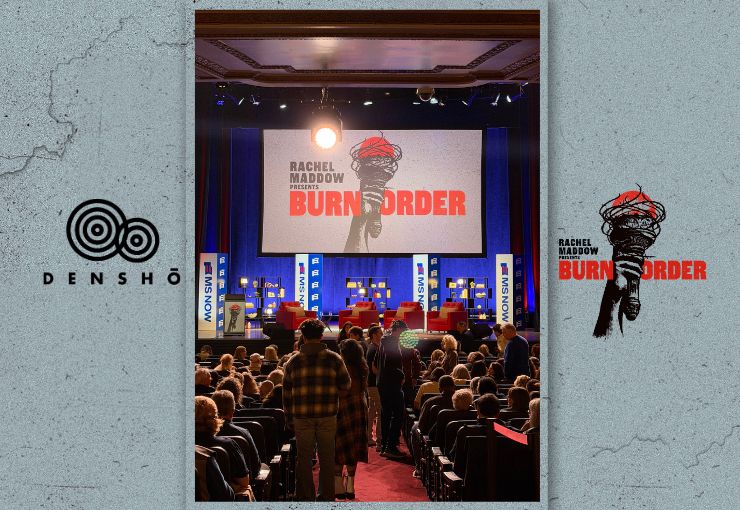
Japanese American Community Excitement and Opinions about Rachel Maddow’s "Burn Order"
In this collaborative post, Japanese American community members and organizers reflect on the impact, value, and effects of “Burn Order.” Sharing a range of perspectives and opinions, the featured contributors highlight the podcast’s importance for illuminating past and present injustices, evoking memories of their own family’s past, and for raising critical awareness about constitutional violations and governmental abuses of power.
Eric L. Muller: Guest Perspective on Rachel Maddow’s "Burn Order"
Legal historian Eric L. Muller raises important historiographical questions about “Burn Order.” Looking closely at the various roles played by key participants in the genesis and defense of Executive Order 9066, Muller argues that the story of Japanese American incarceration should be understood not as a contest between a few unusually good people and one unusually evil one, but as a collective failure of many ordinary people to recognize and challenge injustice.
Related Oral Histories
Aiko Herzig Yoshinaga
Born in Sacramento, CA, and incarcerated in Manzanar and Jerome, Aiko Herzig Yoshinaga recalls finding the "tenth copy" of the original Final Report, providing concrete proof that the army had seen no "military necessity" for the incarceration. [Used in "Burn Order"]
Norman Mineta
Born in San Jose, CA, and incarcerated in Heart Mountain, Norman Mineta recalls becoming involved in politics. While serving in Congress, he was integral in the passage of the Civil Liberties Act of 1988. [Used in "Burn Order"]
Minoru Yasui
Born in Hood River, OR, Minoru Yasui recounts deliberately defying the curfew imposed on Japanese Americans in 1942 and being arrested. He would later be transferred from prison to Minidoka. His conviction was overturned in 1986. [Used in "Burn Order"]
Peter Irons
Attorney and professor Peter Irons recalls meeting Aiko Yoshinaga-Herzig at the National Archives in 1981, resulting in their collaboration to find evidence challenging the government’s wartime orders and decisions.
Gordon Hirabayashi
Born in Seattle, WA, Gordon Hirabayashi recalls violating the May 1942 exclusion order and turning himself over to the FBI. He was found guilty and imprisoned, later serving a second sentence for draft resistance. His convictions were overturned in 1987.
Fred Korematsu
Born in Oakland, CA, Fred Korematsu recounts why he resisted the exclusion order and legally challenged the constitutionality of Executive Order 9066. He was arrested and transferred to Tanforan Assembly Center. His conviction was vacated in 1983.
Relevant Encyclopedia Articles
Aiko Herzig-Yoshinaga
Primary researcher for the Commission on Wartime Relocation and Internment of Civilians (CWRIC), she played a crucial role in the Redress Movement by discovering and publicizing critical evidence of premeditated governmental misconduct during the war. Her expertise and findings were essential to the Coram Nobis cases and "Personal Justice Denied."
Karl Bendetsen
Former U.S. Army colonel who claimed that he "conceived, drafted and processed Executive Order 9066," authorizing the forced removal and exclusion of Japanese Americans from the West Coast. For the next two years he administered the exclusion program, serving as the director of the Wartime Civil Control Administration.
Coram Nobis Cases
The legal cases filed during the 1980s to overturn the criminal convictions of Gordon Hirabayashi, Fred Korematsu, and Minoru Yasui—prosecuted for violating WWII curfew and exclusion orders. These cases revealed the unsubstantiated claims underlying the military's justification for forced removal and mass incarceration.
Munson Report
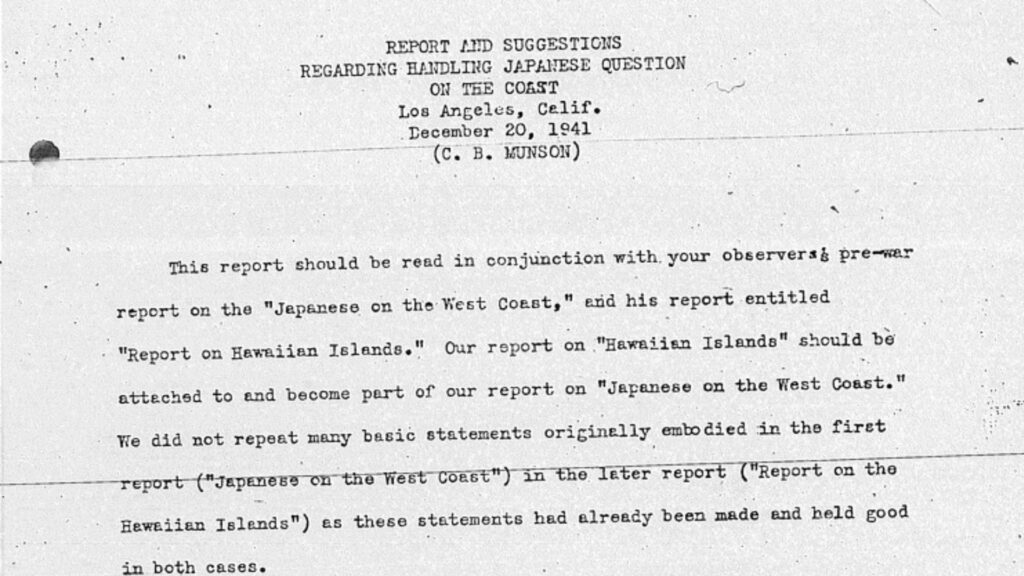
Intelligence report on Japanese Americans on the West Coast filed by businessman Curtis B. Munson in the weeks prior to the attack on Pearl Harbor. Based on firsthand research and consultation with navy and FBI agents, the report largely concluded that Japanese Americans presented no security risk. Its conclusions were largely ignored by the administration.
Kenneth Ringle
An Office of Naval Intelligence officer whose prewar investigation of the Japanese American community led him to conclude that Japanese Americans did not pose a security risk as a group, leading him to oppose their mass removal and incarceration. He went on to work for the War Relocation Authority.
Redress Movement
A movement to obtain redress, reparations, and an apology from the U.S. government during the six decades following World War II. In the late 1970s, three organizations pursued redress in court and in Congress, culminating in the passage of the Civil Liberties Act of 1988, providing a national apology and individual payments to surviving detainees.
Archival Materials Key Government Documents in our CWRIC Collection
Explore our Commission on Wartime Relocation and Internment of Civilians (CWRIC) Collection to see scans of many of the documents and memos from government officials referred to in the podcast. The collection includes some now-declassified documents—including the Ringle Report and Munson Report—verifying that the government had withheld information showing that there was no military necessity for the forced removal and incarceration of Japanese Americans.
Other Podcasts on the Incarceration
If you are interested in listening to more podcasts about the WWII incarceration, here are some options:
- Campu, from Densho, produced by Hana Maruyama and Noah Maruyama, 2020-2021.
- Look Toward the Mountain, from the Heart Mountain Wyoming Foundation, produced by Rob Buscher, 2021.
- Order 9066, from APM (American Public Media) Reports and the Smithsonian’s National Museum of American History, produced by Kate Ellis and Stephen Smith, 2018.
- Scapegoat Cities, produced by Eric Muller, 2017.
This independent resource page is powered by our individual donors. We do this work together. Thank you!