September 14, 2026
The Densho Digital Repository contains many images of prewar Japanese American communities, including those of thriving Nihonmachi along the West Coast. Densho Processing Archivist Dina Moreno curates a collection of photographs of the postwar Seattle area, particularly sites that were and continue to be significant to the Seattle Japanese American community. These photos serve both as a reminder of the vibrant neighborhoods that thrived before the war, and as a poignant testimonial to the losses suffered from the injustice of the incarceration.
Many of the prewar Japanese American communities living along the West Coast resided in thriving neighborhoods, often in the heart of the city. In Seattle, the Nihonmachi stretched from the waterfront east to Capitol Hill, and south down Rainier Avenue and Beacon Hill. It was a neighborhood full of shops, restaurants, hotels, schools, and homes.
The removal and incarceration of the Japanese and Japanese American populations from West Coast cities resulted in a staggering loss of property and economic livelihoods for those families and individuals. Both the disruption of those communities and the loss to the cities where they were long established were devastating.
But those Japanese American communities did not disappear. The Densho Digital Repository contains hundreds of images of people and places from before and after the war. Many of the buildings and locations in Seattle and other West Coast cities are still standing, offering reminders of the rich and resilient communities established and built by Japanese immigrants and their families.
The building housing the American Furniture Company at 6th and Jackson still stands in the heart of Seattle’s nihonmachi. Chosaku Hashiguchi is pictured inside the store. Hashguchi was a prosperous businessman and community leader. He and his family were incarcerated at Minidoka and returned to Seattle after the war.


The Tazuma 10-Cent store at 12th and Jackson was owned by Bunshiro and Sawano Tazuma. The Tazumas were incarcerated at Minidoka with their four young children, but returned to Seattle after the war.

The Furuya Company was one of the most prosperous import/export businesses in the Pacific Northwest. The company’s owner, Masajiro Furuya, also operated the Japanese Commercial Bank in the building. It was originally built in 1900 and renovated multiple times since then, notably after the 1949 earthquake. Along with other Japanese owned businesses, the Furuya company advertised in the 1921 University of Washington yearbook, the Tyee.


Many of the restaurants and buildings established and owned by Japanese families before the war continue to be used today.
The Olympic Cafe, once owned by the Tomehichi and Misa Urakawa family, is still a restaurant in Seattle’s Pioneer Square. Pictured here in 1935, Tomehichi and Misa bought the restaurant in 1922 and ran it with their sons Yoshio and Elmer. Tomehichi was classified an enemy alien and repatriated to Japan in 1943 as part of a prisoner exchange. Misa was incarcerated at Minidoka with her children and then returned to Japan with her husband.


The Kinomoto family stands outside their restaurant, Jim’s Cafe, on S. Washington. Pictured are the family and staff, including brothers Frank and George, and their parents, Yasaburo and Muri Kinomoto. The Kinomoto family was incarcerated at Minidoka. The location continues as a restaurant, currently McCoy’s Firehouse Bar and Grill. The building was damaged in the 1949 earthquake and the upper floors were removed after the earlier photo was taken.

This street view of Jackson Street in Seattle from 1910 shows a row of shops and restaurants with the still-standing Bush Hotel on the left.


The NP Hotel on 6th Ave was built in 1914 and was soon after purchased by a group of businessmen headed by Frank Niroku Shitamae. When the Shitamae family was incarcerated at Minidoka, a clerk maintained the hotel until Frank Shitamae returned and took back management. He ran the hotel until 1960. In 1991, after many years of neglect, the International District Improvement Association purchased the hotel and renovated it. It still stands today in the heart of the Nihonmachi.


The building that housed the Seattle JACL Headquarters still sits on one of the side streets that radiated from the core of Seattle’s Nihonmachi. In 1930, members of the JACL posed outside, precariously perched on chairs on the steep slope.


The building also housed the Japanese Chamber of Commerce as well as businesses on the ground floor.

Nihonmachi was also home to generations of Japanese families.
The extended Kanazawa family took this photo in 1932 on the home’s porch.


In 1941, brothers Paul and Kenji Ima stood outside their family’s hotel, called the Hotel Reynold at the time. The Ima family still owns the building, now converted to apartments.


As well as the stories that are revealed in the Nihonmachi itself, Japanese and Japanese American families established businesses throughout the city and region.
This grocery in the Wallingford neighborhood, north of downtown Seattle, was owned by members of the Tanagi family. The owners are pictured outside the store in the 1930s. The family also operated a small farm and greenhouse and supplied vegetables to local stores. The building has been converted to apartments, but it is still recognizable.


The children of these families attended local schools and went on to colleges like the University of Washington.
In 1941 the Japanese Student association posed outside Suzzalo library on the UW campus. The Asian Student Commission of today continues to support students.

Garfield High school is still the dynamic and diverse school it was when this photo was taken in 1929.

Other far-reaching traces of the Japanese American community in Seattle can be found throughout the city. This stone lantern, given to the city for its assistance after the 1923 earthquake, still stands at the entrance to Seward Park.
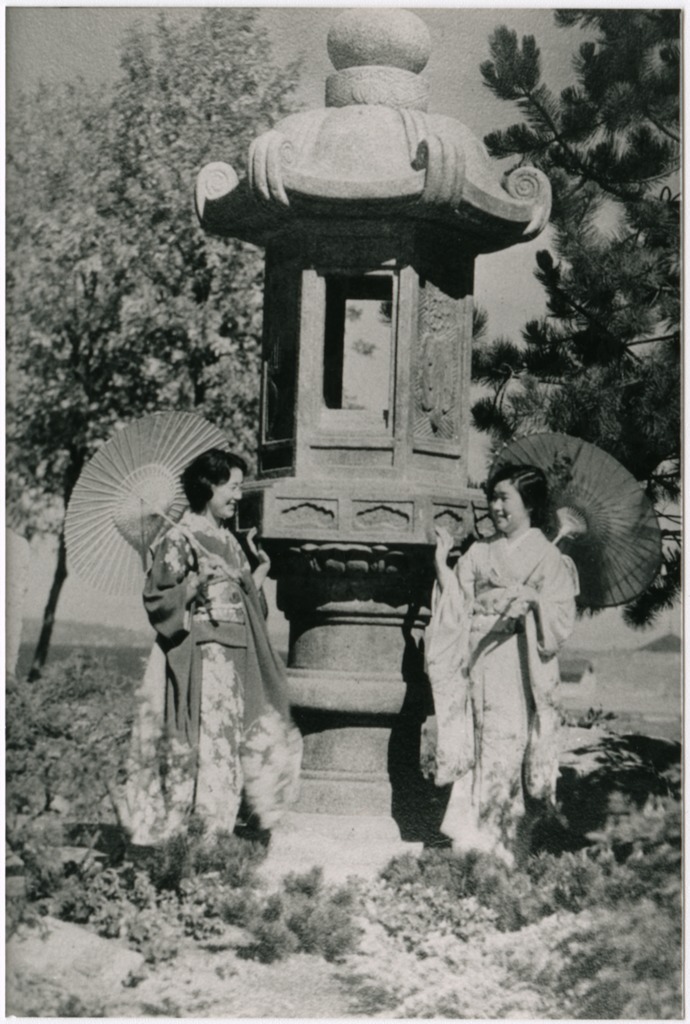

Other lanterns are found in parks around the city, such as this one in Mt. Baker Park.


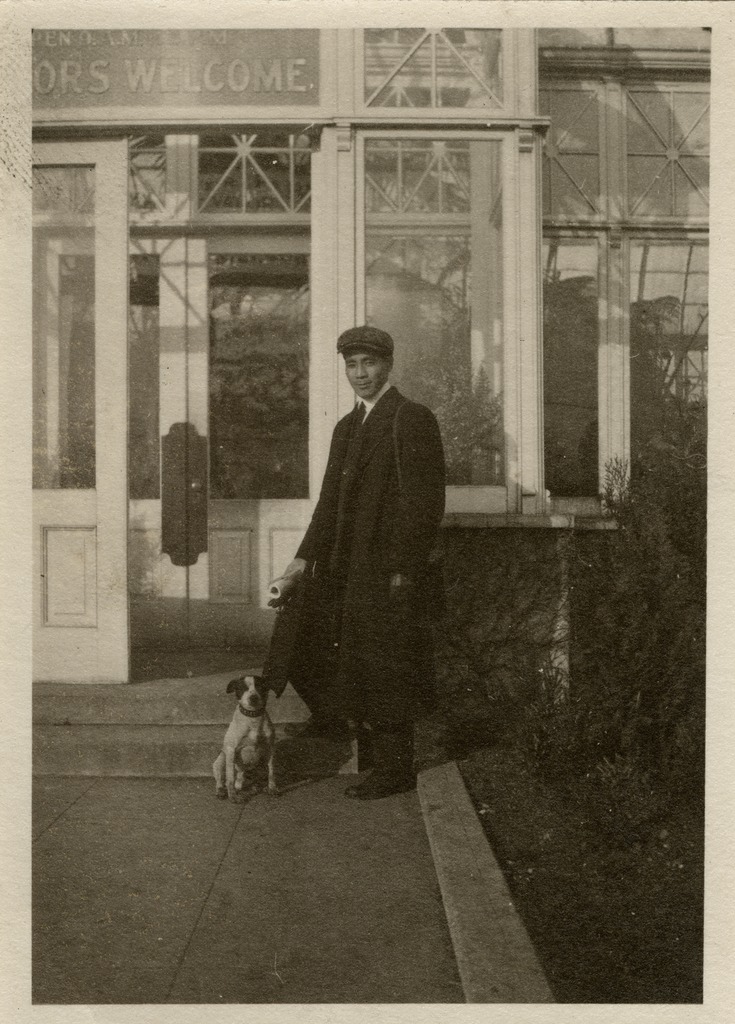
Japanese families visited parks, hiked, fished, and picnicked often, and in general enjoyed the surrounding region. Like today, families spent free time at Volunteer Park, visiting the conservatory and the view over the reservoir.



These images of Japanese American families and businesses before the war offer, on the one hand, troubling reminders of the grave impact of the wartime incarceration. On the other hand, they also show the significant influence that the Japanese community had in the business and social fabric of the city and region. Plus, the survival of some of these buildings and spaces illuminate the community’s collective resilience.
The Densho Digital Repository contains many more images of postwar Seattle, as well as other cities and communities along the West Coast. Stories are preserved and revealed in the places that still stand today. To visit them is to remember and acknowledge the people and history that form the roots of today’s towns and cities.
—
By Dina Moreno, Densho Processing Archivist