November 8, 2026
Glen Kitayama is a retired elementary school teacher and Vice-Chair of the Manzanar Committee. His Masters of Art thesis from University of California, Los Angeles (UCLA) provided the foundation for the book, NCRR: The Grassroots Struggle for Japanese American Redress and Reparations.
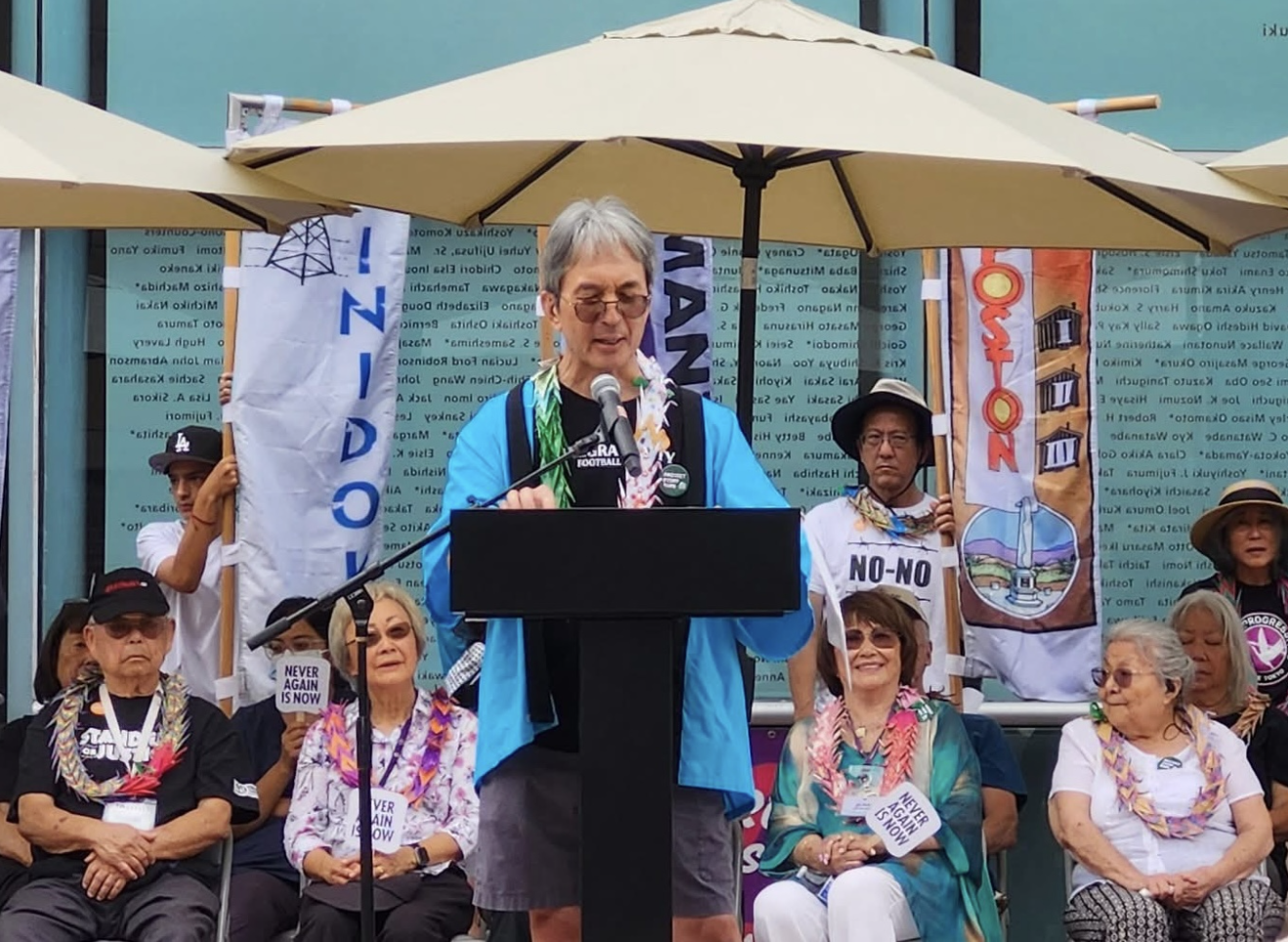
In a conversation with Densho Education and Public Programs Manager Courtney Wai, Glen discusses how his experiences as an elementary educator, community leader, scholar, and descendant intersect with each other. He reflects on how his family’s incarceration history shaped his teaching, offers guidance for introducing this history to elementary students, and shares the power of building connections across communities.
Courtney Wai: Tell me about your background. How did you get connected to Densho?
Glen Kitayama: Without realizing it, I’ve been connected to Densho since 1997 when the organization was just getting started. Don Nakanishi, the director of the UCLA Asian American Studies Center, hired me to interview activists in the Redress Movement since many of them were gathering for a conference at UCLA. I interviewed people like Kathy Masaoka and Jim Matsuoka from Nikkei for Civil Rights and Redress (NCRR), Sue Kunitomi Embrey from the Manzanar Committee, and Aiko Herzig-Yoshinaga among others. When the interviews were finished, I didn’t know what happened to them and just assumed that it was archived at UCLA somewhere. It turned out that Densho had it all along and had worked in collaboration with UCLA.
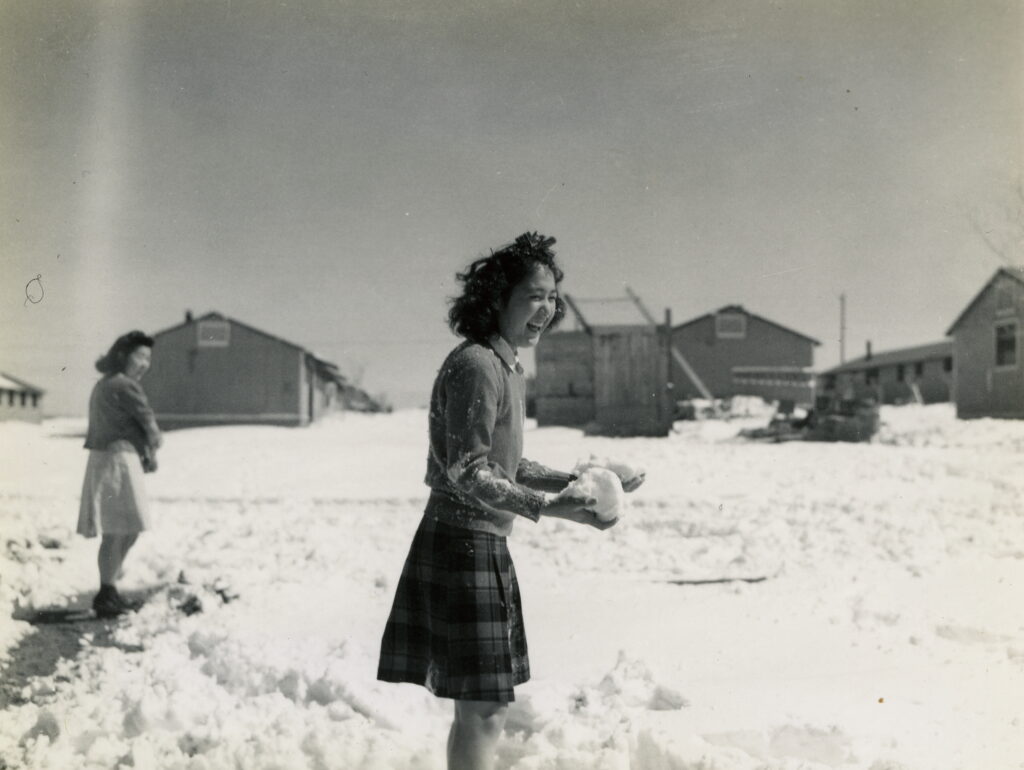
Later, my close friend from UCLA, Brian Niiya, was hired as the Content Director at Densho and started the Densho Encyclopedia. He hired me to write several articles related to the Redress Movement and also one on Clara Breed, a librarian from San Diego who befriended young Nisei school kids before the war and remained their lifeline to the outside world when they were incarcerated at Poston. When I retired from teaching in 2025, Brian thought that my experiences as a teacher and community activist would make me a good candidate for conducting life histories and working with the education curriculum project.
CW: How have your experiences as an elementary teacher, community leader, scholar, and descendant of a family impacted by incarceration shaped what you want children to learn about this history?
GK: Because of my family history, I was profoundly impacted by the incarceration. When I discovered that my grandparents and parents were incarcerated in concentration camps, I thought that my teachers had lied to me about American history. My goal in teaching the incarceration to my elementary school students has always been to tell the truth about our history and to help students discover their own history.
CW: You’re currently helping Densho break down our framework for elementary educators. What drew you to supporting the elementary portions of the Densho Education Framework? What did you especially want to make sure was included for younger learners?
GK: I actually didn’t have anything specific that I wanted to add regarding content because Densho already does a great job with providing information. Since I taught grades 2-5 and substituted in 1st grade, I look at my role as helping elementary teachers think about how they can teach the material and make it relevant for students today. Teachers know their own students the best, so my job is to offer suggestions and let them know what’s available to them.
CW: You’ve curated an exhibit about letters between Clara Breed and young Japanese Americans in camps for the Japanese American National Museum. What can learning about children’s experiences help elementary students understand about incarceration?
GK: I think that children relate better to the material when they learn about what other children experienced. A lot of the letters in the collection were from high school aged students, but some of them were written by elementary school students. A number of the letters asked for library books since Clara Breed was a librarian in San Diego. Taken as a whole, the letters that Clara Breed saved from the children at Poston provided a window into the daily lives of the young incarcerees.
CW: How do you teach honestly about racism and injustice while helping young students recognize stories of resistance, care, and hope? What might that look like in K–2 compared with grades 3–5?
GK: I think that teachers need to understand where the students are coming from and how much they can understand from a developmental perspective. When I taught second grade, I loved reading Yoshiko Uchida’s The Bracelet to the kids or showing them a tape of Patty Nagano reading it to students. This also worked well with upper elementary students too since it simplifies the story into one of friendship and overall fairness. In Kindergarten and 1st grade in California, students are taught about rules and democracy as part of the social studies curriculum in their schools. Teachers can integrate this with how the camps were unfair to Japanese Americans during World War II.
CW: How can elementary teachers help students connect this history to questions of fairness, belonging, and responsibility in their own communities?
GK: Shortly before I retired in 2025, ICE terrorized the Chinatown neighborhood in LA where I had taught for the past ten years. Some teachers chose to ignore the elephant in the room and pretended that everything was normal. I couldn’t do that because these were not normal times. I messaged all of my parents to ask them if their families were okay and sent them a copy of their rights if ICE approached them. A number of parents messaged back and said that they were afraid to send their children to school. About 1/4th of class stayed home for the final days of the school year, so I never had a chance to say goodbye to them.
During the last staff meeting of the school year, I was given the floor and asked how I felt about retiring. I said that I was heartbroken because our kids and our community were experiencing the same thing that my mother experienced in Terminal Island when she was 9 years old and witnessed her father being taken away by the FBI in the hours after Pearl Harbor. For me, it was personal because of my family’s history. For others, it was their history as refugees or immigrants. For most of us, it was connecting with our students and our parents as a part of our community.
CW: This framework can be daunting for teachers to tackle on their own. What’s one tip or suggestion you have for elementary teachers who want to use this but are unsure of where to start?
GK: I think that it helps to have a basic understanding of the World War II incarceration. With my colleagues, I always encouraged them to take a look at the Densho website since there’s a great introduction to the incarceration on the homepage. After this, teachers can look at the framework and decide what they would like to teach. The beauty of the framework is that each section can be taught on its own.
CW: Teaching incarceration history can be especially challenging given our current political climate. How do you sustain yourself in this work, and what continues to give you hope?
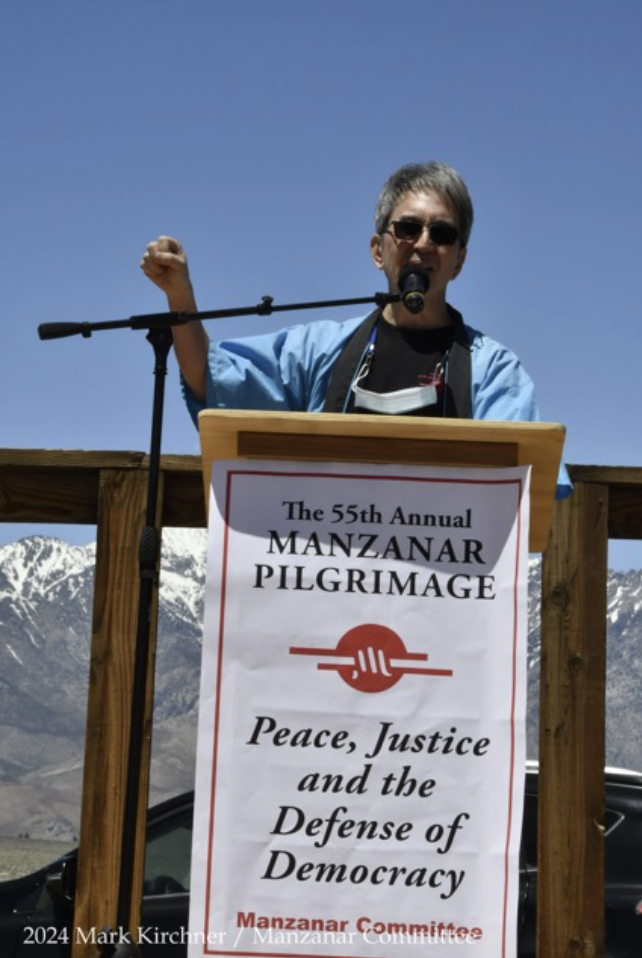
GK: Since I’m retired, I don’t find teaching incarceration history personally challenging. In the Manzanar Committee’s Katari program, we host Nikkei Student Union (NSU) leaders from various campuses at Manzanar for an intensive place-based learning experience that they can take back to their campuses to help them organize for our annual Pilgrimage.
The real challenge in teaching this material happens in the classroom. To start, teachers are constantly pressured to raise standardized test scores, so there’s not as much motivation to teach subjects that aren’t part of the official curriculum. On top of that, teaching subjects that make people uncomfortable can have repercussions. After 9/11, people became blind in their patriotism and began targeting anyone who looked Arab much in the same way Japanese Americans were targeted after World War II. In my class, I taught my third graders that we didn’t need to be afraid of Arab Americans, Muslim Americans, or anyone else who looked different from us. As part of a writing lesson, I also had the students compare and contrast the number of people who died at the World Trade Center with the number of civilians killed in Afghanistan with the overall lesson being that both events were tragic. When a construction worker at the school saw the graphic organizer displayed on my classroom wall, he went to the principal and demanded that I be fired. Fortunately for me, I had a reasonable principal and could defend my lessons as factually correct and based on the writing standards. He didn’t agree with my perspective, but respected my opinion. In other hands, this could have ended badly.
I want to end this on a happy note. I also took the students on a field trip to a local mosque later in the school year. I already had a relationship with them since Senshin Buddhist Temple and NCRR reached out to them in friendship after 9/11. Some parents were worried about exposing their kids to a mosque and in the back of their minds probably equated Muslims with terrorists. Most parents, however, trusted me and let the kids go. It was a fantastic experience. The kids had a great time learning about Islam and the Middle East because the leaders at the mosque were so kind and provided entertaining art lessons. Years later, one of the students in my class wrote to let me know that she had been accepted to Harvard University. Her personal essay was titled, “Everything I Needed to Learn in Life, I Learned in the Third Grade.”