August 29, 2026
Densho unequivocally condemns recent statements made on the podcast Timcast IRL suggesting that Chinese Americans should be incarcerated in the event of a war between China and the U.S.
On August 14, 2026, co-host Ian Crossland said if Chinese forces landed in North America, “we should intern all the Chinese Americans we can find,” concluding, “it kind of seems like we should.” He made these comments in a discussion about immigration and citizenship, criticizing “birth tourism” and immigrants today not “assimilating” the way earlier generations did.
Later in the conversation, Crossland appeared to walk back his statement, but continued to question the loyalty of Chinese Americans: “I don’t want to implicate all Chinese Americans because that’s horrific…I don’t want them interned if there was some conflict between the Chinese, but how can you tell? How can you tell who’s who? How can you tell where their allegiances are? And how do you know if their allegiances will or won’t flip if the tide of war starts to change?”
Podcast guest Kevin Smith then raised the WWII incarceration of Japanese Americans as a direct comparison. Rather than objecting to race-based incarceration on principle, he questioned whether it would be logistically possible.
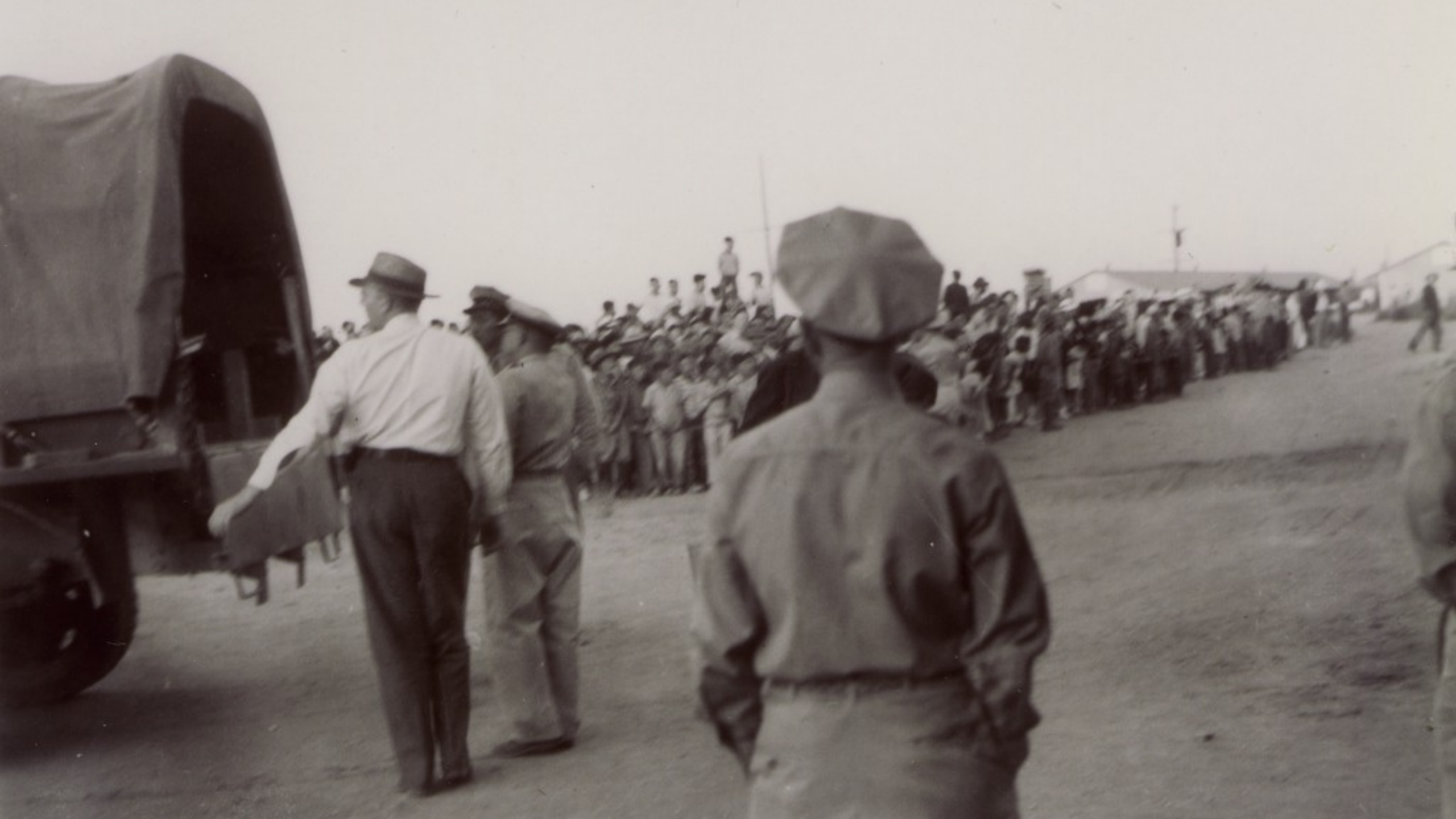
The wartime incarceration of Japanese Americans is not a historical model whose present-day feasibility should be debated. It was a grave constitutional and historic injustice with long-lasting consequences. The U.S. government later acknowledged that the incarceration was not justified by military necessity, but resulted from “race prejudice, war hysteria, and a failure of political leadership.”1
The comments on Timcast IRL draw upon longstanding anti-Chinese, anti-Asian, and anti-immigrant attitudes, dating back to the 1800s. This rhetoric promotes stereotypes of Asian Americans as unassimilable foreigners, as part of an indistinguishable monolith, and for whom citizenship is conditional. These ideas have fueled racial violence and discriminatory policies, including the Page Act of 1875 and the Chinese Exclusion Act of 1882. The history of Japanese Americans illustrates how fear does not suspend constitutional rights equally for everyone. Instead, racialized communities are made to bear the consequences. Conversations like these are dangerous, as they have the potential to influence public discourse and sway uninformed listeners. This particular podcast has an audience of 2.77 million subscribers on YouTube.
History shows us that mass injustice begins with language that casts an entire community as dangerous, makes collective suspicion appear reasonable, and gradually moves previously unthinkable actions into public debate and policy. Densho stands with Chinese American communities, immigrant communities, and all people targeted by racism, discrimination, and unjust detention. Stewarding the history of the WWII of Japanese Americans carries a responsibility to confront injustices today as well as concerning echoes of the past, including deeply misguided rhetoric. When talk of race-based incarceration is tossed lightly into conversation, it is important to remember the heavy weight these words hold.
- Commission on Wartime Relocation and Internment of Civilians, Personal Justice Denied: Report of the Commission on Wartime Relocation and Internment of Civilians (Seattle: University of Washington Press and Washington D.C.: Civil Liberties Public Education Fund, 1997), 459. ↩︎