October 19, 2026
Densho’s role as a leading digital resource for free, accessible archival materials and oral histories on Japanese American incarceration history owes much to the dedicated and visionary work of Deputy Director, Geoff Froh. Working first as a volunteer in the late 90s, Geoff’s experience in web technologies and digital video with the Japan America Society, University of Washington and Asia-Pacific Economic Cooperation (APEC), allowed him to consult for a budding Densho project at the time, and assist with establishing systems administration. Born and raised on the East Coast in a suburb of D.C., Geoff’s ties to the West Coast and the incarceration history are through his mother, who was born in Tule Lake in 1943. Today, Geoff leads Densho’s technology team, and thinks often about the reclamation of WWII data and archival material that belongs to and should be stewarded by the community. “That data was created about us without our consent. That’s data that belongs to us, and that’s data that we want to use to help tell our story and tell it the way that we know that it happened.”
This conversation is part of “We Are Densho,” a series which highlights the people—our staff, board members, supporters, partners, and community members—who have made Densho what it is today.
Diana Tsuchida: Can you describe your background, where you were raised and what your community was like?
Geoff Froh: I’m originally from the East Coast in the Washington, D.C. suburbs. My mom still lives in the house in Falls Church where I grew up. I went to school at the University of Virginia, where I met my now wife, Amanda. We moved out to Seattle in 1995 thinking that we would be here for a couple of years, have some fun and then go back to D.C. and have real jobs. But after three decades and a child, I don’t think we’re ever leaving the Northwest.
Diana: What did you get your degree in and how did that overlap into the technology sector? Were you always interested in this field?
Geoff: It goes way back. I can remember as a kid having our first personal computer, which was a Commodore 64, I think in 1984 or ’85, something like that. And even prior to that I had some interest in computers. I had taken some classes in programming BASIC and experimented with all these very early technologies. But in school, I was an Asian Studies major with a Japan concentration. I had planned on going into some kind of policy field or pehaps academic history. Following school I immediately went to the JET program and spent a year in Japan.
When I came back to the States I worked in D.C. for a think tank that would go out, collect materials, scan them, and put them into this bulletin board system. And then people could read and download the latest that the US government had. At that time, it was very difficult to find policy documents and information from the Congressional Research Service. A lot of this documentation around Japan relations and Japanese foreign policy was available, but you had to be in DC to get it, and you had to go to offices and pick things up. And so we were running a bulletin board system, a dial-up BBS. We had companies and organizations in finance or policy who were interested in US-Japan relations subscribe to our service.
And so in 1994, we actually launched a web-based version of this system, which at that time was almost unheard of. It was bizarre that anyone would do that. We bought an internet connection from one of the first dedicated internet providers in the DC area, as the internet was kind of born in Northern Virginia. We were able to get an internet connection and we stood up a web server in 1994, maybe even late ’93. So with that background, I had to learn a lot very quickly about open source operating systems, about web technology, which again was very new at the time.
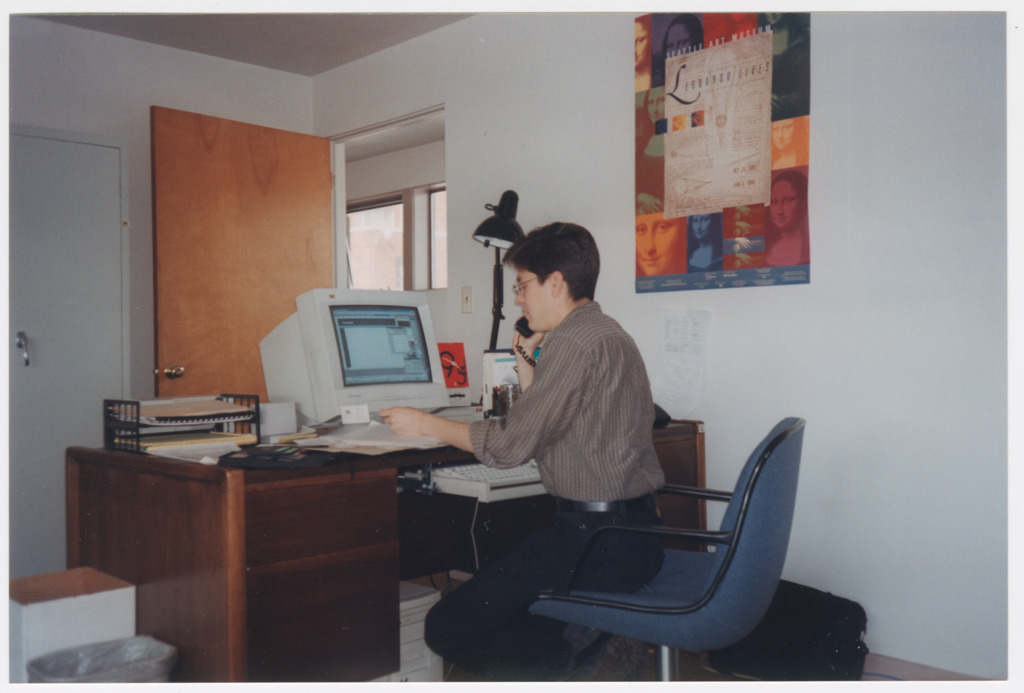
Then I came to Seattle to work for the Japan America Society on a project they were running to provide internet technology or infrastructure for this network of Japan America societies across the US. So the society in Washington was tasked to set up a kind of shared internet system for a web system — internal mailing lists, email lists. And so we ran that here from Washington. I spent a lot of time traveling around all over the US to various societies, helping them set up internet connections, helping them figure out how to build websites and that sort of thing. So, no formal technology training really until in 2004, [when] I went to grad school at the University of Washington and did a Master’s in Information Science at the iSchool there.
Diana: What is it about technology that is so interesting and compelling to you? What draws you to it?
Geoff: I think like many kids, I loved Legos. I love building things. And the idea of being able to build something from, from computer code, from like nothing essentially. It was really exciting to have a personal computer not just to play games or do word processing, but to actually build and use something that I made. A lot of technologists will say the same thing.
I truly feel the dissemination and availability of information, open access is critical to maintaining a functioning society. People need access to quality information, and that really is the foundation of a lot of our work here at Densho. On one level, it’s about informing people about this history, allowing people in our community to tell their stories, but it’s also making that as widely available as possible. I think this is a lot of Tom and Scott Oki’s vision at the beginning: the idea that we could take this personal computer technology, this very inexpensive technology, and use it to build something that has as much impact as a physical museum was an important idea at the beginning of Densho and is still today.
Diana: Can you share how your family’s camp experience and history has driven and impacted your own work with Densho?
Geoff: My mom was born at Tule Lake, nearly born at Topaz. My grandmother and grandfather had two other young daughters at that time, 5 and 3, when my mom was born. My grandmother was very pregnant and they were supposed to be going to Topaz, but she was deemed not physically able to make the long trip. So they stayed at Tule Lake until my mother was born. She’s the middle child of five. All daughters.
My grandparents, who were Nisei, both grew up in the Bay Area, but later moved to southern California in Ventura. Going out to the West Coast was always an interesting experience when I was growing up. I would stay at my grandparents’ house and they had books about incarceration, or make some vague references, but I don’t think I really understood what camp was until I was in 6th or 7th grade. Even then, I didn’t really have a handle on what it meant. My grandparents didn’t talk about it very much, and none of the family really said much either. The first time I vividly remember doing research was probably in 11th grade government class. That coincided with the time things were starting to happen with the redress legislation, around 1985 – 86. We were living in D.C., and my dad worked up on the Hill for Ted Kennedy. He was in health policy, but he knew folks who worked with Senator Inouye and other people who were involved with the issue. Actually, they talked to my mom a little bit, but she really didn’t remember very much because she was an infant. But I would say that’s the time when I really understood what that history meant.
Diana: So your family ended up in Tule Lake purely based on their initial location, and it had nothing to do with the segregation after the fallout from the “loyalty questionnaire.”
Geoff: Yes. And in fact, that was one of the reasons why they left Tule after segregation. On my grandmother’s side, one of her parents’ siblings was married to Walter Tsukamoto, who was a key figure in the JACL. My grandfather, for most of his life, was pretty apolitical. According to the family lore, during camp my grandfather wasn’t around that much, and was working all the time. My grandmother had the kids and grandpa would come back to the barracks and they would almost never eat in the dining hall. They’d always eat in their room. They did not have a lot of friends in camp, other than some relatives and things like that. Later, we realized that he really tried to keep a low profile because he was being harassed. It turns out that he was being targeted for being a JACL supporter, an inu (dog), when all that happened. That family association became a major reason for them to leave Tule Lake and go to Topaz. Now knowing the history of all this, it is understandable in many ways.
But I think it just sort of shows one of the ways that the incarceration experience tore the community apart. It created rifts that exist even today. We still have echoes of that trauma, and it is just one of the threads that runs through a lot of stories in the JA community. We were just neighbors living together when the government took us away. All these internal conflicts that did not need to happen and would not have happened, happened simply because of the stress and the pressures of the intractable decisions that ordinary people in an impossible situation were forced to make.
Diana: What was your initial role at Densho and how quickly did it evolve? Can you talk about those early years?
Geoff: I started by doing some volunteer systems administration, helping out because at that point I think it was pretty much Tom by himself running all the technology. At the beginning, the “Densho Project” was a kiosk application that was running at the Wing Luke on a single machine where you could watch the oral histories, and view several hundred photos and documents. That was it. I think Tom understood that we couldn’t replicate this kiosk: that in the long run, it was not really scalable. There were several other ideas for widening the reach. Tom had come to Densho after working for Microsoft where he had helped establish their multimedia efforts. He knew the people running the Encarta encyclopedia group. He considered distributing the Densho content in CD-ROM format, like Encarta, or maybe trying to convince Microsoft to include the material in Encarta.
But it became very clear in the late ’90s that the internet should be our future, especially as the web was becoming pretty well established as a viable distribution channel. We were beginning to see the emergence of digital video on the internet as well: the idea of having people watch on-demand video was something that could happen. I had some experience in that, facilitating some live events and on-demand content at UW. I thought I could bring these skills to Densho. When I finally came on full-time, I think my first job title was Technical Specialist or something very general like that. Basically, I had my hands in all of the technical things that we did from systems administration to web programming to digital video technology to long-term preservation storage.
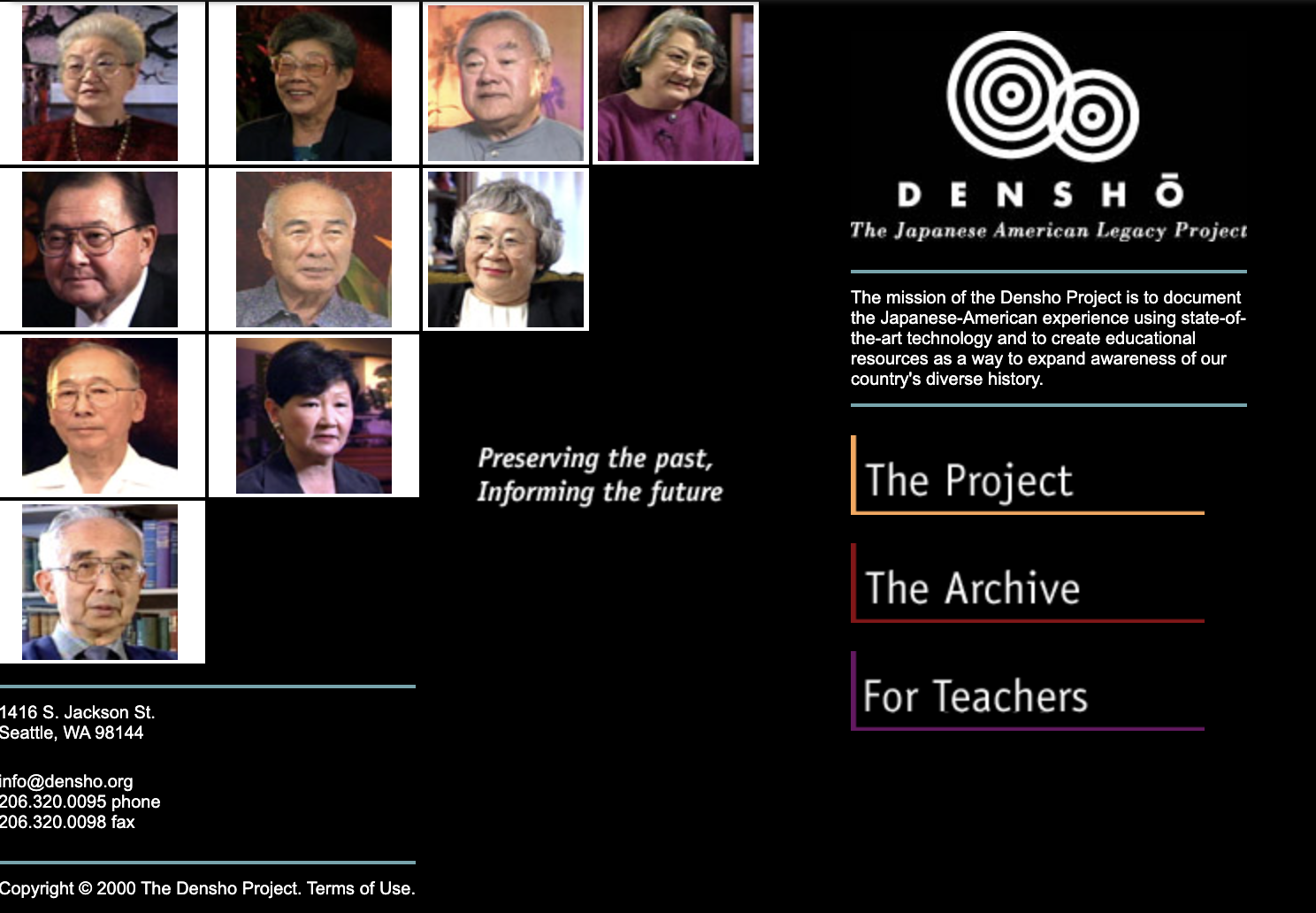
One of my very first major initiatives was to stand up an organizational website. We weren’t ready yet to have video on the web, but we needed some kind of web presence. Our first website was launched in early 2000. You can still see one of the first captures of it at the Internet Archives’s Wayback Machine. It’s just a static website, but that’s where Densho started on the internet.
Diana: What are the technological moments that really stand out to you as the most impactful?
Geoff: I’d say the first was the launch of our first website. It was kind of our stake in the ground; our statement that this is in fact the direction that we’re planning to go. The next significant event was around 2002 when we launched the first online version of what we called “The Archive”, now the “Densho Digital Repository”, where we first hosted the entire corpus of oral history videos, along with all of the photo and document materials. It was a major milestone because we committed to having all of our resources available on the internet, making the website the primary way of disseminating our content and reaching our audience. We also started to self-host: meaning we began to run our own server machines. That itself was a major milestone as well that has remained a key component in our overall technology philosophy.
Another important event was in the early 2010s when we made a shift towards open source technology. That constituted not only a technical change but also a kind of a philosophical shift as well. It meant moving away from architectures built on a proprietary, monolithic software stack, and instead selecting and integrating smaller, purpose-built open-source components. It also meant that when we write software, we make it openly available, using software that’s openly available. This meshed with our open access stance – our promise to make our content freely available. I think those commitments remain central to what Densho is today.
Diana: What does the longevity of Densho and its impact on the community say about the importance of preserving this history?
Geoff: I think unfortunately but perhaps not surprisingly, we are seeing the echoes of our community’s history now. They are traces we have witnessed several times over the 30-year history of Densho. And so the mission of informing people, about preserving this history, about connecting this history to larger themes in the American experience, remains critical. I can’t see that really changing anytime soon, though I dearly hope that it will.
As far as the future of Densho goes, we are entering this post-witness era, a time when people who directly experienced incarceration won’t be able to tell their stories anymore, and it becomes even more incumbent on the descendants to not only preserve the story that has been told, but continue to contextualize and reinterpret and help people understand why this is still relevant to American history. As an organization, we’ve managed to find our place in the galaxy of other cultural memory organizations doing work in this space. It has become even more clear that Densho has played a role in helping to elevate the idea of community-based history, of community archives, and the value of taking ownership of and stewardship responsibility for our own stories.
We’re the ones who need to preserve the story of our community, to reinterpret that story, and to help that story evolve over time as we evolve. It’s not somebody else’s to tell. I think we’ve served as an example for many other cultural memory organizations embedded in community by showing that this is a viable model. We can do this work in a highly professional way, in a manner that ensures that the materials are properly stewarded, that they are preserved, and that they’re safe. To me, our longevity serves as validation of that self-reliance and agency.
I really want to emphasize that even though I’ve been around a long time, I’m part of a larger team of people working here to shape and grow our technology. It’s not been just me for the last 30 years. All of us at Densho have a strong commitment to using technology in an effective but also ethical way to forward the mission. That has been part of the DNA from the beginning. So I do want to shout out all the rest of my technology team members who are working on some really challenging things right now. These are all people who could be quite gainfully employed at much larger enterprises doing all kinds of things, really wherever they wanted. They have chosen to be here because they understand how important this work is and they feel that it is important. They are why Densho is the institution it has become.
—
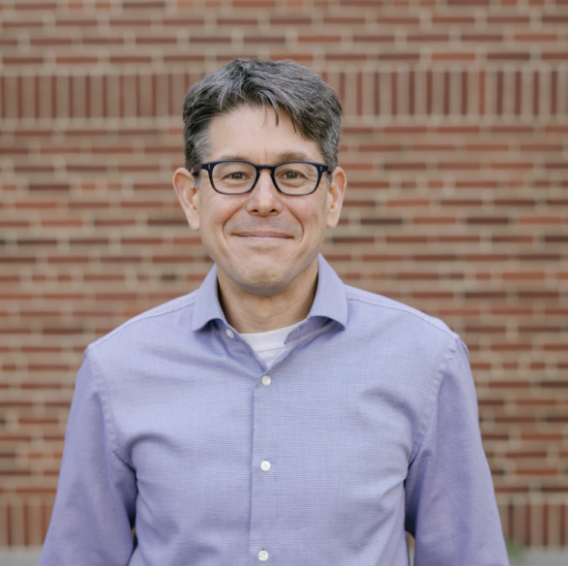
Interview with Geoff Froh, Densho Deputy Director, conducted by Diana Tsuchida, Densho’s Communications Manager