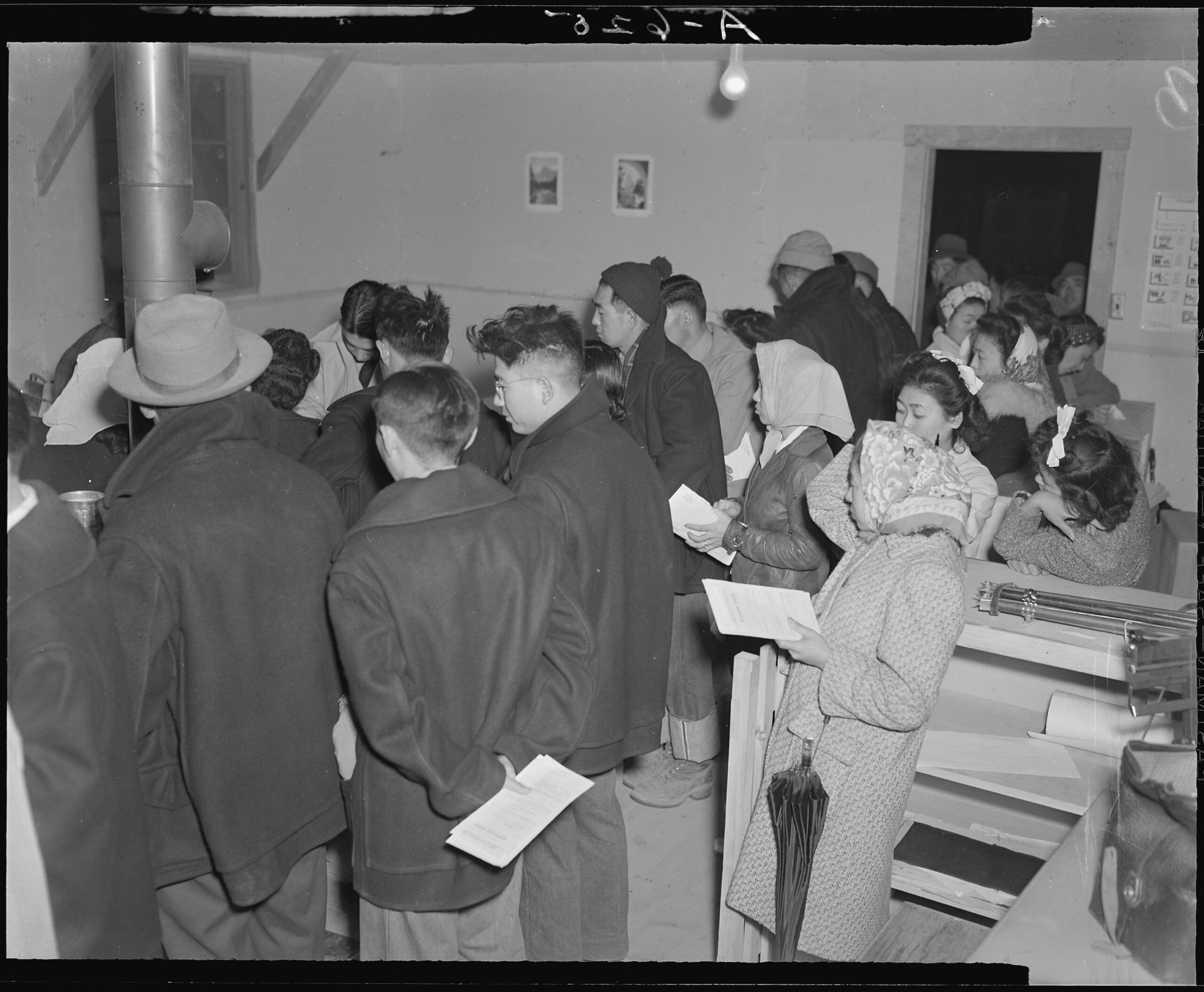
November 2, 2026
With voting underway for the 2026 midterm elections, Densho Editorial Manager and Staff Historian Jonathan van Harmelen reflects on the attempts to suppress the voting rights of incarcerated Japanese Americans in 1942.
As we approach the midterm elections, we are reminded of how in 1942, some Nisei participated in that year’s midterm election. More startling, though, is how, like today, elected officials tried to suppress the voting rights of incarcerated American citizens of Japanese ancestry and even weaponized the election to overturn birthright citizenship.
The question of how Japanese Americans could vote in camp was clarified early on. By Summer 1942, when most politicians began their campaigns in preparation for the November election, Japanese Americans had already contacted the War Relocation Authority regarding how to obtain and submit ballots.
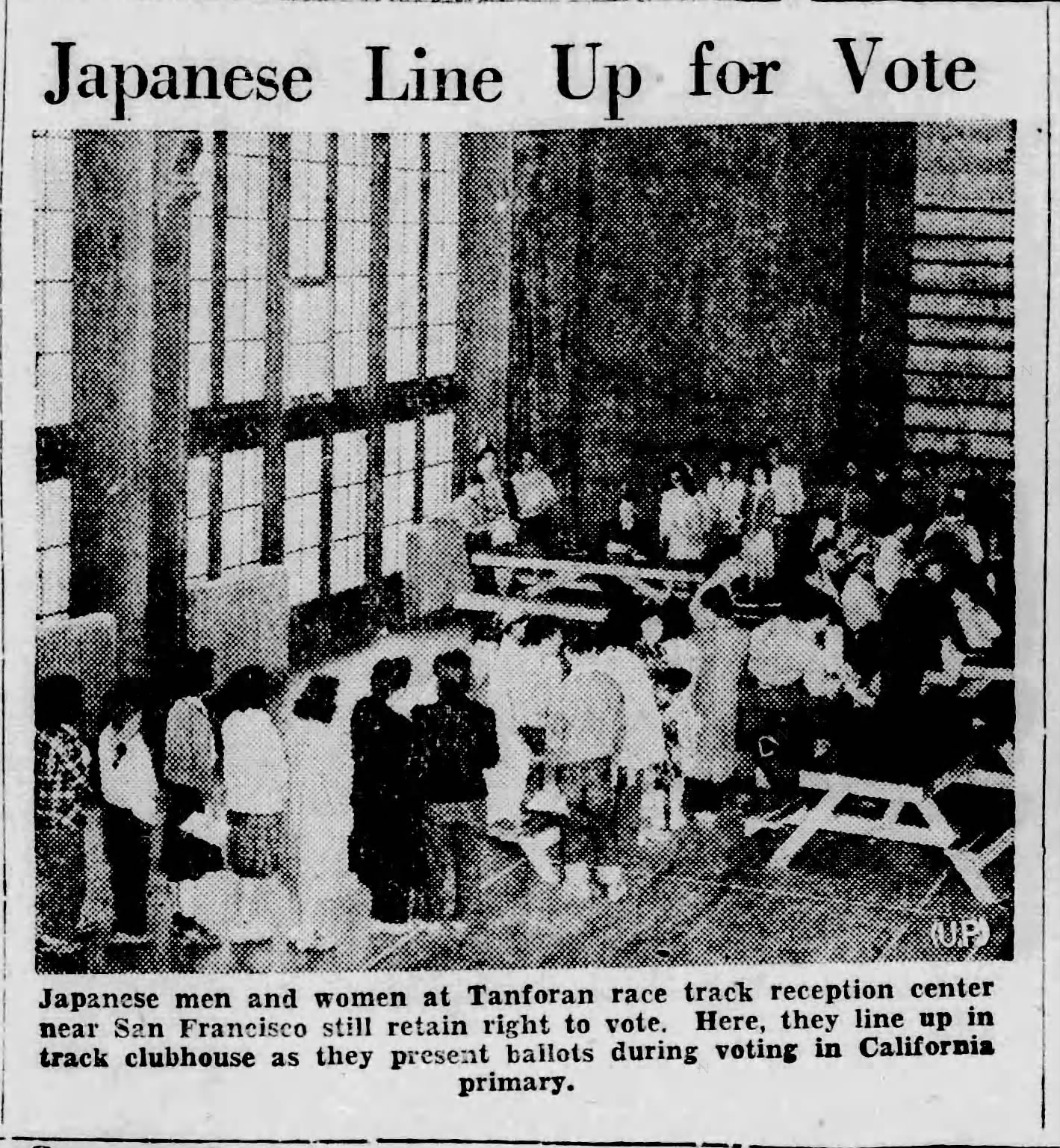
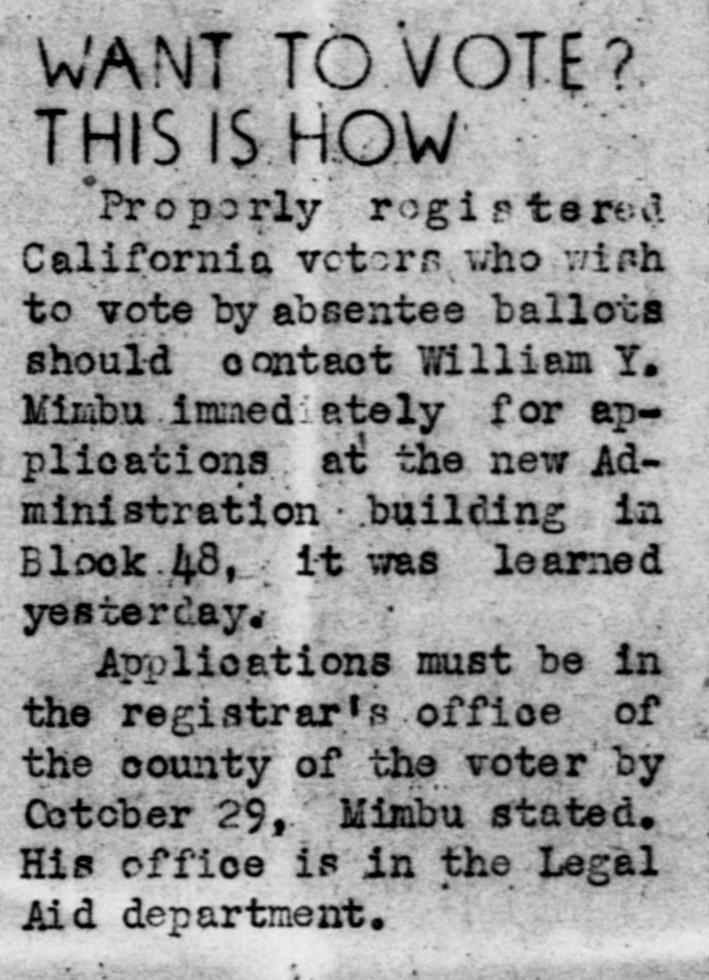
Like now, voting rights in 1942 were determined by the state of residency. The War Relocation Authority’s solicitor, Philip Glick, instructed camp directors that incarcerated Japanese Americans could not register to vote in states where their camp was located. However, voters already over the age 21 years of age who had registered before their incarceration could submit absentee ballots in those jurisdictions. A notary public was required to process such ballots — the WRA legal staff in each camp performed such services.
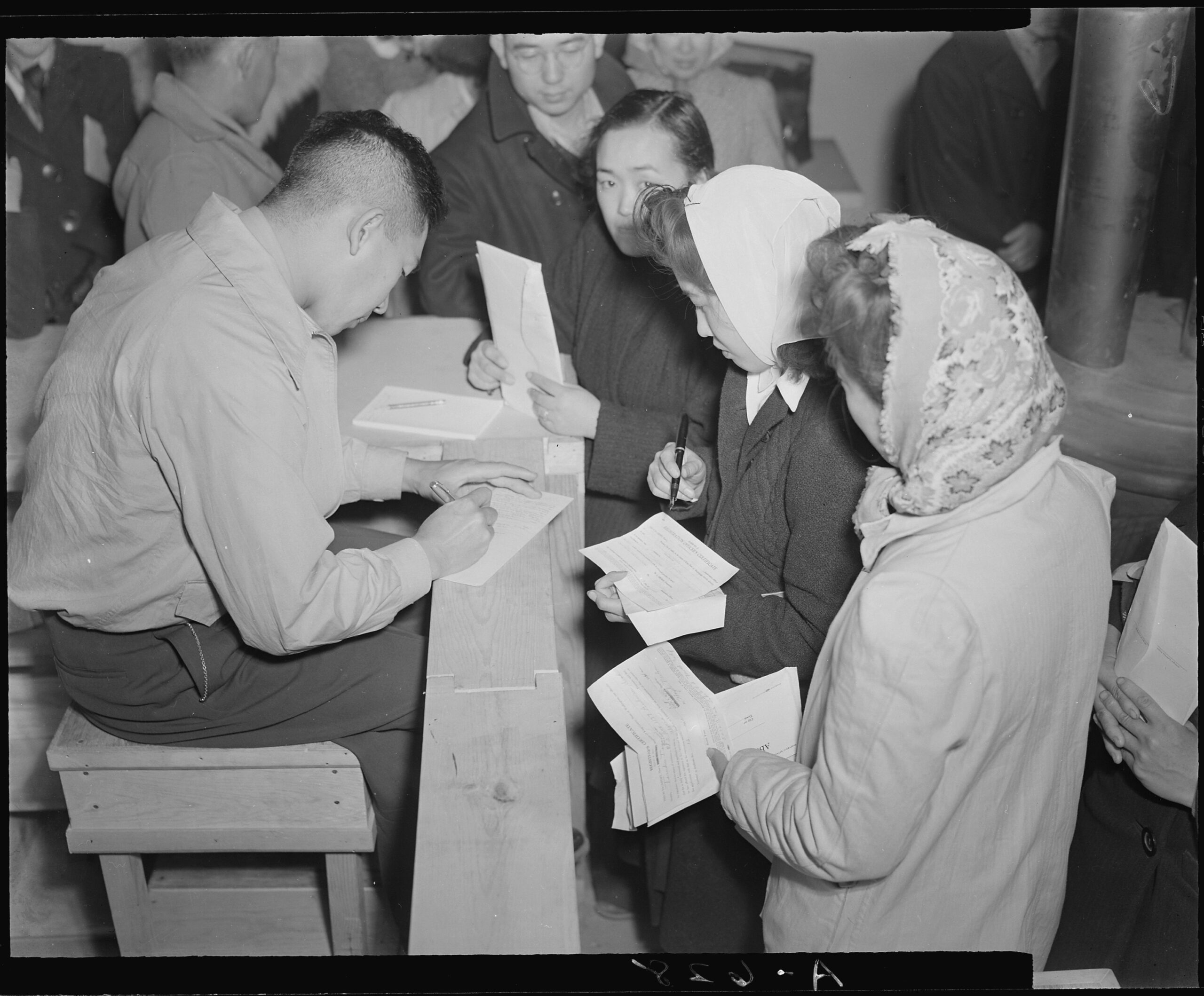
Within camp, feelings over the 1942 election oscillated between a sense of patriotic fervor and jadedness over the value of their rights.
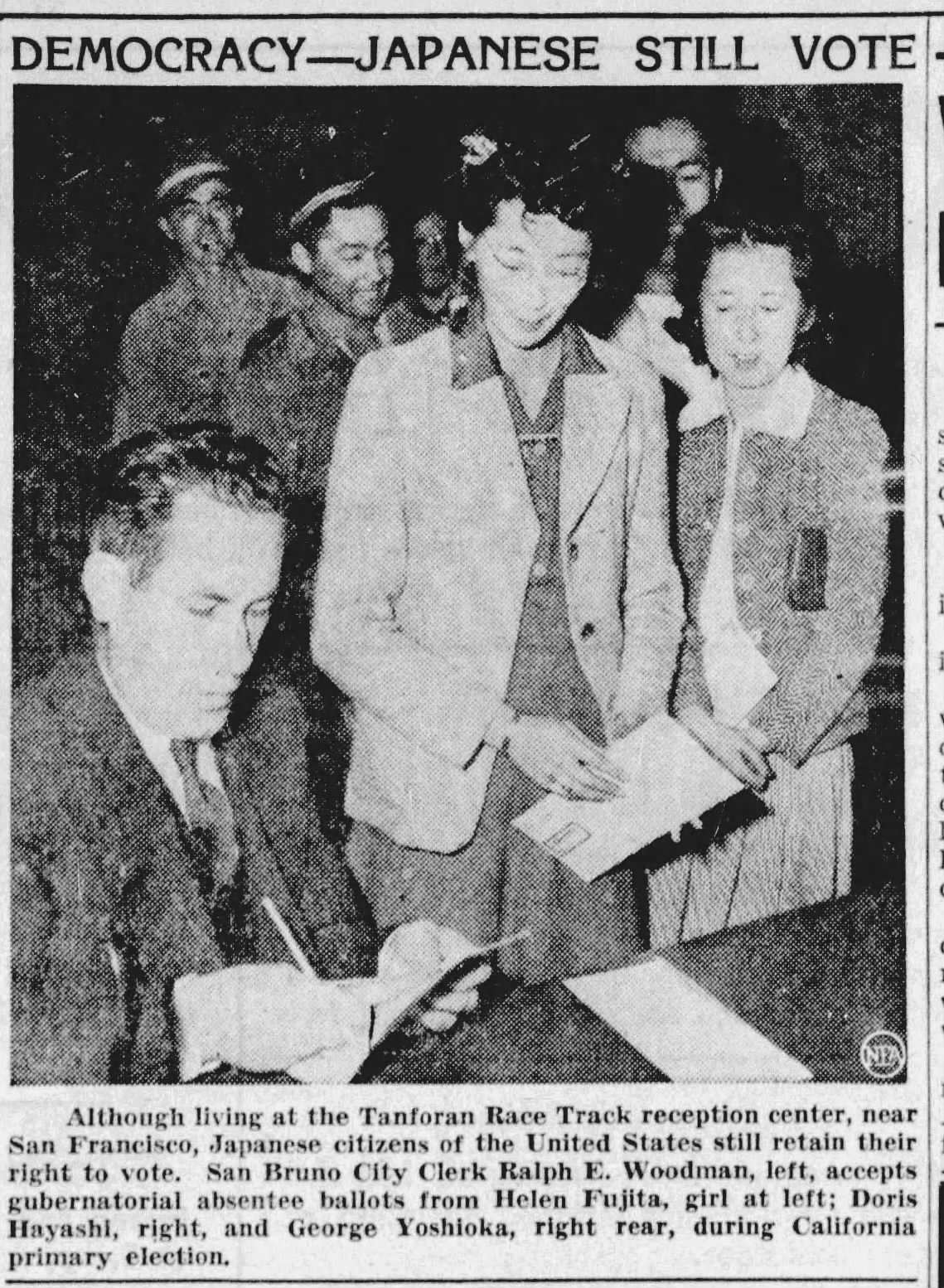
In several camps and assembly centers, Japanese Americans cast ballots. In fall 1942, several newspapers in California, including the Los Angeles Daily News and San Francisco News, ran a photo showing three Nisei, Helen Fujita, Doris Hayashi, and George Yoshioka, submitting their absentee ballots to San Bruno City Clerk Ralph Woodman at the Tanforan Assembly Center. At Manzanar, the Manzanar Free Press ran an editorial reminding inmates to speak with camp director Roy Nash about securing ballots. At the Topaz camp in Utah, local resident Frank Beckwith arranged to have a notary public present to collect ballots.
Among the more patriotic editorials appeared in the October 25th, 1942 issue of the Poston Chronicle’s column “Voice of an American.” Subtitled “Voting – A Luxury,” the author wrote: “To the American of Japanese extraction, the election should portend another issue of vital significance…the danger to our way of living by the eventual and complete invasion of our rights as American citizens in the post-war era.”
In state politics, the forced removal of Japanese Americans did not generally come up as an issue in itself, but it did serve as a talking point for elected officials – the most famous being Earl Warren. In his 1942 gubernatorial campaign against Democratic incumbent Culbert Olson, Warren accused Olson of inadequately preparing the state for war. Among the evidence Warren provided to voters of Olson’s incompetence was his handling of the Japanese American question.
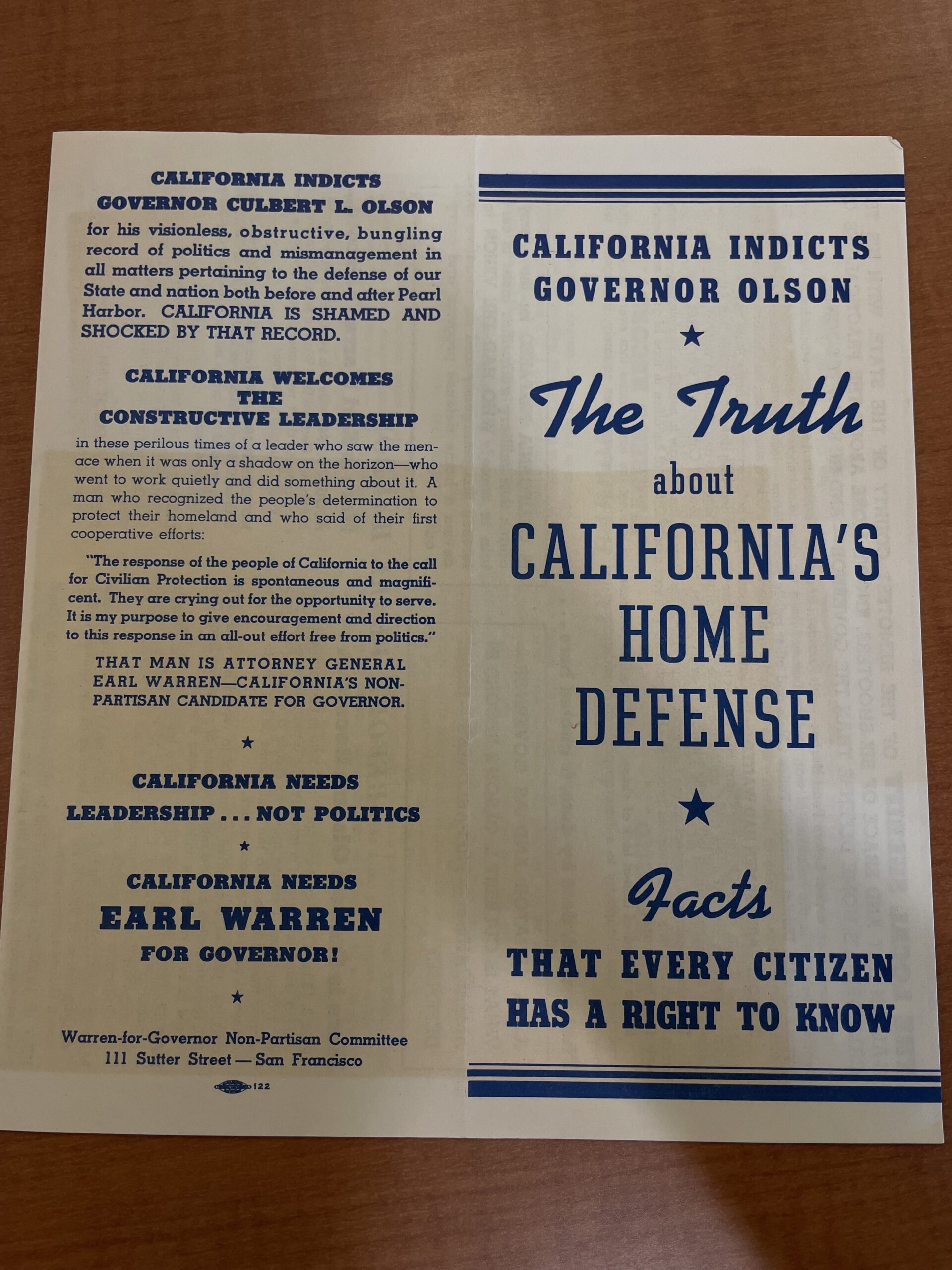
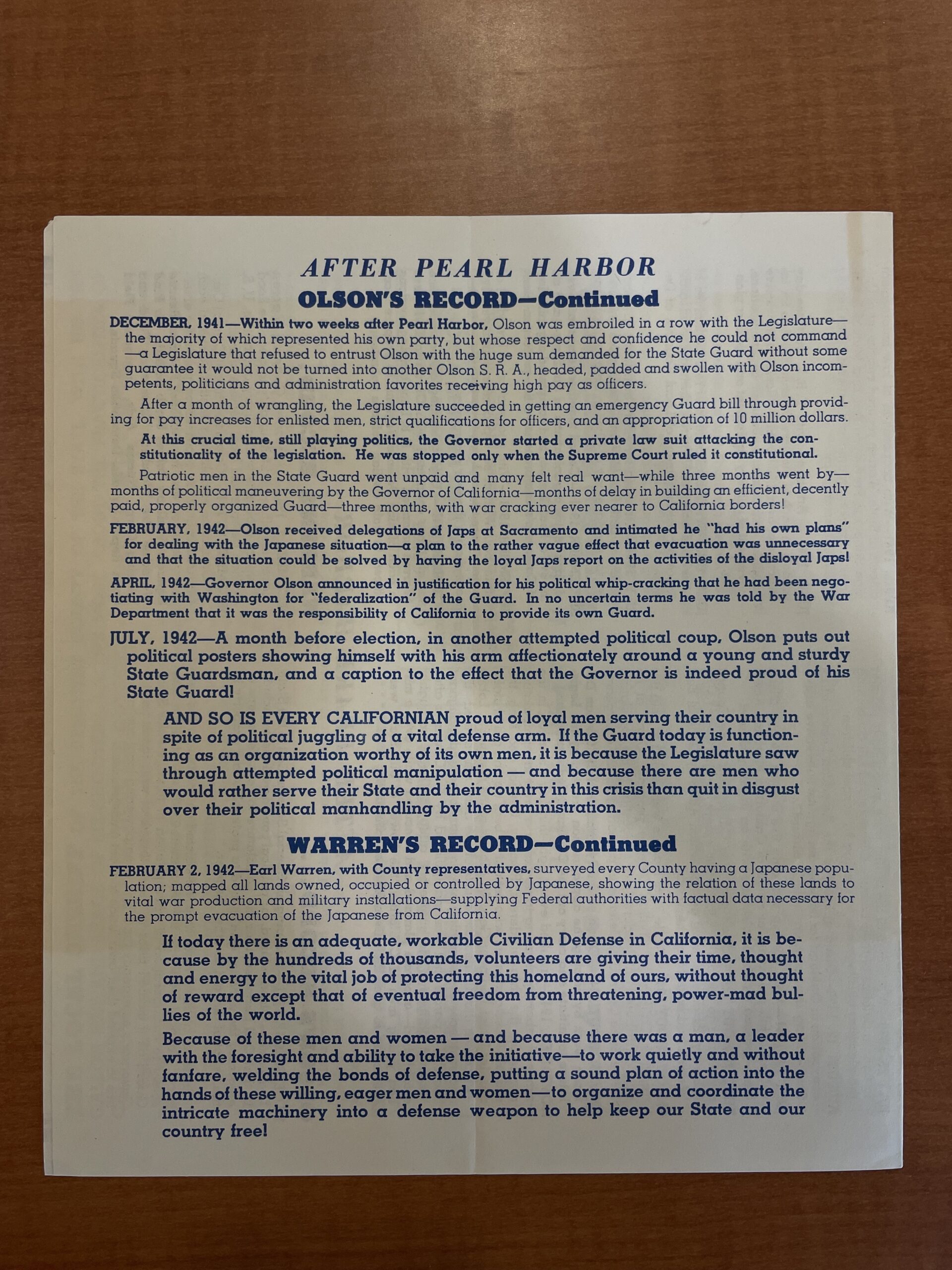
Warren handily won the 1942 gubernatorial race – a victory noted by many Japanese Americans as a callous vindication of Warren’s false statements on Japanese Americans.
Even after Japanese Americans cast their ballots, the question over their right to vote did not end in 1942.
The eligibility of Japanese Americans to vote in the ’42 election served as campaign fodder for anti-immigrant political organizations. The Native Sons of the Golden West sponsored a test case to strike Japanese Americans off the voter rolls of San Francisco County. Led by NSGW president John Regan, the Native Sons hired former California Attorney General Ulysses S. Webb to sue Cameron King, Registrar of San Francisco County to block Nisei voters from submitting ballots. As Greg Robinson notes in his Densho Encyclopedia entry on the case, Webb argued that Japanese Americans posed a threat to national security, and thus asserted that Nisei did not have the right to participate in U.S. elections.
In court, judges questioned Webb’s motives, as voting rights were guaranteed to any citizen. Webb revealed that Japanese Americans were not entitled to such rights, and told Judge Augustus St. Sure that his ulterior motive was to strike down birthright citizenship. Justice St. Sure immediately ruled against Regan’s suit.
Regan v. King eventually made it to the 9th Circuit Court of Appeals, where members of the Court roundly rejected Regan’s petition to end birthright citizenship. The case finally died when the Supreme Court refused to hear Regan’s appeal in May 1943.
The 1942 election, the first wartime midterm election since World War I, posed many challenges to Americans. But for Japanese Americans, it presented another reminder of how the American government, and the elected officials they voted for in the past, failed to protect their constitutional rights.
Today, the United States is not in a declared state of war. Yet the same challenges present in 1942 have reemerged in this year’s midterm election, with the Trump Administration and its allies launching accusations of voter fraud and placing restrictions on voting.
The challenges facing Americans to participate in elections underscores the fragility of American democracy. Just as in 1942, attacks on voting rights now undermine the democratic values advanced by the Constitution.
–
By Jonathan van Harmelen, Densho Editorial Manager & Staff Historian
Note: In 2016, former Densho Communications & Public Engagement Director Natasha Varner wrote a Densho Catalyst article about voting in camp.
Header image description: Original WRA caption: Tule Lake Relocation Center, Newell, California. Absentee voters of Japanese descent getting ballots and having them notarized. Courtesy of the National Archives and Records Administration