June 9, 2026
In this conversation, Densho’s Senior Development and Communications Manager Jennifer Noji talks with Courtney Wai, Densho’s Education and Public Programs Manager, and Akeela Kongdara, Senior Programs Associate of Asian Texans for Justice. Drawing on their personal and professional experiences, Akeela and Courtney discuss the right-wing effort to reshape social studies standards in Texas, the impact on how students learn about Japanese American incarceration and other marginalized histories, and what is at stake for students in Texas and across the country.
Learn more in a related article by Densho Executive Director Naomi Ostwald Kawamura; she reflects on what it means to teach history responsibly, as debates over social studies standards reveal that how we teach history matters just as much as what we include.
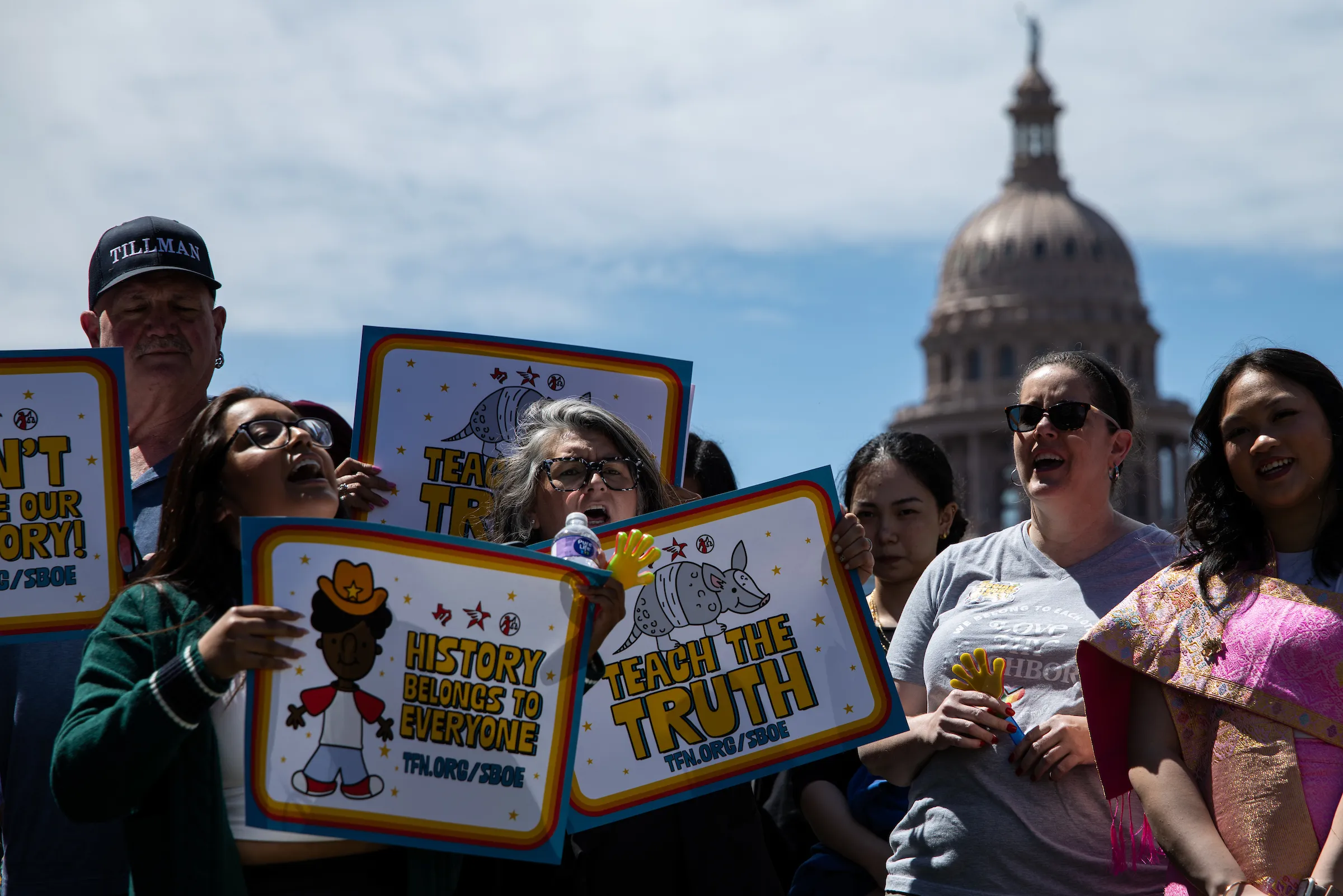
Jen Noji: Can you share an overview of what’s happening with the social studies standards revision process in Texas?
Akeela Kongdara: About every 10 years, the State Board of Education revisits the social studies standards to update and revise student learning goals – the last major revisions were adopted in 2010. Minor revisions were adopted in 2018.
In the 2021 Texas Legislative Session, Senate Bill 3 banned critical race theory in K-12 public schools. In response to the legislature, the State Board of Education (SBOE) revisited the Social Studies standards. For the next year, they would undergo multiple rounds of revisions with community input.
In August 2022, the standards were up for adoption and gained the attention of community advocates and media. Tensions were high. Feeling the pressure of the upcoming midterm elections, many SBOE members were primaried, and others feared how their votes would affect their election outcomes. Ultimately, the SBOE tabled the conversation to 2025.
The following legislative session in 2023, the Texas Legislature passed House Bill 1605, which established a state-owned curriculum, Bluebonnet Learning, that incentivized adopting school districts by allocating an additional $60 per student to their allotment. The curriculum covers K-3 Foundational Skills, K-5 Reading Language Arts, and K-10 Mathematics with biblical integrations – continuing the trend to erode Texas Public Schools. House Bill 1605 also required the Texas Education Agency and State Board of Education to curate mandatory vocabulary words and one literary work per grade level.
In the 2025 Texas Legislative Session, Senate Bill 24 would require standards on “understanding of communist regimes and ideologies” that need to be adopted by July 1, 2026. This bill was signed by Governor Abbot on June 20, 2026. In September 2025, the SBOE decided to revisit the full social studies standards, also known as the Texas Essential Knowledge and Skills (TEKS).
Courtney Wai: Thanks, Akeela, for providing a helpful roadmap. I started teaching in a Texas public school in 2011 and have lived and worked here in education since then. During this time, I have experienced first-hand how Texas has been whitewashing history more and more. I’m also concerned that this revision promotes poor pedagogy. Many of the proposed standards are developmentally inappropriate and too focused on memorization. Good social studies education should help students make sense of the world around them; these standards often move in the opposite direction.
When I testified during the 2022 social studies standards revision process, what stood out to me was not only the content being debated, but also the larger political climate around education in Texas. There was a very visible right-wing presence at SBOE meetings, including Moms for Liberty, which has since been labeled an extremist group by the Southern Poverty Law Center. Their presence reflected a broader attempt to narrow what students are allowed to learn about race, identity, power, and history.
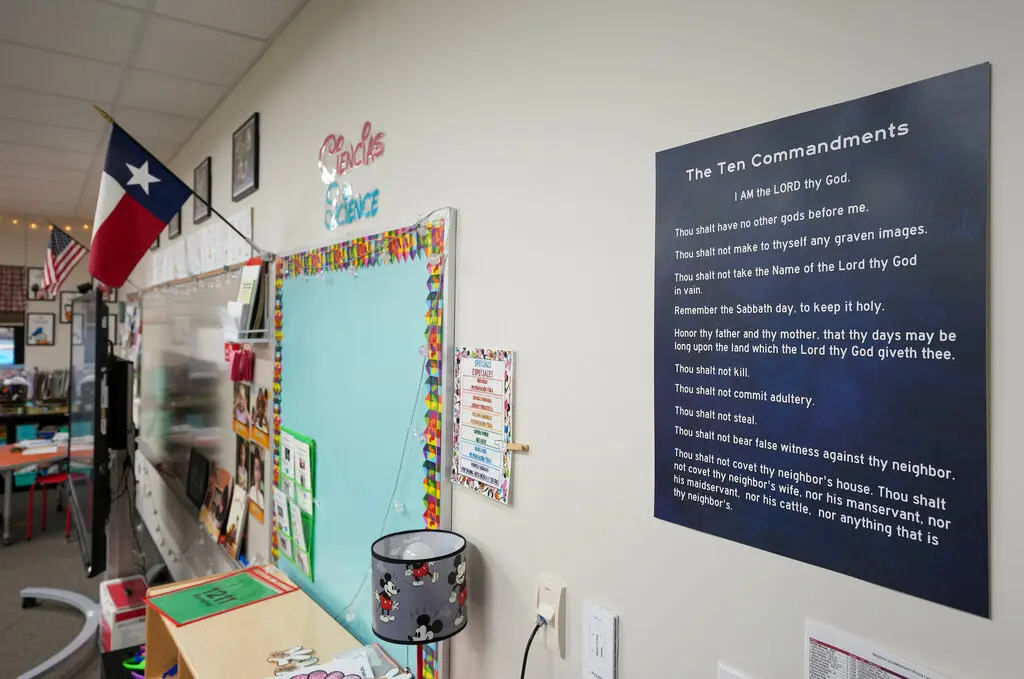
As Akeela mentioned, this is also part of a larger effort to reshape public education in Texas. We see it in book bans (PEN American documented 1,781 book bans in Texas, the second most documented behind Florida), in the chilling effect on teachers, in the push for “In God We Trust” signs in classrooms, in state-controlled reading lists, and in the voucher movement. These fights are all part of an attempt to control what students learn, limit honest conversations, and weaken public education in Texas more broadly.
JN: This debate is framed as a fight over “content,” but it also seems to be about pedagogy. What concerns do you have about the kind of teaching and learning these proposed standards encourage?
AK: Growing up in Texas, I remember history was the most common, least favorite subject amongst my peers, due in large part to a focus on memorization instead of understanding. Social Studies is meant to prepare our students to understand the world they live in, engage with people different from themselves, navigate complexity, and contribute meaningfully to society. By centering Western Civilization and American Exceptionalism as the only valid lens for understanding history, these standards not only ignore other communities but also actively misrepresent the rest of the world. They distort history and our perception of the real world.
Good social studies pedagogy builds curiosity and critical thinking. These standards move in the opposite direction by encouraging conformity and demonizing differences.
The stakes are high for students. 75% of Texas public school students are students of color, and more than 30% of them have at least one immigrant parent. When our education systemically centers one perspective, students find it hard to connect themselves to the content and to the world.
CW: My experience as a Texas educator reflects Akeela’s experience as a Texas student. The proposed standards push teachers to move quickly across a huge amount of content, which leaves very little room for depth. When students are rushed through difficult histories, they may learn a list of events without understanding the systems, decisions, and human experiences behind them.
At Densho, our pedagogical approach asks students to engage deeply with primary sources that center Japanese Americans in addition to learning historical context. This requires students to grapple with difficult questions. We want students to understand Japanese American incarceration not as an isolated event, but as part of a longer history of racism, xenophobia, exclusion, and contested belonging in the United States. That kind of learning takes time. It requires inquiry, reflection, and opportunities for students to make meaning from evidence.
Finally, learning these histories is also emotionally challenging. If we are asking students to learn about topics like racism, mass incarceration, and state violence and hear how everyday people have been impacted, teachers need time to do that responsibly. Students need space to process what they are learning, ask questions, sit with complexity, and connect the past to the present in thoughtful ways. Standards that prioritize coverage over understanding make that much harder.
JN: What’s at stake in Texas, and why should people outside of Texas pay attention to this process? What are the broader national implications?
AK: As the second most populous state, Texas has a lot of influence, and what is taught in our classrooms does not stay in Texas.
The current social standards will shape the education of more than 5.5 million public school students and beyond. Texas educated one in ten children in America, and the state operated the second-largest textbook market in the country. When Texas sets its standards, publishers follow, pushing rewritten materials into schools outside of Texas. [To learn more, check out Densho Executive Director Naomi Ostwald Kawamura’s Densho Catalyst article, which describes Texas’s outsized role in shaping history education in the US.]
We already see this happening. States like Colorado and Oklahoma have already taken similar steps towards this biased version of social studies education. When Texas falls into line, this curriculum will be spread throughout the country and abroad.
On the federal level, we are experiencing the Department of Education being dismantled. Texas is one piece of a nationwide effort to gut public education.
CW: What is at stake is whether students are given the tools to understand the world they are inheriting. When students do not learn honest histories, they are less prepared to recognize injustice, challenge misinformation, or understand how policies and public narratives shape people’s lives. They may learn a version of history that avoids conflict and complexity, but that does not help them become thoughtful participants in a diverse democracy. As a mom to a future Texas public school student – who will inherit this current version of standards – I’m scared for the future of social studies education, which has already been deprioritized in favor of English Language Arts, a tested subject.
In addition to shaping history textbooks across the country, Texas is also a political bellwether. When you trace the history of the anti critical race theory movement, you can see that Texas is one of the three states where this movement started – and then you can see that similar bills were passed around the country.
There is a phrase often attributed to W.E.B. Du Bois: “As goes the South, so goes the nation.” I think about that a lot in this context. Texas is not an exception to national politics around education. It is one of the places where these fights are being tested, refined, and exported.
JN: You mentioned that the right-wing takeover is impacting how students might learn about Asian American histories, including Japanese American wartime incarceration. Can you share more about how the current proposed social studies standards approach teaching these histories?
AK: Asian American representation has been sparse in the Texas social studies curriculum. Historically, only two mentions of Asian Americans existed in all K-12 standards – the Chinese Exclusion Act and Japanese American wartime incarceration (referred to as “Japanese American internment” in the standards). While both are mentioned twice (in 7th grade Texas History and High School US History) in the proposed standards, a key difference is the implied analysis of immigration, nationality, and citizenship with these topics.
For Japanese American incarceration, “American” was dropped in the proposed standards, stripping victims and survivors of their American-ness and eternalizing the perpetual foreign stereotype. Ultimately, it dismisses the country’s unlawful detention of Japanese Americans during World War II, following a bigger trend of ignoring and dehumanizing immigrants.
The current standards were the ones I learned, and a consistent theme that has stuck with me since fourth grade was the power of immigrants. Across multiple grade levels, we would look at immigration patterns and their impact on population growth, the economy, and culture. Yet, in the proposed standards, key legislation like the 1965 Immigration and Nationality Act (Hart-Celler) – which ended over 80 years of exclusionary immigration policy and laid the foundation for our current immigration system – was left out.
To maintain its framework, the proposed standards do three things for histories that don’t support it: dismiss, misrepresent, and ignore.
CW: There are a few places where Japanese American incarceration appears in the proposed standards, and some of the language is concerning.
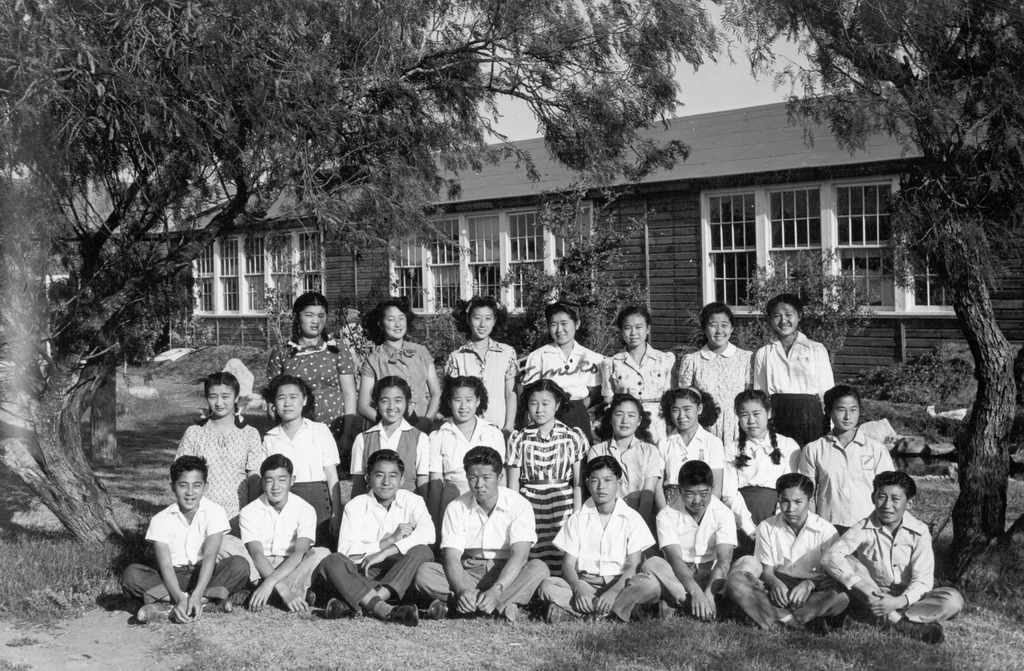
In 7th Grade Texas history, there is now a standard asking students to “analyze the causes and effects of the internment of Japanese Americans during World War II.” On one level, it matters that students in Texas are being asked to learn this history, and analyzing causes and effects can open students to examine the incarceration history in a more rigorous way. But the language still uses “internment,” which is imprecise and minimizes the broader system of forced removal and incarceration that targeted Japanese Americans, most of whom were U.S. citizens.
There is also a new standard asking seventh graders to “contrast the treatment and conditions of prisoners-of-war detained in Texas and the United States with the treatment of prisoners-of-war detained in Germany and Japan in World War II.” I worry about how this could be taught. Without careful framing, students could be encouraged to compare harms in ways that minimize human rights abuses or suggest that some forms of incarceration were acceptable because others were worse. Brian Niiya, Densho’s staff historian, also worries how it would be approached. He wonders, “Would Japanese Americans held at Crystal City be considered ‘prisoners-of-war’ for instance?
For 11th grade US history, Japanese American incarceration appears in a standard that ask students to “describe the contributions that the American homefront made to World War II, including manufacturing, labor migrations, rationing, the Manhattan Project, the Women Airforce Service Pilots (WASP), Rosie the Riveter, the Bracero Program, and Japanese internment.” That framing worries me because it can narrow the history to “contributions” and wartime productivity. I have seen instructional materials that suggest Japanese American incarceration was unjust because Japanese Americans were productive farmers or contributed economically, and that framing is dangerous. Incarceration was unjust because it was a violation of civil liberties and human rights, not because Japanese Americans proved their value to the economy.
Brian shares that “implying that ‘internment’ was beneficial rather than a gross human rights violation actively harmed the war effort.” He adds, “While Japanese Americans made substantial contributions to the war effort both through military service and through work in war industries, their contributions would have been much greater without the incarceration and related discrimination that banned them from branches of the armed forces other than the army and prohibited them from enlisting or working in war industries in the early months of the war. The Japanese American incarceration was also used in Japanese propaganda to justify its war effort on behalf of Asians, given American discrimination against Asian Americans.”
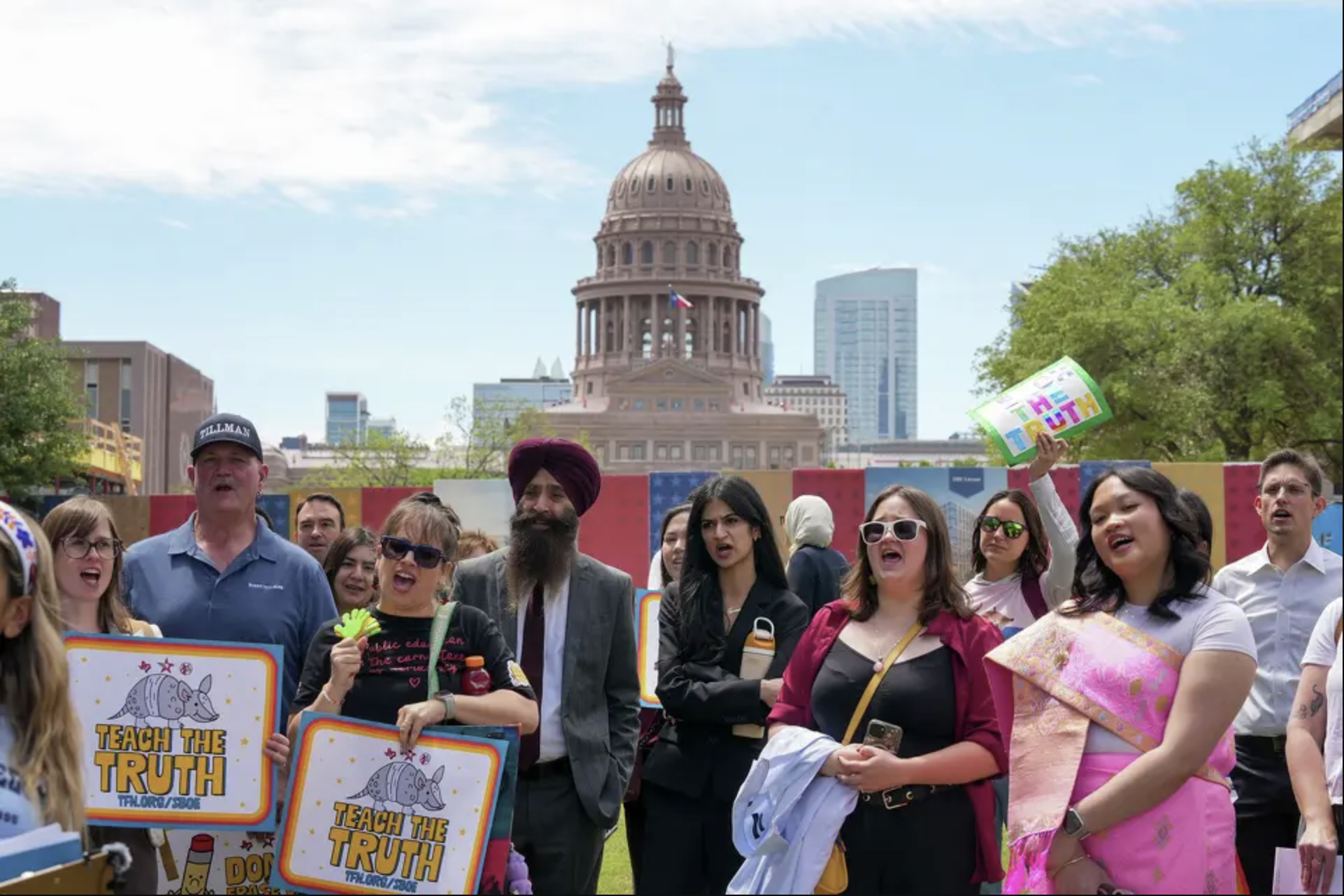
JN: What happens when students are taught simplified, incomplete, or distorted versions of history?
AK: When students are taught a simplified or distorted version of history, the damage extends past their education. Students who don’t see their communities reflected accurately in what they learn struggle to place themselves in society – affecting their sense of belonging, their quality of education, and how they are treated by their peers.
In 2024, 93% of Asian American youth reported experiencing racial discrimination at school, and in the past five years, anti-Asian sentiment and Islamophobia have continued to rise, leaving many students feeling unsafe at school. When our standards misrepresent our students, it tells them that they don’t matter, and they don’t have an incentive to be civically engaged to better their communities.
CW: I completely agree with Akeela. When students are taught revisionist and whitewashed histories, they lose opportunities to see themselves, their families, and their communities as part of the American story. As a classroom teacher, I saw how many students had little or no prior knowledge of Japanese American incarceration. When they encountered this history for the first time, they had important questions: How could this happen? Why didn’t more people stop it? What did people do to resist? How does this connect to what is happening now?
Those are exactly the kinds of questions students should be asking. But censorship and restrictive standards make it harder for teachers to support that kind of learning.
Distorted history also limits students’ ability to recognize injustice in their own state and in their own time. For example, Japanese American families were once targeted by alien land laws that restricted their ability to own land because they were seen as perpetual foreigners and threats to national security. Today, we are seeing renewed efforts in Texas to restrict land ownership based on national origin or perceived foreign threat. We are also seeing Muslim communities targeted through policies and rhetoric that frame them as dangerous.
If students only learn a sanitized version of the past, they may not recognize those patterns when they reappear. A strong history education is critical and helps students understand that injustice is not only something that happened “back then.” It is something people have resisted across generations, and something we are responsible for confronting now.
JN: This is all really alarming. What can people do right now, especially Texans who want to speak up?
AK: June is Immigrant Heritage Month. Here are some actions that Texans can take to support our fight at the State Board of Education:
- Submit Public Comment by June 15 at 5:00 PM CT
- Check out our toolkit
- Contact your representative
- Be ready to testify the week of June 22. (Registration opens on June 16)
CW: People are speaking up. Educators, students, families, historians, and Texas-based organizations are paying close attention and pushing back. That matters.
For Texans, as Akeela mentioned, one of the most immediate actions is to submit public comment by June 15 at 5:00 pm CT. Public comment can feel intimidating because this process is confusing and bureaucratic, but that is exactly why it is important for people to participate. Decision-makers need to hear that Texans want honest, accurate, inclusive, and developmentally appropriate social studies standards.
For those specifically concerned about Japanese American incarceration, I think it would be helpful to name what stronger standards should include: accurate terminology, attention to constitutional rights and civil liberties, the role of racism and wartime hysteria, the experiences of families and communities, resistance and redress, and connections to broader histories of exclusion, immigration, and belonging.
Below are some sample changes we would recommend. Feel free to copy and paste these into your public comment!
For 7th Grade Social Studies:
- We recommend changing Grade 7, Standard 7E from “analyze the causes and effects of the internment of Japanese Americans during World War II (H,S)” to “analyze the causes and effects of the incarceration of Japanese Americans during World War II (H,S).”
- The change to “incarceration” more accurately refers to the exclusion of Japanese Americans, most of whom were U.S. citizens.
For 8th Grade Social Studies:
- We recommend changing 8.13K, which ask students to “identify on a map World War II prisoner-of-war camps in Texas, including Hearne (H, Geo/C, S)” to 8.13K: “identify on a map World War II prisoner-of-war camps and Japanese American incarceration camps in Texas, including Hearne and Crystal City, and describe the treatment of detainees and the constitutional questions raised by wartime incarceration (H, G/Civ, Geo/C, S).”
- As The Social Studies Advocate explains, “Teaching wartime detention in Texas through POW camps alone tells only half the story.” Omitting Crystal City leaves out a major Texas chapter of Japanese American incarceration and limits students’ opportunity to examine larger issues about Crystal City relating to the constitution and citizenship. We support this recommendation and have made one terminology change: replacing “internment” with “incarceration” for greater historical accuracy.
For High School US History
- Densho recommends revising 14(E) which currently asks students to “describe the contributions that the American homefront made to World War II, including manufacturing, labor migrations, rationing, the Manhattan Project, the Women Airforce Service Pilots (WASP), Rosie the Riveter, the Bracero Program, and Japanese internment (H, Geo/C, E).” We ask that “Japanese internment” be omitted from the list of contributions on the American homefront so that 14(E) reads: “describe the contributions that the American homefront made to World War II, including manufacturing, labor migrations, rationing, the Manhattan Project, the Women Airforce Service Pilots (WASP), Rosie the Riveter, and the Bracero Program (H, Geo/C, E).” In addition, like The Social Studies Advocate suggests, Densho recommends adding a new standard: “analyze the domestic impact of World War II on civil liberties, including the forced removal and incarceration of Japanese Americans under Executive Order 9066 and the subsequent legal challenge in Korematsu v. United States (H, G/Civ).”
- As The Social Studies Advocate and Brian note, Japanese American incarceration was not a homefront “contribution” to the war effort. Unlike the other examples listed in this standard, Japanese American incarceration was a gross civil liberties violation. Finally, we are also advocating for the use of the words “removal” and “incarceration” and rather than “relocation” and “internment,” respectively.
JN: Courtney, for people outside of Texas, what forms of solidarity or support would be meaningful?
CW: First, stay informed and understand that this is not only a Texas issue. The same strategies being used here are showing up in other states, and the outcomes in Texas can influence curriculum and instructional materials across the country.
Second, amplify and support the work of Texas-based partners and organizers, including Asian Texans for Justice and Texas Freedom Network. This process is confusing and convoluted by design. As a former Texas public school teacher, I rely on these organizations to help me understand what is happening and how people can take action.
People outside Texas can also share Densho’s concerns with their networks, especially educators, families, and organizations committed to honest history and history education. These conversations cannot stay siloed.
And finally, do not write Texas off. There are so many people here fighting for honest, inclusive, and accurate education. Solidarity means seeing and supporting that work, not assuming the state is a lost cause. Texans are organizing, testifying, teaching, and refusing to let students be denied the education they deserve.
JN: Even with everything that is happening, what gives you hope?
AK: This fight is not new. In 2010, community advocates faced similar challenges over Texas social studies standards, and those TEKS were adopted when I was in the fourth grade. But despite those flawed standards, I was lucky. I had educators who went beyond the curriculum, who made history relevant, and who connected me to the world beyond my classroom. This motivated me to become an advocate for inclusive curriculum because our students deserve curriculum that represents them accurately. At the April SBOE meeting, I ran into my high school U.S. history teacher. It was in her class that I learned the connection between history and civic engagement. Great educators are our last line of defence against a bad curriculum, and they give me hope for our students.
CW: As always, students give me hope. Students have shown up again and again to demand an education that is honest, rigorous, and inclusive. They are asking for depth. They are asking to see their communities represented accurately. They are asking adults to take their learning seriously.
That matters because young people understand that history is not just about the past. It shapes how they understand themselves, their communities, and the choices they can make in the present. When students speak up for honest history, they remind us what this fight is really about.
I also find hope in educators and community organizations who continue to teach with care, even under difficult conditions. Bad standards can do real harm, but they do not erase the commitment of teachers, students, families, and advocates who know that young people deserve better. That collective commitment is powerful.
—
Interview with Courtney Wai, Densho Education & Public Programs Manager, and guest contributor Akeela Kongdara.
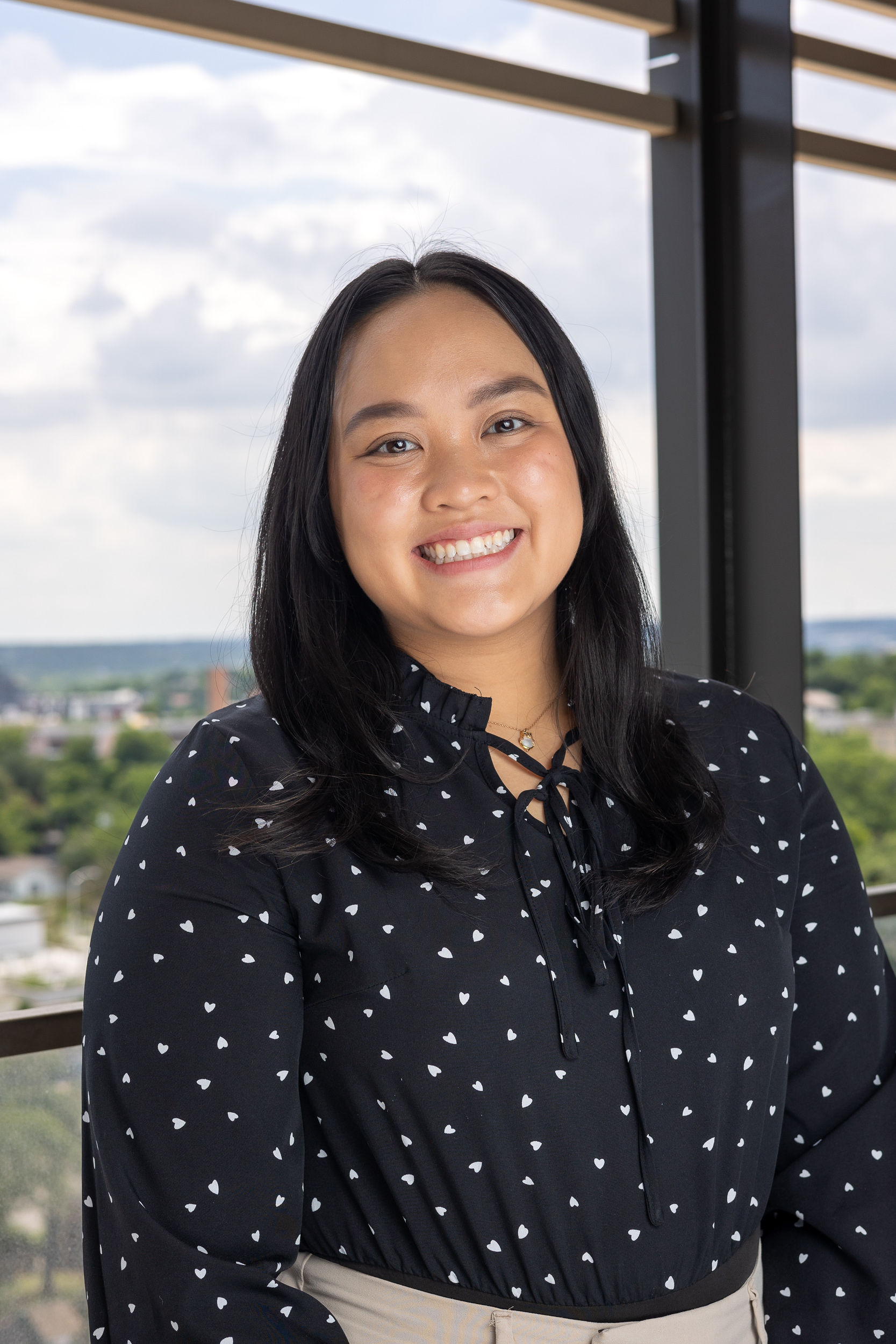
Somprathana Akeela Kongdara is a proud third-generation Lao Texan and granddaughter of Lao refugees. Deeply rooted in both her Lao heritage and her Texan upbringing, Akeela is guided by the African proverb, “It takes a village to raise a child” — recognizing the collective influence that has shaped her identity, values, and commitment to justice.
Armed with a B.S. in Political Communication and a B.A. in Asian American Studies from the University of Texas at Austin, Akeela uses culturally responsive, ethnic studies frameworks to inform policy, outreach, and program development. She has championed data disaggregation, pushed for inclusive curricula, and fought harmful legislation affecting all Texans. Locally, she supports students through college applications and equips them with the tools to advocate for themselves and their families.
Today, Akeela works with youth across Texas to fuel their civic engagement and advocacy journeys — giving the rising generation the skills and confidence they need to champion their communities. Her aspiration is a Texas where Asian Texan youth see themselves as powerful agents of change, fully equipped to shape the policies and institutions that affect their lives. In her free time, she enjoys supporting women’s sports, attending concerts, and spending time with family.