June 9, 2026
Densho Executive Director Naomi Ostwald Kawamura reflects on what it means to teach history responsibly, as debates over social studies standards—including recent proposed changes to Texas’s curriculum—reveal that how we teach history matters just as much as what we include. For histories like the WWII incarceration of Japanese Americans, meaningful education requires students to grapple with questions of race, civil liberties, democracy, and belonging. Kawamura makes clear that preserving history is only meaningful if future generations can learn from it, which is why Densho is committed to supporting educators, especially as they navigate this increasingly contested terrain.
Learn more about the current effort to reshape social studies standards in Texas in a conversation with Courtney Wai, Densho’s Education and Public Programs Manager, and Akeela Kongdara, Senior Programs Associate of Asian Texans for Justice.
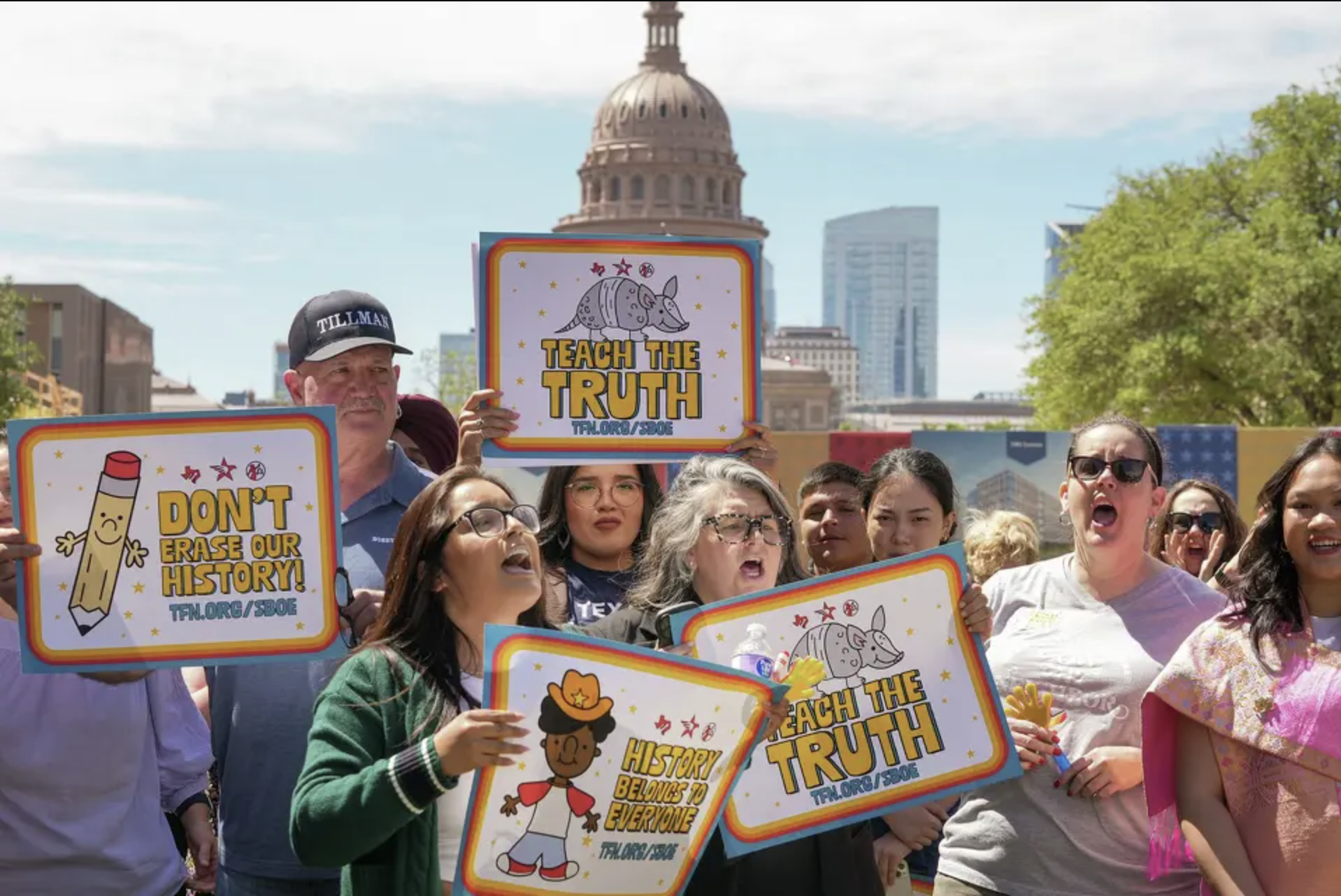
I recently attended a meeting where a politician posed a rhetorical question, “How many of us would actually encourage our own children to go into education?” This question stayed with me. Not because I disagreed that educators are often undervalued, though they are. Rather, it has stayed with me because it has pointed to something deeper about what we are asking of teachers, particularly at a moment when the teaching of history itself is becoming more contested in the United States.
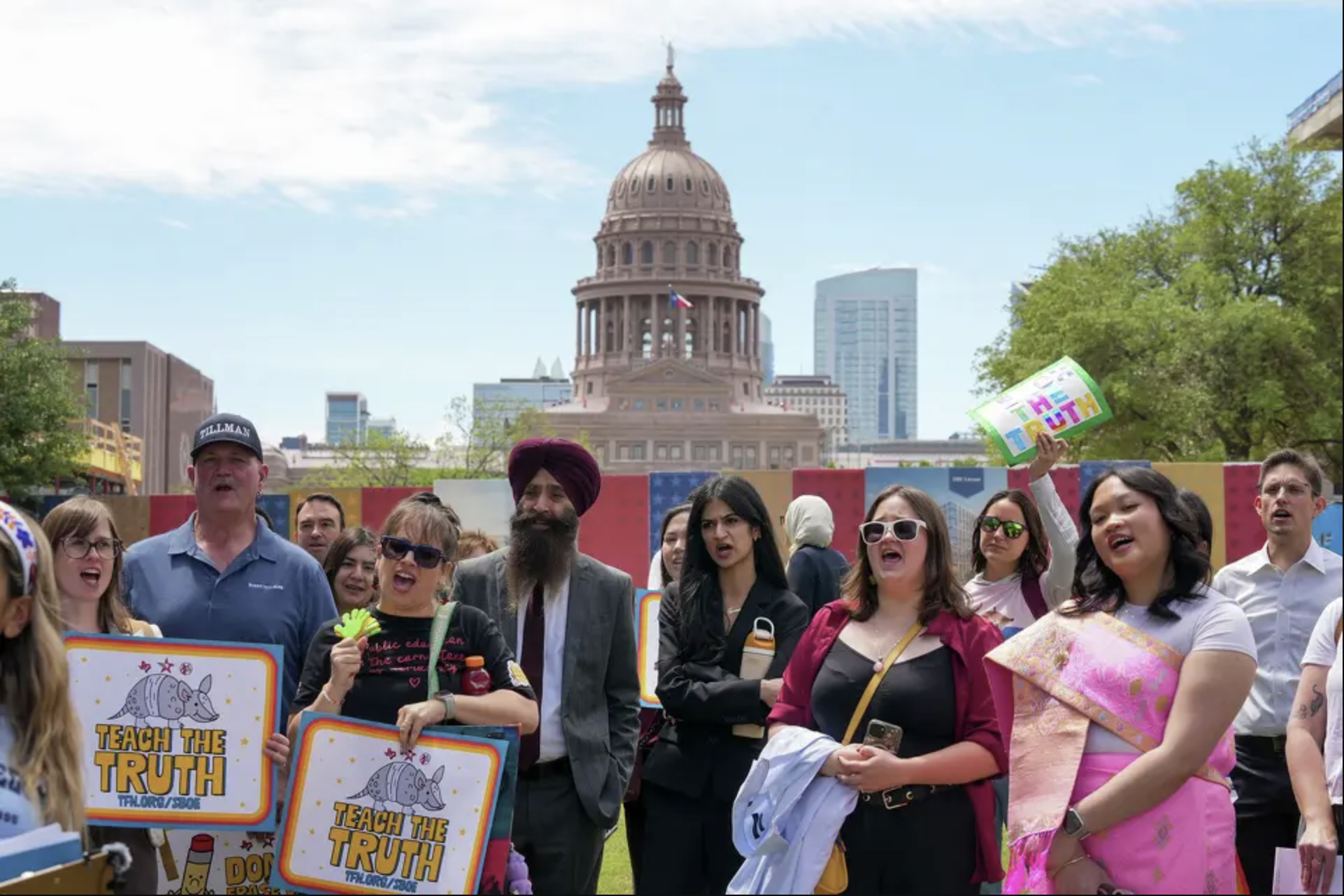
Questions about the role of education are not theoretical. They are shaping active debates about the purpose of education in the United States, including recent proposed changes to Texas social studies standards.
For many Americans, Texas curriculum standards may seem far removed from everyday life. Yet curriculum standards quietly shape what students encounter in classrooms, what instructional materials are developed, how teachers are supported, and ultimately how young people come to understand the past.
Historically, Texas has played an outsized role in shaping history education in the United States. With roughly 5.5 million children in its public education system, the state’s textbook adoption decisions long influenced what publishers produced for educational markets and extended the impact of these standards far beyond its borders. While the growth of digital publishing and the prevalence of online resources has somewhat diminished this influence, public education in Texas continues to influence what is taught in classrooms, shape public debate, and determine how students encounter the past in their classrooms across the nation.
At first glance, debates about social studies standards can appear to concern a relatively simple question: What historical content should be included? But history and social studies education is not just about what events or historical figures we include in the curriculum. It is also about how we make meaning of the past and, therein, what histories we deem meaningful. This distinction matters deeply for histories such as the World War II incarceration of Japanese Americans.
What matters is not only whether this history is included but how it is framed and understood. Without attention to context, causality, and consequence, this history risks losing the very meaning that makes it relevant to today. The existing Texas high school U.S. history standards require students to analyze major issues of World War II, including the wartime incarceration of Japanese Americans as a result of Executive Order 9066. That inclusion matters. That inclusion is important and should be preserved.
This is why the recent standards revision process is significant. In one earlier version of the standards introduced by the Texas State Board of Education, the existing standard was removed, which meant that the mention of Executive Order 9066 was struck before later being restored in a subsequent draft. Its restoration matters. But as the standards continue to be reviewed, nuanced historical understanding will require more than naming events. Standards can require students to be able to name important events yet set a low bar for what students are asked to do with them. If the wartime incarceration is treated primarily as content to be recalled, students may learn that it happened without being asked to examine why it happened, who was harmed, and what were its long-lasting consequences.
Rather, students should engage with critical questions like: What role did racism, fear, political leadership, and institutional failures play in making mass incarceration possible? What happens when constitutional protections become vulnerable in moments of national crisis? How do communities respond, resist, survive, and rebuild?
Without these types of questions, Japanese American wartime incarceration risks becoming an isolated historical episode rather than an opportunity to examine how democratic institutions function under pressure and what responsibilities we carry forward across generations.
Increasingly, teaching these histories is also demanding educators to navigate difficult terrain. To teach about Executive Order 9066 today may also mean helping students engage with questions about race, citizenship, civil liberties, democracy, and belonging. It also asks students to take a critical eye to the role of government in a political climate where this approach to history education is dismissed as divisive or “corrosive ideology.” This is part of why supporting educators now matters so deeply.
I began my career as a teaching artist and classroom teacher. I have dedicated much of my life to education. Would I encourage my own daughter to teach? I would. But I also want her to know that she would not be doing this work alone. If we collectively believe that history education matters, educators cannot be left to shoulder these challenges by themselves. They need access to trusted historical materials, strong professional communities, and institutions willing to stand beside them in teaching difficult histories thoughtfully and responsibly.
At Densho, this belief has shaped our growing investment in education over the past three years. Preserving history is not enough. We must also be responsible for helping to ensure that histories such as the wartime incarceration remain meaningful to future generations. Debates over social studies standards are not simply about historical content. They reveal deeper assumptions about the role education plays in a democratic society.
—
By Naomi Ostwald Kawamura, Densho Executive Director.
Learn more about the current effort to reshape social studies standards in Texas in a conversation with Courtney Wai, Densho’s Education and Public Programs Manager, and Akeela Kongdara, Senior Programs Associate of Asian Texans for Justice.