July 1, 2026
In this collaborative reflection, four Nikkei researchers from the United States, Canada, Brazil, and Australia share insights from their ongoing project examining how contemporary Nikkei art and artists engage with themes of memory and identity across borders. Central to their inquiry is the term “Nikkei” itself – a word that shifts in meaning across national contexts, carrying distinct histories, politics, and emotional weights for different communities. The researchers’ reflections are based on interviews with artists as well as attending exhibitions and performances in their respective countries. Co-written by Japanese Canadian scholar Andrea Mariko Grant, Japanese Australian artist Elysha Rei, Densho’s Jennifer Noji, and Japanese Brazilian artist Taís Koshino, the piece explores what it means to belong, or not belong, to the wider Nikkei diaspora at this particular social, historical, and political moment.
Introduction
We are part of a collaborative research project looking at contemporary Nikkei art in Canada, the US, Brazil, and Australia. Our focus is on how Nikkei artists explore the themes of memory and identity in their work, how these themes may shift and transform as they cross borders, but also how they may remain constant. We consider work that addresses the histories of Nikkei incarceration, internment, dispossession, and exile during the Second World War, but also work that does not and may even refuse to address these histories.
We are all Nikkei ourselves, and two of us are also (practicing and accomplished) artists. We have found that the artists and artworks we discuss below have all clarified questions that may have been haunting us, finding new vocabularies or forms to express things we have long thought or felt about ourselves, our families, and our communities. In this project we are asking: what does it mean to bring us all under this umbrella of Nikkei? Does it unite us or push us further apart? Perhaps it does both. What does it mean to unite us as a diaspora? And who might that exclude?
One question that we each grapple with is the very terms of our project: what exactly does “Nikkei” (日系) mean, and is it as transnational as it is often assumed? What we have discovered through the course of our ongoing research is that the term Nikkei shifts and turns across borders, and that its meanings have changed over time. Some of our interlocutors see it as a way to distance ourselves from imperial powers; others see it as a way to displace us from our homes, marking us as still and ever foreign. In some contexts, Nikkei isn’t even widely recognised or used.
It is clear that Nikkei has very different meanings across Canada, the US, Brazil, and Australia. Perhaps this is unsurprising given the very different histories and politics of our respective national contexts. In our understanding, Nikkei is a dynamic, affective, and ever shifting term that can never capture all the complexities of our identities. And yet as different as our contexts – and individual and family experiences – are, we are still defined by something that seems to hold us together, however loosely or uneasily. At moments we embrace the term, at others we reject it, but we always critically reflect on it. Here the insightful reflections of Brynn Saito and Brandon Shimoda become instructive: “Nikkei implies, and often enforces, an inherent connection to a common imperialist, nationalist origin, from which many of us are working to free ourselves in our movements forward.”1
This research has been ongoing since February 2025. It involves each of us interviewing Nikkei artists in our respective communities, attending exhibits and performances, and visiting artists in their studios or homes. In each section, we explore what the term Nikkei means in each context and consider several artworks by Nikkei artists that address the themes of memory and identity. In no way is what we present below comprehensive – rather, it is an attempt to document and engage with work that has caught our attention as we grapple with what it means to belong or not to the wider Nikkei diaspora at this particular social, cultural, historical, and political moment.
Nikkei Artists in the United States
Jennifer Noji
The term “Nikkei” has a complex history in the US, and its meaning continues to shift and evolve in response to community dynamics and preferences (Discover Nikkei). Long before “Nikkei” gained traction in the Japanese American community, generational terms like Issei, Nisei, and Sansei (first, second, and third generation, respectively) were more commonly used for self-identification. While “Nikkei” is now widespread, and sometimes used interchangeably with “Japanese American,” how exactly it is to be used, and who is or is not considered Nikkei, is still being worked out (Densho).
The Japanese American community has wrestled with what the term should mean as its demographics have shifted, with low immigration rates, an aging population, rising interracial marriages, and dispersal away from urban Japantowns, all provoking ongoing discussions about the community’s future (Yamashiro). The term seemed to gain traction in the early 2000s, when the community grappled more formally with questions of inclusion, and new Nikkei-named organizations and initiatives began to form (Discover Nikkei). Today, Nikkei identity in the US is understood as expansive, multifaceted, and evolving,2 raising questions about how history, cultural memory, family traditions, and community access shape what it means to belong to the global Japanese diaspora.
Among the US-based artists I interviewed, the meaning and importance of being “Nikkei” or “Japanese American” varied drastically. Some identified as “Japanese American,” one as “Okinawan American,” while others identified as “Nikkei,” and a few used the words interchangeably. Notably, several artists identified not only as “Japanese American” or “Nikkei” but also as descendants of the World War II incarceration, with some specifying a particular wartime camp, such as “a Topaz descendant” or “Minidoka descendant.” For most, being Japanese American or Nikkei was not simply a designation of immigrant backgrounds and ancestral roots but rather deeply connected to their family’s wartime experiences.3
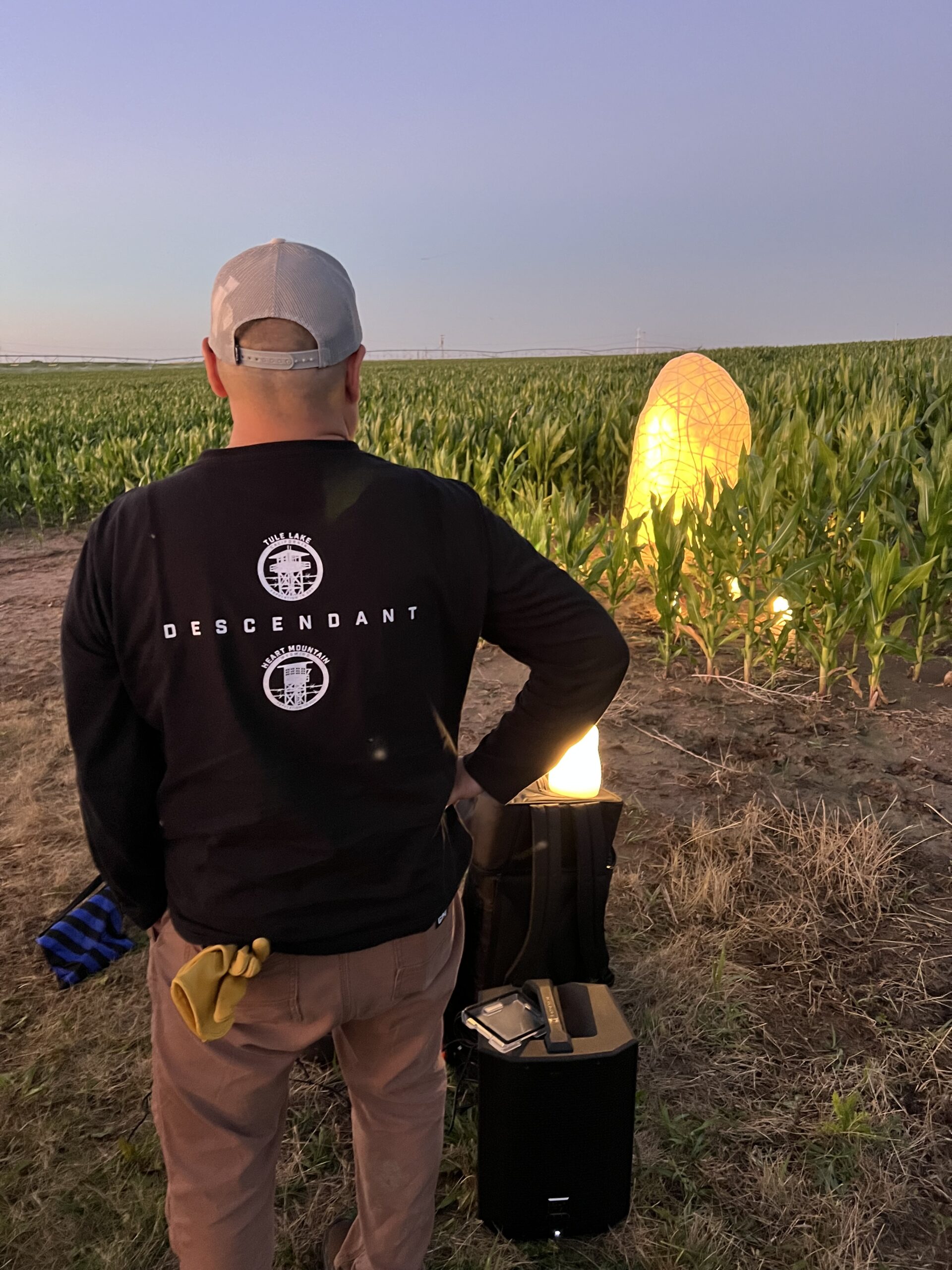
Several artists, including Glenn Mitsui and Nancy Ukai, felt strongly about connecting their “JA” or “Nikkei” identity with the history and legacy of WWII incarceration, expressing a sense of responsibility to their incarcerated ancestors. Mitsui explained that his work with the Wakasa Spirit Stone project – commemorating people who were killed during the WWII incarceration – is “something we have to do… to pay homage to them, and to complete our mission.” He adds: “It’s just something in the roots of who we are as Japanese Americans.”
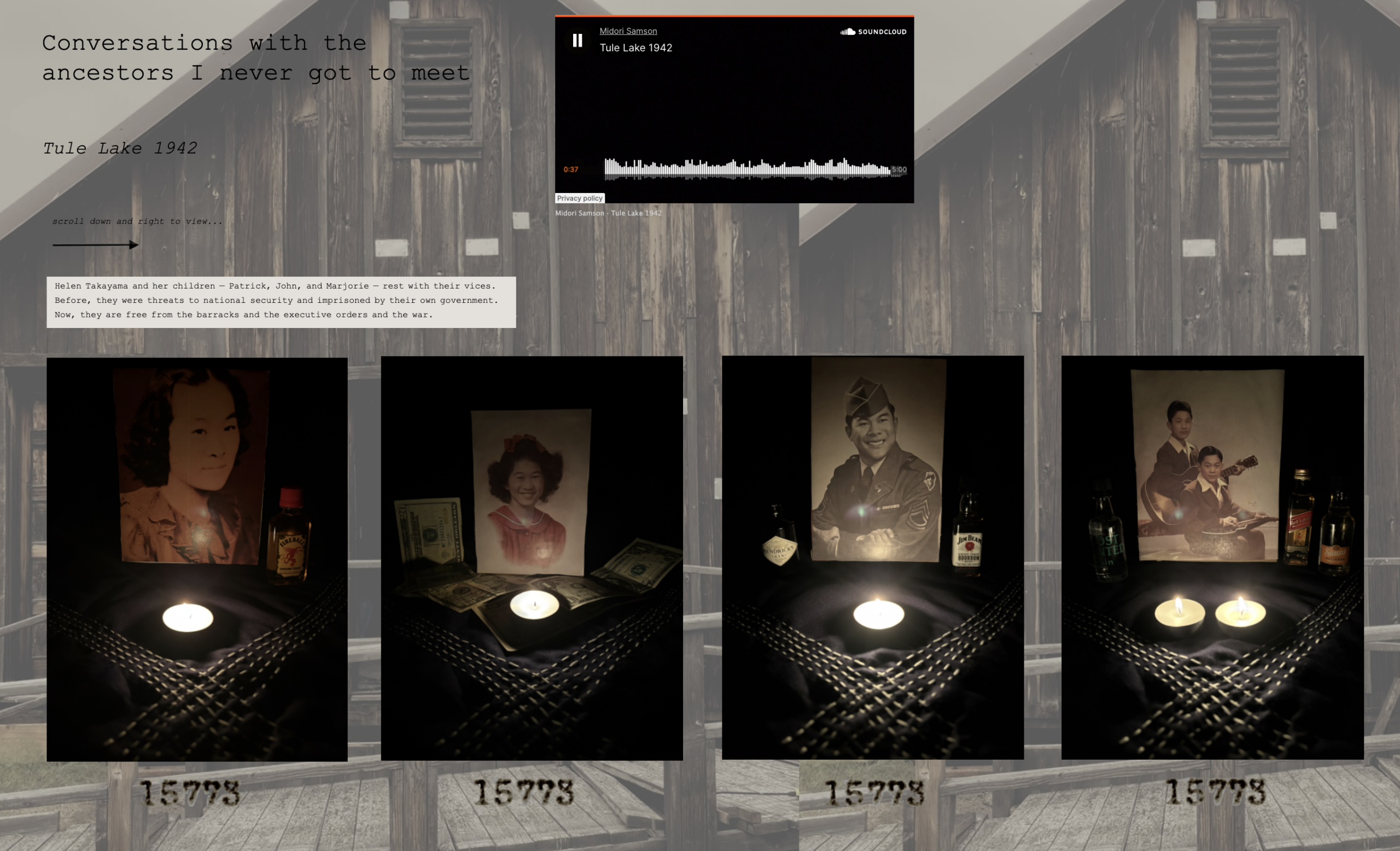
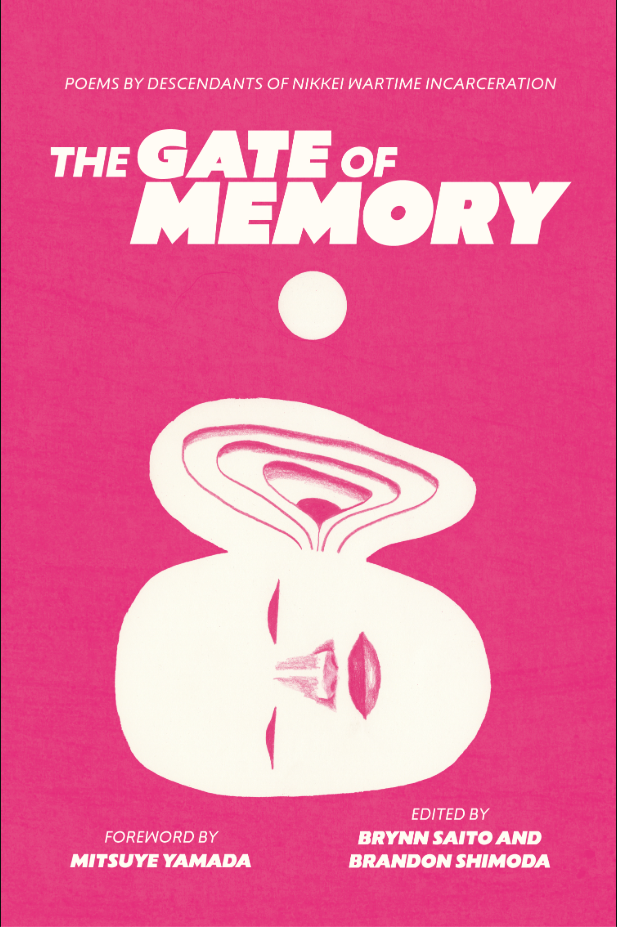
Other artists, including Midori Samson and Brandon Shimoda, expressed similar sentiments, describing feelings of responsibility to their ancestors – feelings that are clearly reflected in their work. In fact, both Samson’s virtual exhibit “Conversations with the ancestors I never got to meet” and Shimoda’s recent co-edited volume The Gate of Memory: Poems by Descendants of Nikkei Wartime Incarceration (referenced above) explicitly thematize topics of ancestral connection, belonging, and diasporic memory.
Multiple artists also discussed being Nikkei as a “diasporic” identity connecting them to the larger global Japanese diaspora. Artist traci kato-kiriyama explained their preference for “Nikkei” over “Japanese American,” saying: “The reason why I love ‘Nikkei’ is because [it] is a conjoining term. It’s a gathering term. It’s literally a diasporic term, and that has a power to allow us to come together from different cultures and to talk about linkages.” In this sense, “Nikkei” offers an inclusive identity category that creates belonging and community.
In contrast, kato-kiriyama describes “Japanese American” as less about connecting people to each other and more about tying them to nation states. They explain that while the term is “useful” for “grappling with where we came from” and “what it means to be in this body that is attached to two governments,” such attachment to Japan and the US needs “incredible amounts of questioning.” While recognizing that “most cultures, most governments, need to be questioned,” kato-kiriyama claims that this need is “very obvious to me when we talk about two imperialist countries with horrible military histories.”
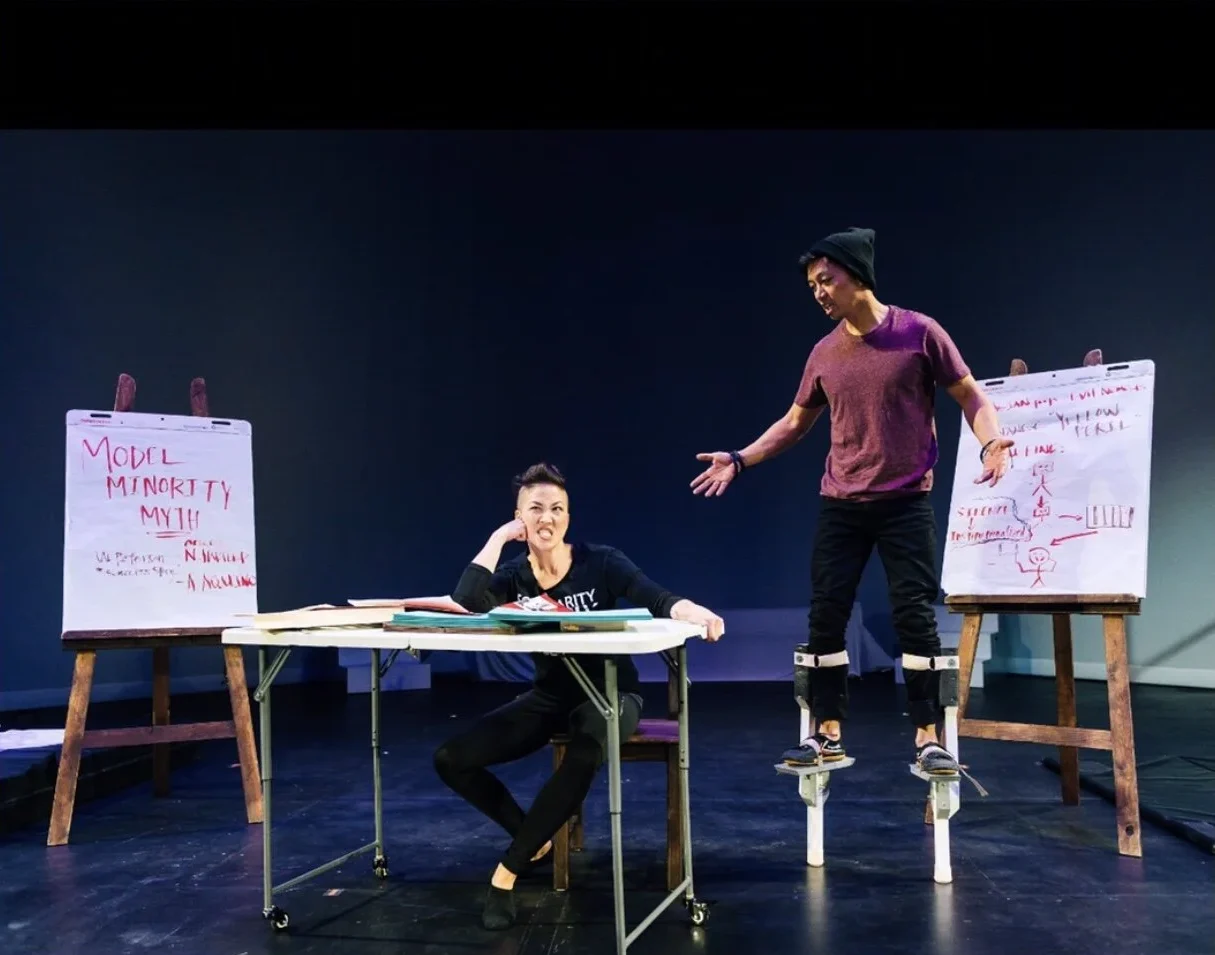
Raising important political, social, and historical considerations, kato-kiriyama makes clear that terms such as “Nikkei” and “Japanese American” carry complex, multifaceted, and subjective meanings for different people that extend far beyond one’s ethnic lineage or place of origin. Additionally, kato-kiriyama emphasized that “Nikkei” is not something that defines a person but rather comprises one facet of someone’s complex identity. For them, being Nikkei is not something performative but a part of who she is, inseparable from her other identities, which she describes as forming “a kaleidoscopic lens,” which “we all have a different version of.”4
Nikkei Art in Canada
Andrea Mariko Grant
From what I’ve observed in Canada, Japanese Canadian artists tend to identify themselves as Japanese Canadian, although there is a growing interest among some younger artists to identify as Nikkei. Several Yonsei artists, for example, prefer the term Nikkei as it is more expansive and diffuse, seemingly able to capture other forms of identity under its umbrella (multiracial heritage, for example). However, older generations of Japanese Canadians tend to be less comfortable with the term Nikkei, believing that it continues to mark the community as “other,” associating them not with Canada but with Japan. When the Japanese Canadian Museum in Burnaby, British Columbia, changed its name to the Nikkei National Museum and Cultural Centre, this caused no shortage of controversy, with some community members believing that the term Nikkei was little known or used and confusing. Some artists I spoke to thought Nikkei was a helpful short hand; others didn’t use it because it often prompted more (intrusive) questions.
In what follows, I consider two recent works that explore Japanese Canadian memory and identity in the present moment. This is in no way an exhaustive list. In our wider project, I’m interested in work made by Japanese Canadian artists, both those with family histories of internment5 and also those whose families may have immigrated after the Second World War. In this short piece, however, I consider one work that directly addresses a particular moment in the history of the internment and one work that speaks to wider questions of connection/disconnection to Japanese identity as lived in the diaspora.
The Shape of Loss (2025) by multidisciplinary Sansei artist Louise Noguchi explores the confiscation of Japanese Canadian fishing boats in 1941, shortly after Japan bombed Pearl Harbour. Claiming national security concerns, the Royal Canadian Navy and the Royal Canadian Mounted Police seized more than 1,100 fishing boats from Japanese Canadian fishers on the West Coast of British Columbia. A few months later, the Canadian government issued Order-in-Council P.C. 1486 that ordered all persons of the Japanese race to leave the West Coast, putting into devastating motion the uprooting, internment, and eventual dispossession of 22,000 Japanese Canadians.
Instead of safeguarding the fishing boats, the Canadian government later sold them off without their owner’s consent, much like it did with other confiscated properties, businesses, and possessions.
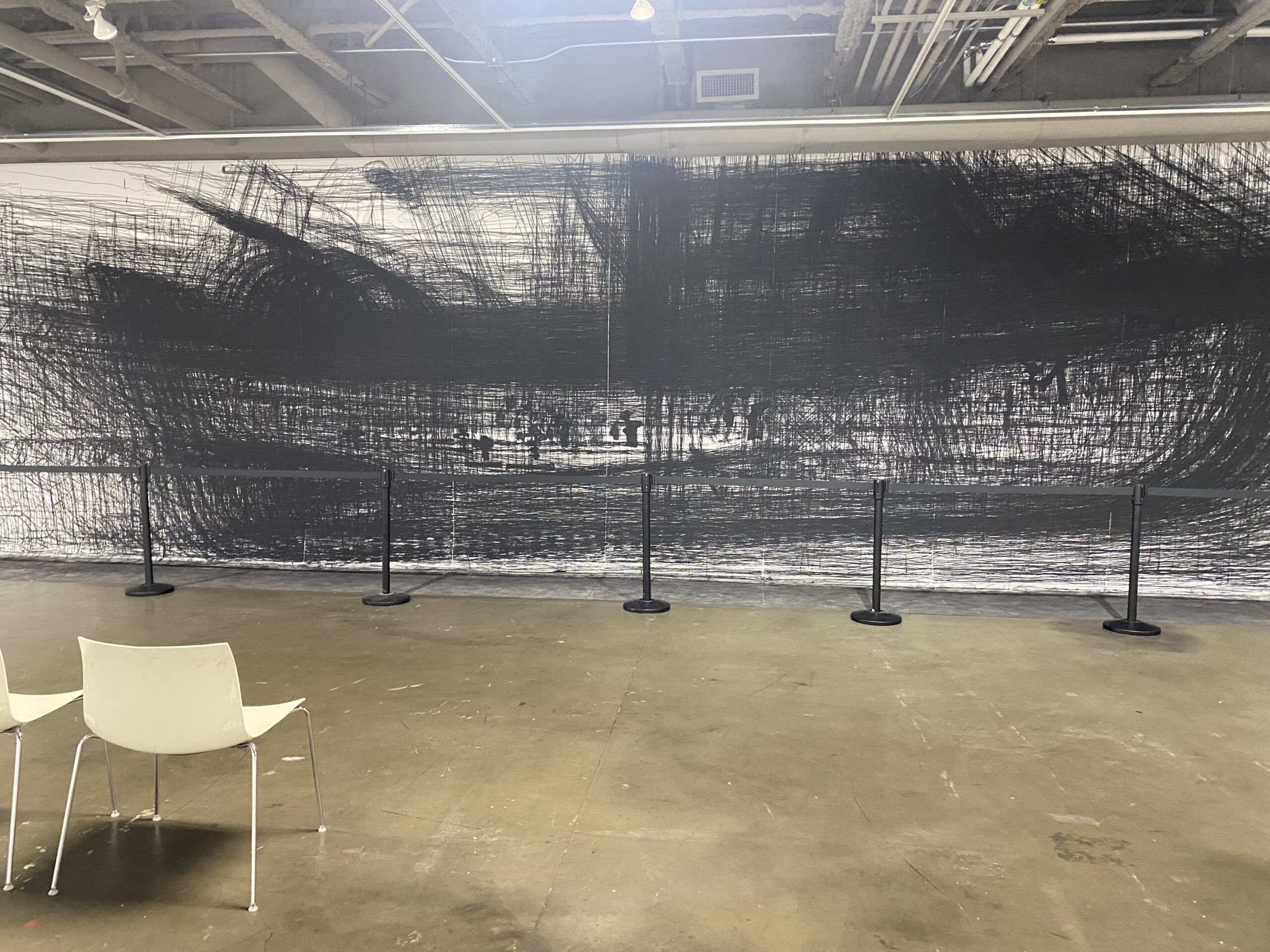
The Shape of Loss addresses this shameful history. As part of Nuit Blanche, an all-night arts event in Toronto, it consisted of a live performance over 12 hours, where announcers – descendants of the original boat owners or those with family ties to the fishing industry – read aloud each boat’s name, owner, type, and size, and nine artists drew a life-size hull of each boat. On the opposite wall of the boat drawings, Noguchi had carefully handwritten the same information for each boat, recreating an archival ledger. For the live performance, around 300 boats were traced, with the remaining boats finished afterwards.
Although I had not been in Toronto to see the work live, visiting it afterwards at the Japanese Canadian Cultural Centre in November 2025, I was immediately struck by its sheer size and scope. Some of the hulls were up to 21 metres in length, and they dominated the gallery’s wall. The tracing and retracing of the boats’ silhouettes created a sense of eeriness or haunting, as if the boats were fading in and out of my vision, bobbing along the water. It made the loss of the boats concrete, something impossible to deny. Yet it also gestured towards everything else that had been lost: some families never returned to the West Coast or took up fishing again. (Japanese Canadians were only allowed to return to the West Coast in 1949, which effectively dispersed the community across the country.) At the same time, however, Noguchi’s project also offered a site of (re)connection as Japanese Canadians with ties to this particular history had been able to meet through the project and performance, often for the first time.
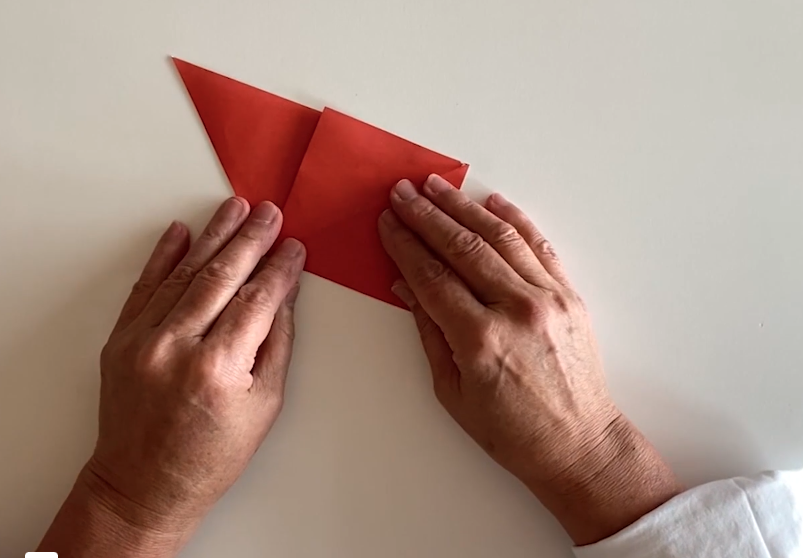
Other work by Japanese Canadian artists explores the possibilities of collaboration across media, location, and generation. A particularly poignant example of this is the collaboration between Baco Ohama, a Calgary-based artist who describes herself as “a sensorialist, a text walker, a maker, and one who engages in acts of writing”, and Jon Sasaki, a Toronto-based multidisciplinary artist. The pair were put together as part of a wider project called Yume. Digital Dreams, curated or “instigated” by Julie Tamiko Manning and Matt Miwa. For Ohama and Sasaki’s collaboration Misconstructions, they sent each other audio recordings of origami instructions over four weeks, which they could only listen to once and could not stop or replay. They then each video recorded themselves attempting to follow the instructions in real time.
The resulting origami objects are not what was originally imagined – it is hard to imagine, in fact, what they were intended to be. (A crane, a frog, a box?) While the project playfully captures the difficulties of digital communication, it also effectively captures the ambiguous ways in which Japanese Canadian artists engage with their own cultural heritage. That Ohama and Sasaki fail to ‘master’ a stereotypically Japanese artform gestures towards the fractured lines of cultural transmission within families and within the wider Japanese Canadian community.
Yet Misconstructions also captures how Japanese Canadian artists attempt to engage with that heritage on their own terms, and the mistakes or imperfections become their own kind of beauty. The resulting objects may not be what had originally been intended, but they still stand alone as art objects in their own right, suggesting a certain reclamation of what may have been lost. As the pair reflect in a written statement on the project, included during a virtual presentation of their work, “in the slippage between ‘what was intended’ and ‘what was understood,’ we found a rich source of productive, happy accidents.”
Nikkei Art in Brazil
Taís Koshino
Japanese immigration to Brazil officially began in 1908, marking the start of a long and complex history. Today, the Brazilian Nikkei community is the largest in the world. The Nikkei context in Brazil isn’t defined by a clear racial category, it’s more ambiguous, intimately intertwined with the abolition of slavery, stories of silencing, and a post-war desire to integrate into society. The Nipo-Brasileiro (Japanese Brazilian) identity is being shaped by multiple generations, Brazilian society’s view of this community’s ups and downs, and a sense of non-belonging. It’s not something fixed or rigid. Instead, it’s fluid and constantly changing. During the interviews, some artists didn’t identify with the term Nikkei, which is more associated with institutions that maintain certain Japanese traditions, but most were comfortable with the Nipo-Brasileiro term. Their artworks reveal an intricate picture of this scenario.
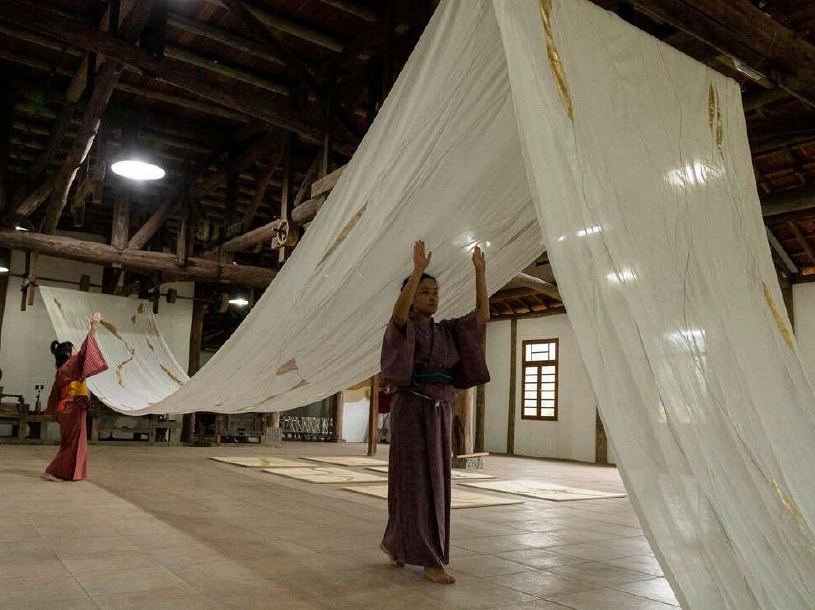
In the Kawa-Kami (2022) project, Juliana Matsumura created site-specific installations and a performance at Casarão do Chá (Mogi das Cruzes, São Paulo), a historic building related to early Japanese immigration. The installations consisted of Atravessar o Fim, a suspended textile, and M’Boijy, six wood blocks carved with images evoking a river’s path and covered with gold leaf, which were on the floor. For Confluência, the performance, Matsumura invited Erika Kobayashi, another Nipo-Brazilian artist who has conducted extensive research on the tea ceremony. Wearing kimonos, both artists walked slowly around the space, surrounded by the sound of rain and their voices reciting dates and narrating important moments connected to affective events involving the women in their families.
In her interview, Matsumura, who also has Afro-Indigenous heritage, discussed her relationship to Japanese ancestry through the body. She noted that during the performance, it was “probably the first time I wore a full kimono in my life,” disclosing a sense of distance and an attempt to claim this part of her heritage. This work navigates between ritual and natural elements and, in its movement, suggests that identity has a deep relation with territory and is negotiated, claimed, and shaped by life experiences.
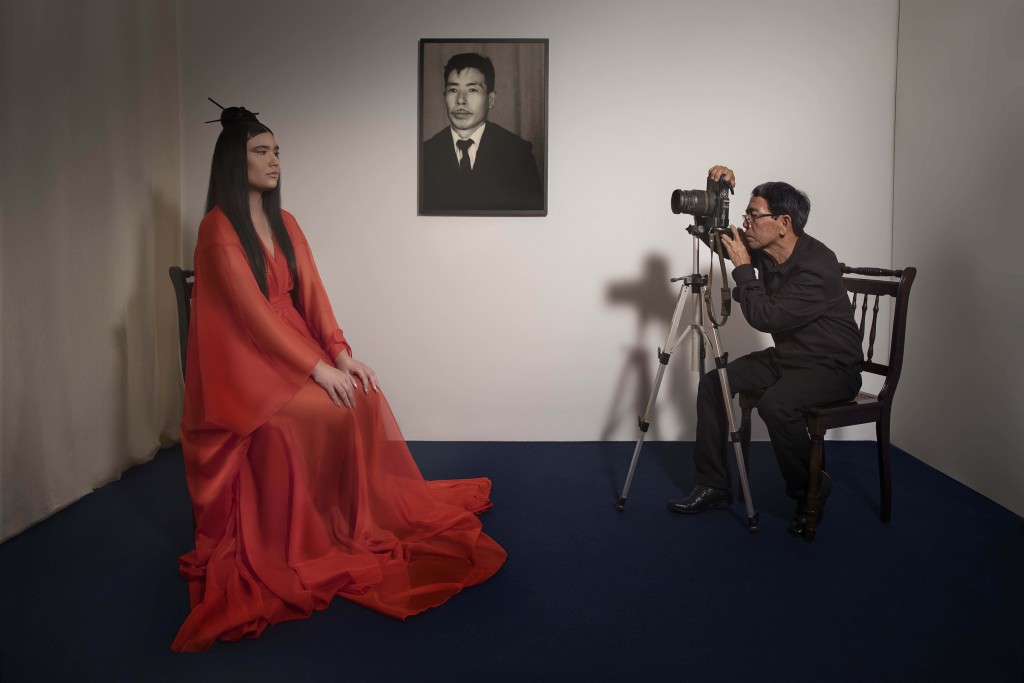
Alice Yura’s Foto Yura (2022) is a photo essay that reconstructs the space of the Yura family photography studio through the artist’s archive and memories. In this essay, Alice worked with her father and uncles, presenting a family history shaped by the photographic profession, part of a broader tradition present in many Japanese immigrant communities. In her interview, Alice explained that after her family moved from the interior of São Paulo to Mato Grosso do Sul, a more rural region of Brazil, her uncle learned photography. He was the eldest of seven siblings who would become photographers, including her father. The artist maintains the family’s photographic tradition, yet she breaks with the lineage of male photographers by presenting photography in her practice as artistic research rather than solely as a profession.
In the pictures, Alice wears an orange kimono that she designed herself, referencing both a childhood photograph of her sister and A japonesa (1924), by Anita Malfatti, an important Brazilian modernist painter. Through this series, Alice inserts herself into the photographic archive of the women in her family, since traditionally all of them had been photographed wearing kimonos and she, as a trans woman, had not yet been photographed in this way. Thus, by recreating Foto Yura, Alice both preserves and disrupts family traditions so that she, too, can belong. Yura’s work highlights how gender and race intersect in the understanding of bodies and how identity is continuously mediated by personal memory, family traditions, and collective history.
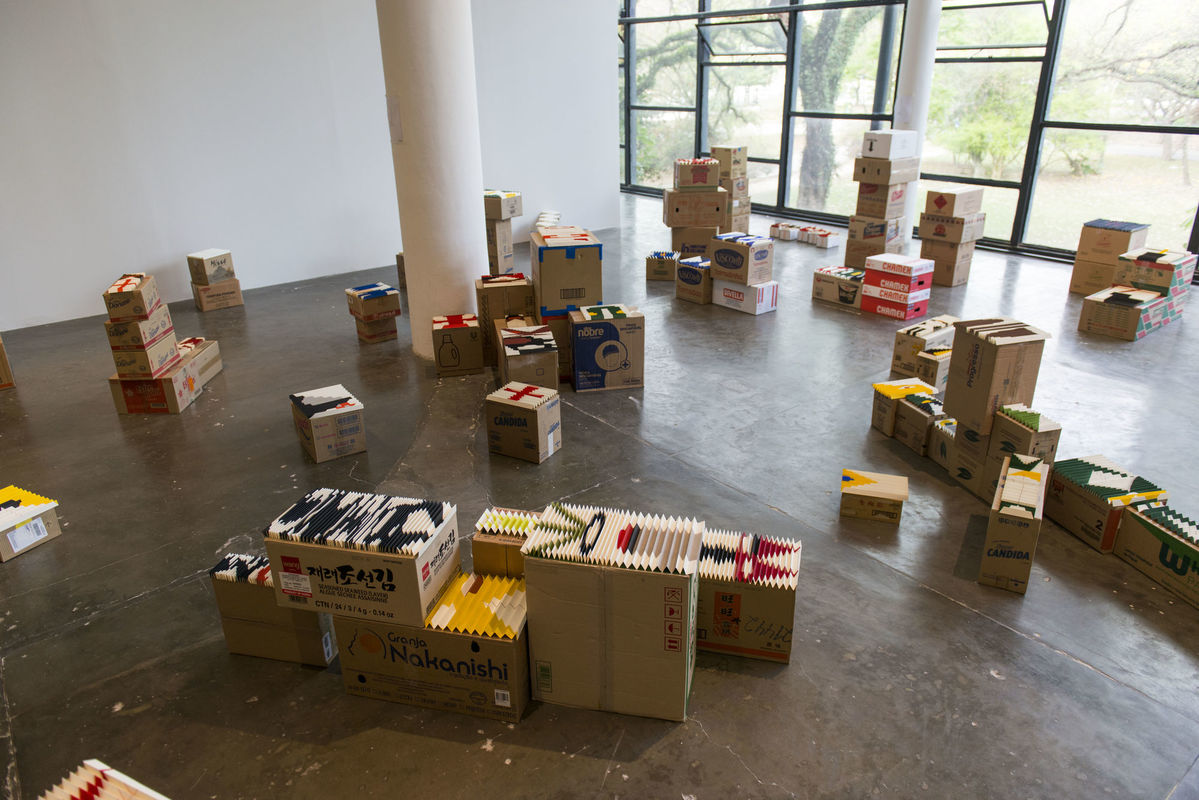
Menas (2015–2021) by Alice Shintani draws attention to the art system itself. The installation is composed of painted, folded papers placed over carefully selected cardboard boxes for Asian and cleaning products. At first glance, the paintings and folded papers may evoke a Japanese aesthetic, and this association is intentional. The work critiques the art system’s capture and commodification of identities, as well as the reduction of artworks to questions of identity and biography. After Menas was exhibited at the 34th São Paulo Biennial, Shintani donated all the works to the staff members, further challenging the art system’s notions of value, ownership, and circulation.
These works offer a glimpse into the complexity and multiplicity of Nipo-Brazilian identity in contemporary art. In these cases, identity isn’t defined by the preservation of tradition but by relationships to the present, memory, territory, and ancestry. Each artist engages differently with Nikkei identity, and each work reveals how this identity intersects with gender, labor, and environmental concerns, not as a unified aesthetic, but as a diversity of narratives and lived experiences that question what it means to be “Nikkei” in contemporary art.
Nikkei Art in Australia
Elysha Rei
In Australia, Nikkei identity among Japanese Australian artists is not widely assumed or inherited as an everyday term. This reflects broader observations that Japanese Australian identity has historically been under-recognised within national discourse, contributing to its relative invisibility and fragmentation. As a result, Nikkei identity in Australia tends to emerge not as a fixed label, but as a way of making sense of diasporic experience.
For some artists, this recognition arrives as a moment of clarity. Artist Kyoko Imazu, described only coming to understand herself as Nikkei when prompted to reflect on it in this research project, experiencing this realisation as both affirming and expansive. This reflects a broader pattern in the Australian context, where identity is often formed through dialogue, research, and community engagement rather than intergenerational transmission. In this sense, Nikkei functions as a connective framework, allowing artists to situate themselves within a global diaspora while articulating a distinctly local experience.
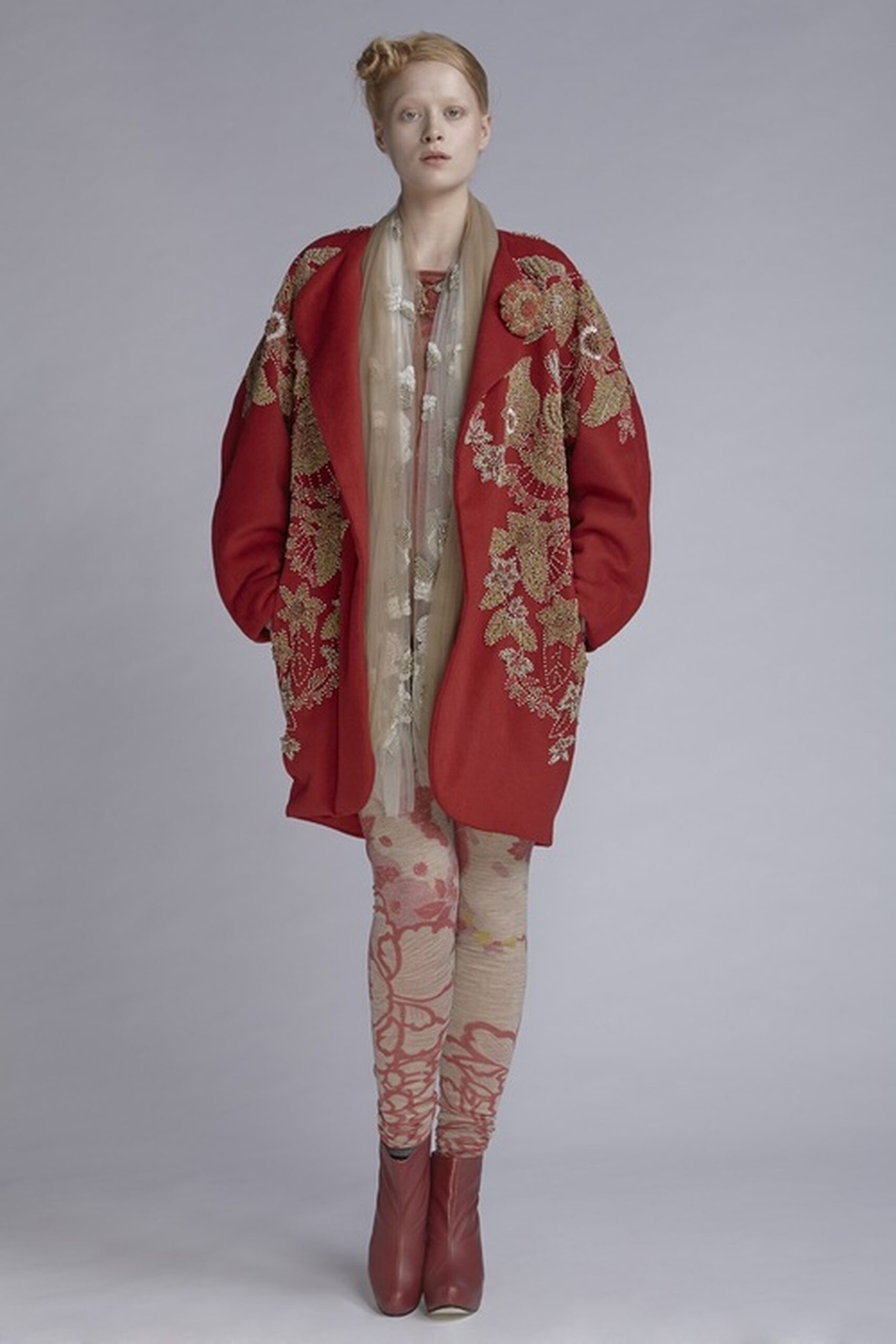
At the same time, not all artists feel compelled to adopt the term. Fashion designer Akira Isogawa has expressed a sense of distance from “Nikkei” as an identifier, instead positioning himself within a more fluid, global understanding of identity. Importantly, the absence of the term does not indicate an absence of cultural connection. Rather, identity is maintained through lived practices such as language, relationships, and ongoing engagement with Japan.
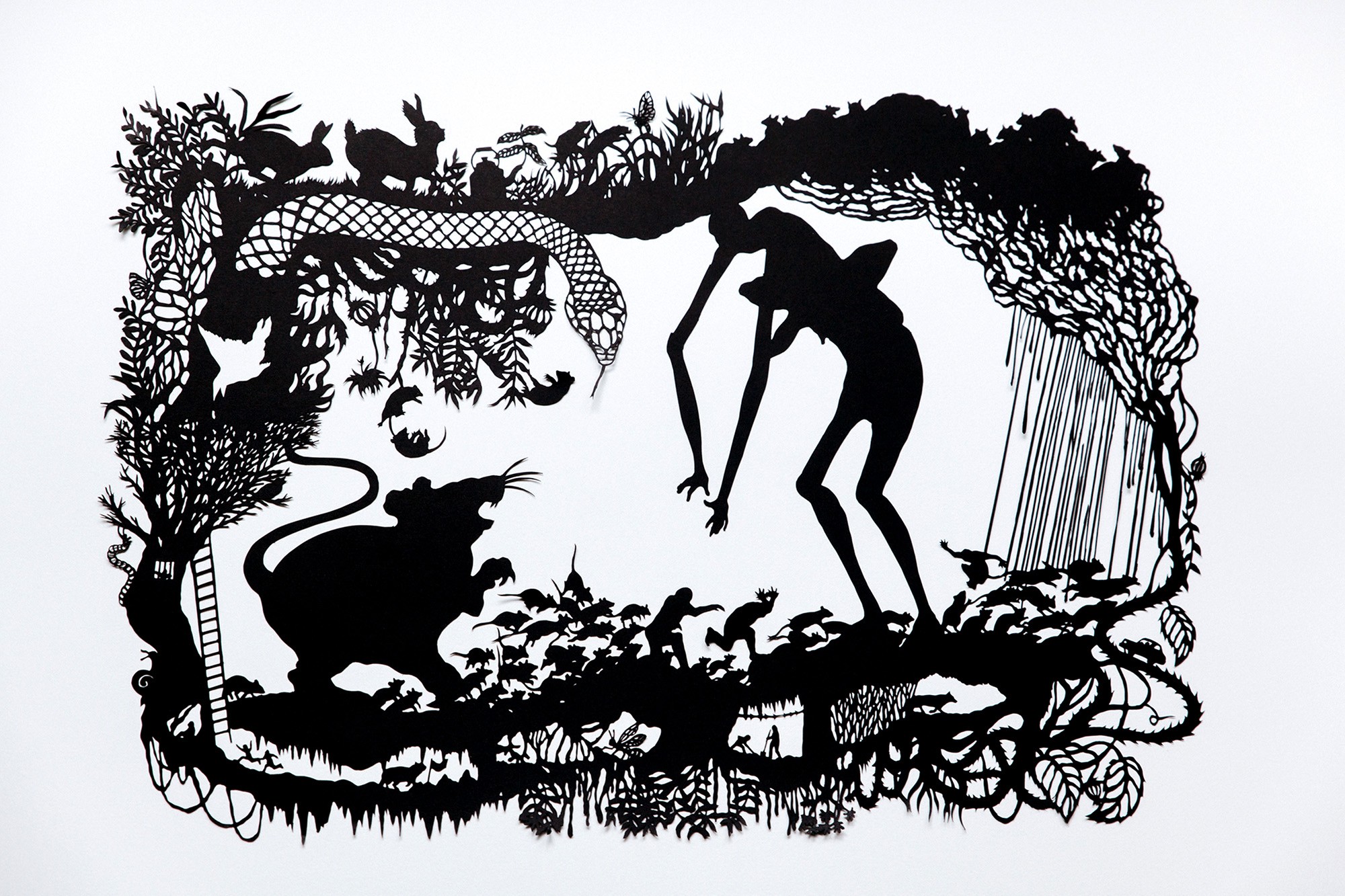
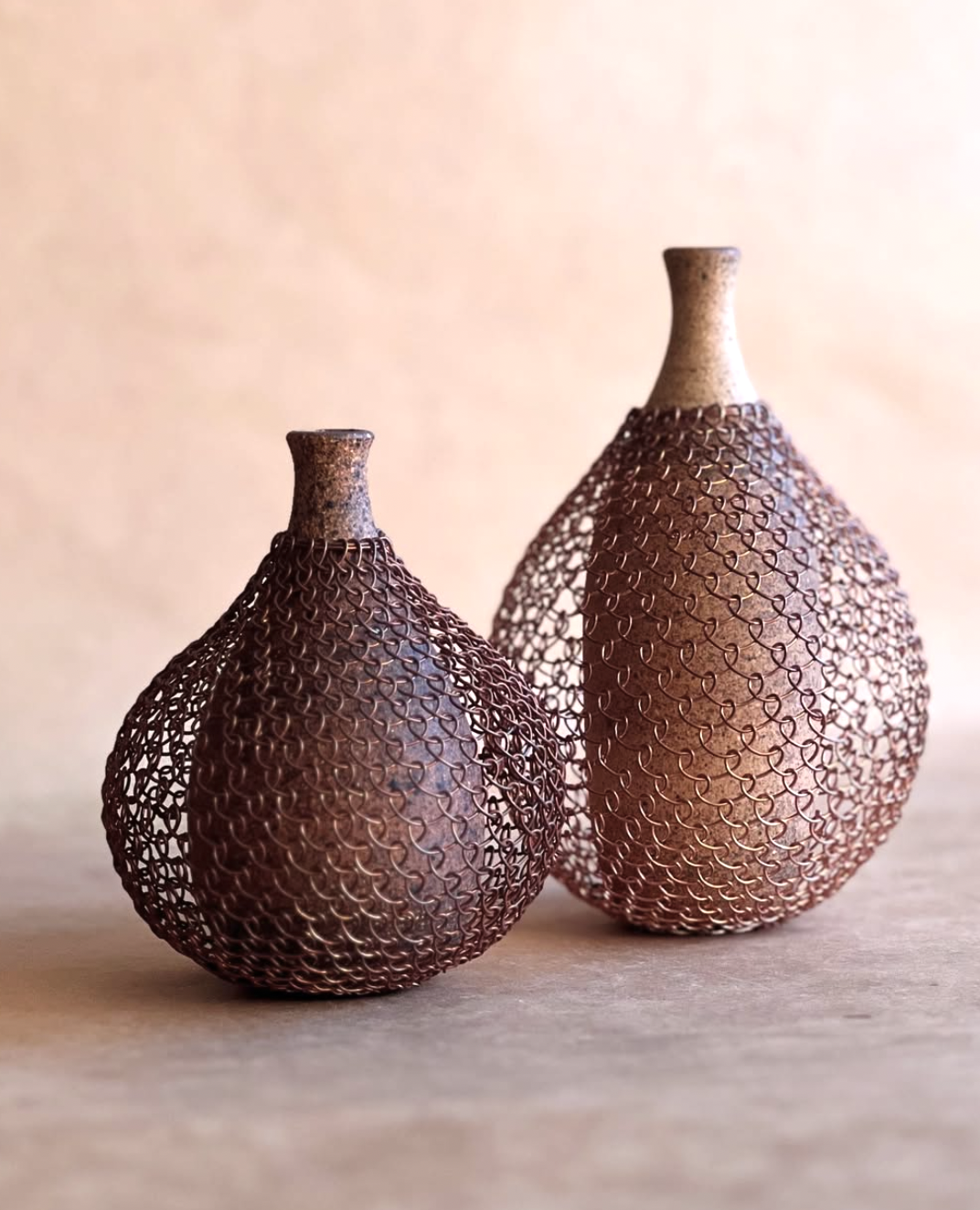
Artistic practice plays a central role in this process. Across the interviews with artists with Japanese heritage in Australia, Japanese heritage is consistently present within artists’ work, though often in subtle or embodied ways – through material, process, and inspiration. Kyoko Imazu’s visual language draws from manga and anime aesthetics and a passion for yokai, which Imazu describes as a “constant” presence since childhood, suggesting that these supernatural figures operate not merely as folkloric motifs, but as enduring cultural anchors tied to memory and identity. Importantly, this fascination persisted following her migration to Australia, where she continued to interpret her surroundings “through the lens of potential Yōkai hidden around every corner.”
Artists such as Asahi So describe a deep cultural alignment expressed through material, process, and sensitivity to form. These examples reflect a broader understanding of diasporic identity as something that operates through cultural memory and creative expression, rather than solely through explicit identification. In this way, artistic practice becomes a site of continuity, where identity is both maintained and reinterpreted across contexts.
This dynamic is inseparable from Australia’s historical context, particularly the legacy of the White Australia Policy – a series of laws and administrative practices in effect from 1901 to 1973 that restricted non-European immigration, with the explicit aim of maintaining a predominantly white, Anglo-Celtic population. For Japanese migrants already residing in Australia and their descendants, this policy limited migration, reinforced racial exclusion, and contributed to pressures to assimilate, shaping how identity was expressed or concealed across generations.
It is important to note that the artists discussed here have migration experiences that occur after the historical conditions shaped by the White Australia Policy and wartime internment of Japanese civilians. In 1946, the Australian Government forcibly deported almost all civilians of Japanese heritage, significantly reducing the size of the community and disrupting the continuity of the diaspora until the policy’s dismantling enabled new waves of migration from the 1950s onward. As a result, there are comparatively fewer Japanese Australians with pre-war migration connections.
For artists with post-White Australia Policy migration backgrounds, identity is not formed through direct intergenerational transmission of these histories, but rather through contemporary, self-reflexive processes of cultural engagement and discovery. As Fukui and Kanamori argue, this has produced a contemporary condition in which many Japanese Australians are actively rediscovering diasporic histories, including those that predate their own family’s arrival in Australia. This also creates a complexity of markedly different diasporic experiences within the community.
Within this context, contemporary artists play a critical role in shaping how Nikkei identity in Australia is understood today. Rather than inheriting a fixed definition, they are formulating an evolving, relational identity grounded in lived experience, creative practice, and renewed engagement with community. This positions Nikkei identity in Australia as complex, nuanced, and continually evolving.
Nikkei as practice?
What we present above is just the beginning of our exploration of these themes. Yet, we can see that across these four contexts – the US, Canada, Brazil, and Australia – Nikkei encompasses multiple, shifting, expansive, and ambiguous meanings, shaped by the distinct social, cultural, historical, and political conditions of each country and in relation to the land.
In this sense, Nikkei can be understood not necessarily as an innate identity but rather as a practice of negotiation, self-determination, and relation. Art is an important way in which those in the Nikkei diaspora are defining and redefining what it means to be included within (or excluded from) this category. For some, Nikkei offers the possibility of transcending national boundaries, but it must also grapple with histories and ongoing processes of settler colonialism and imperialism.
Notes
- Brynn Saito and Brandon Shimoda, “Even the Dead Will Hear Us Speak”, in The Gate of Memory: Poems of Descendants of Nikkei Wartime Incarceration, ed. Brynn Saito and Brandon Shimoda (Chicago: Haymarket Books, 2025), 5. ↩︎
- “Nikkeijin.” In Encyclopedia of Race, Ethnicity, and Society, edited by Schaefer, Richard T., 984-85. Thousand Oaks, CA: SAGE Publications, Inc., 2008. https://doi.org/10.4135/9781412963879.n401. ↩︎
- It is worth noting that this association between Japanese American identity and WWII incarceration history, when projected onto Nikkei artists by others, can be limiting, as it leads people to assume that their artwork deals only with the incarceration. ↩︎
- It is important to note, once again, that the artists I interviewed comprise a small sample who engage deeply with Nikkei identity and incarceration history in their work, and their reflections should not be taken as representative of the larger Japanese American population. Their perspectives are nonetheless illuminating precisely because of that depth of engagement. ↩︎
- Within the Canadian context, survivors and their descendants tend to use the term “internment” rather than incarceration to reflect varied experiences of state violence. ↩︎
—
This article was co-written by four researchers (bios below) as part of the Nikkei Art in Transnational Perspective project, which explores how contemporary Nikkei art addresses – or not – the legacies of the uprooting, incarceration, exile, and dispossession experienced by various Nikkei communities during the 1940s. This project was funded by a Social Sciences and Humanities Research Council grant.
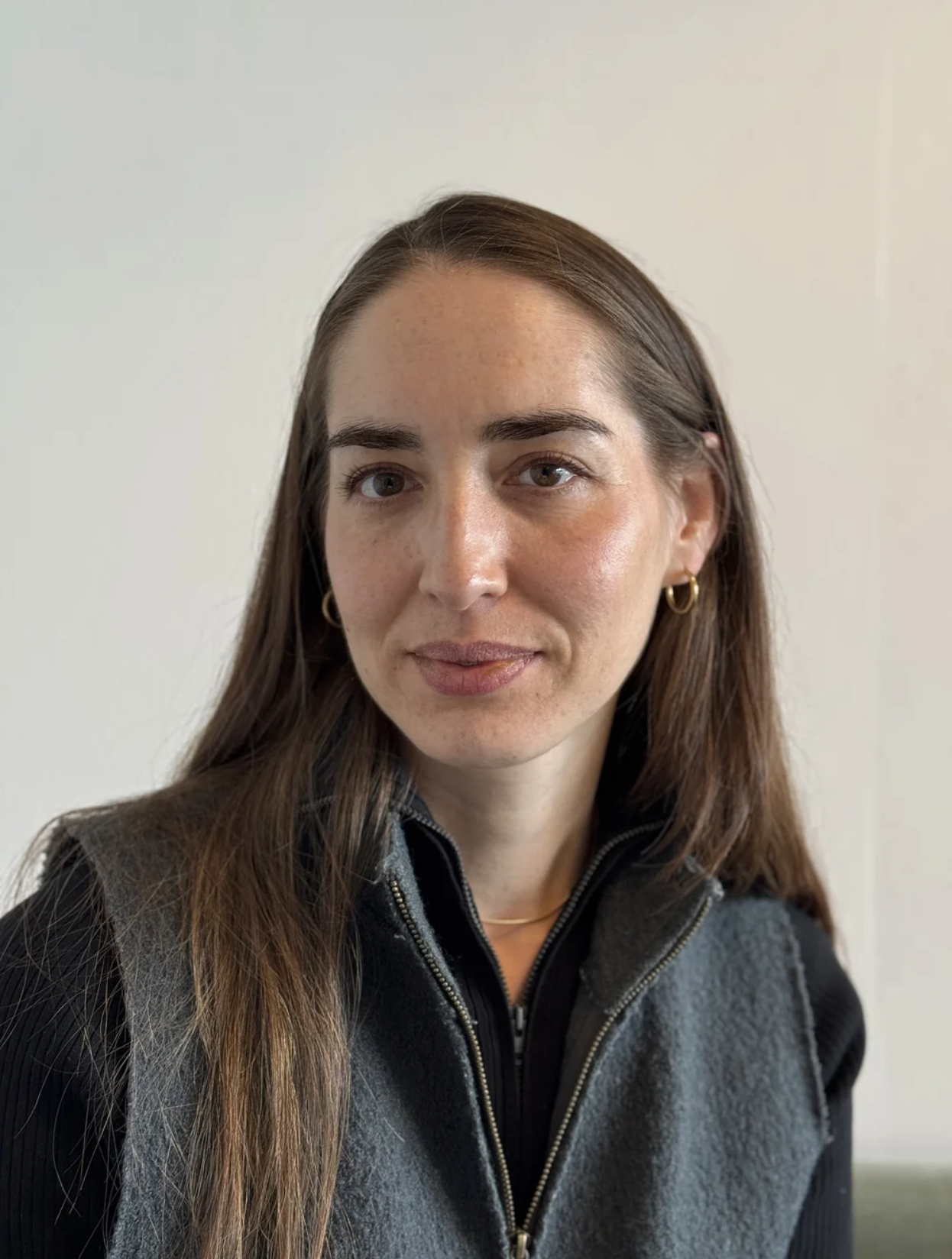
Andrea Mariko Grant is a Research Associate and Adjunct Professor in History at the University of Victoria. A social anthropologist by training, her work explores the intersections between creative practice, memory, and historic wrongs. She currently leads the SSHRC-funded project, “Reckoning with Historic Injustice”, which examines how contemporary Nikkei artists in Canada, the US, Australia, and Brazil remember – or forget – wartime incarceration histories. She holds a PhD in social anthropology from the University of Oxford and was previously based at the University of Cambridge. She also works as a community-engaged curator on public history and public art projects.
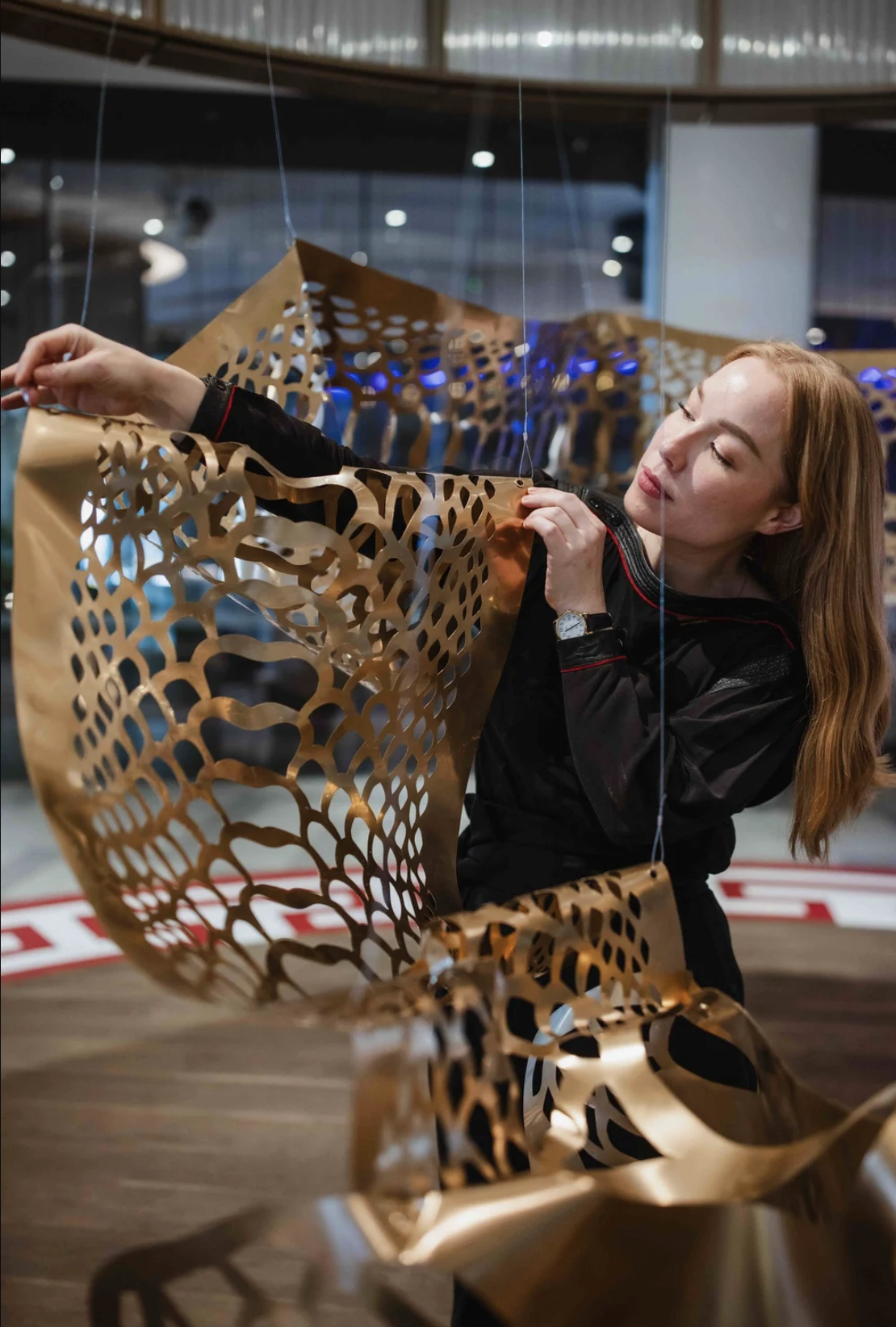
Elysha Rei is a Japanese-Australian artist whose intricate paper-based works explores the intersections of memory, identity, and belonging through the language of paper. Specializing in highly detailed hand-cut designs and large-scale site-specific installations, Rei transforms single sheets of paper into layered stories, bridging cultural histories with contemporary practice. Over the past two decades, her work has been commissioned, exhibited, and collected both nationally and internationally. She is a 2018 Asialink Arts alumni, a research fellow and artist researcher for the global project Past Wrongs, Future Choices (UVic, Canada), and was the inaugural Chair of Nikkei Australia (2022-2025), a grassroots organization dedicated to Japanese-Australian heritage.
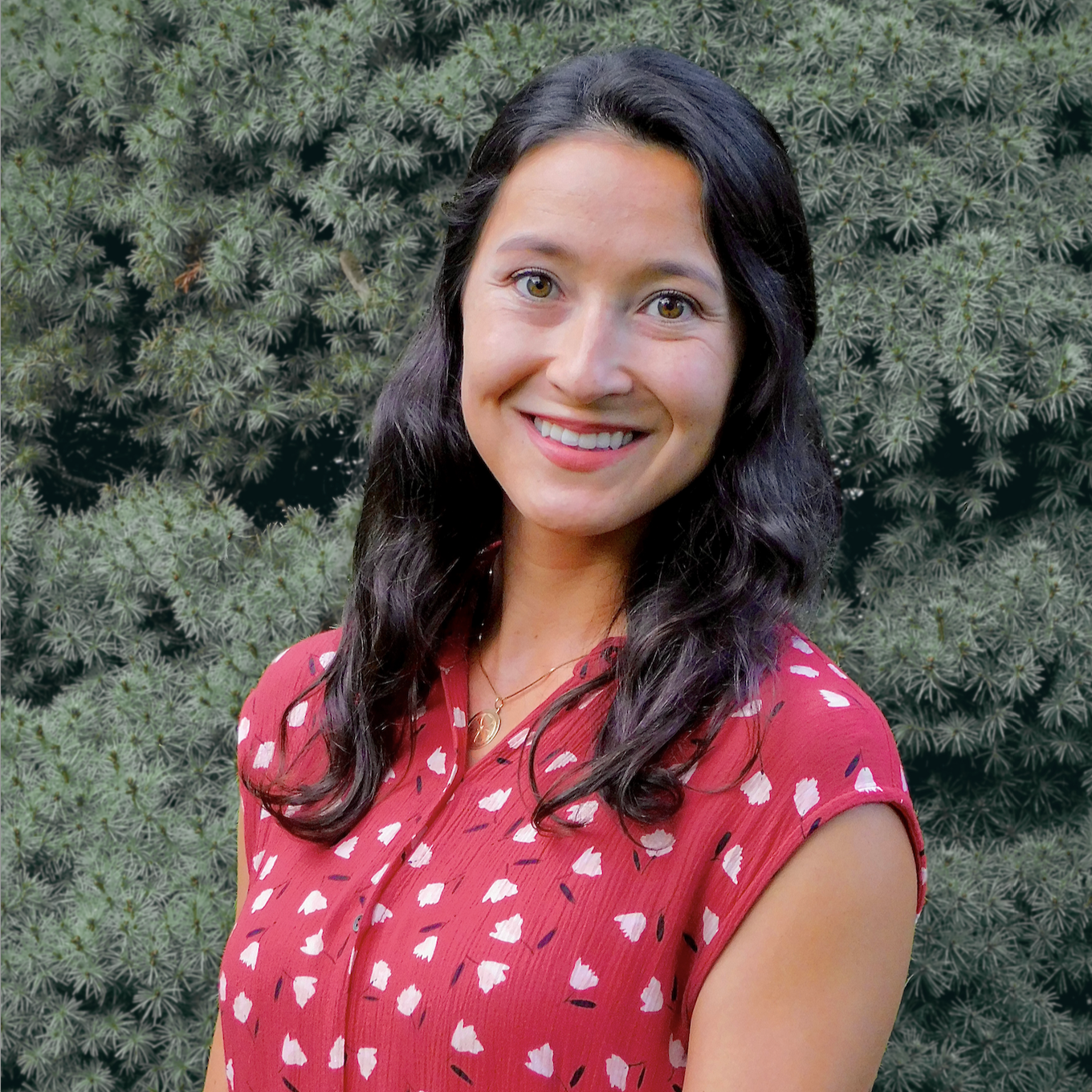
Jennifer Noji is a Japanese American researcher, writer, and the Senior Development and Communications Manager at Densho. As the granddaughter of Gila River and Minidoka camp survivors, she has dedicated much of her personal and professional life to learning and teaching about the World War II incarceration of Japanese Americans and other historical injustices. She holds a BA in Communications and Comparative Literature (Rutgers University) and a MA and PhD in Comparative Literature (UCLA), and her research explores how societies remember and reckon with legacies of racial and colonial violence. She has published articles on cultural memory, political violence, and collective responsibility in various academic journals and volumes.
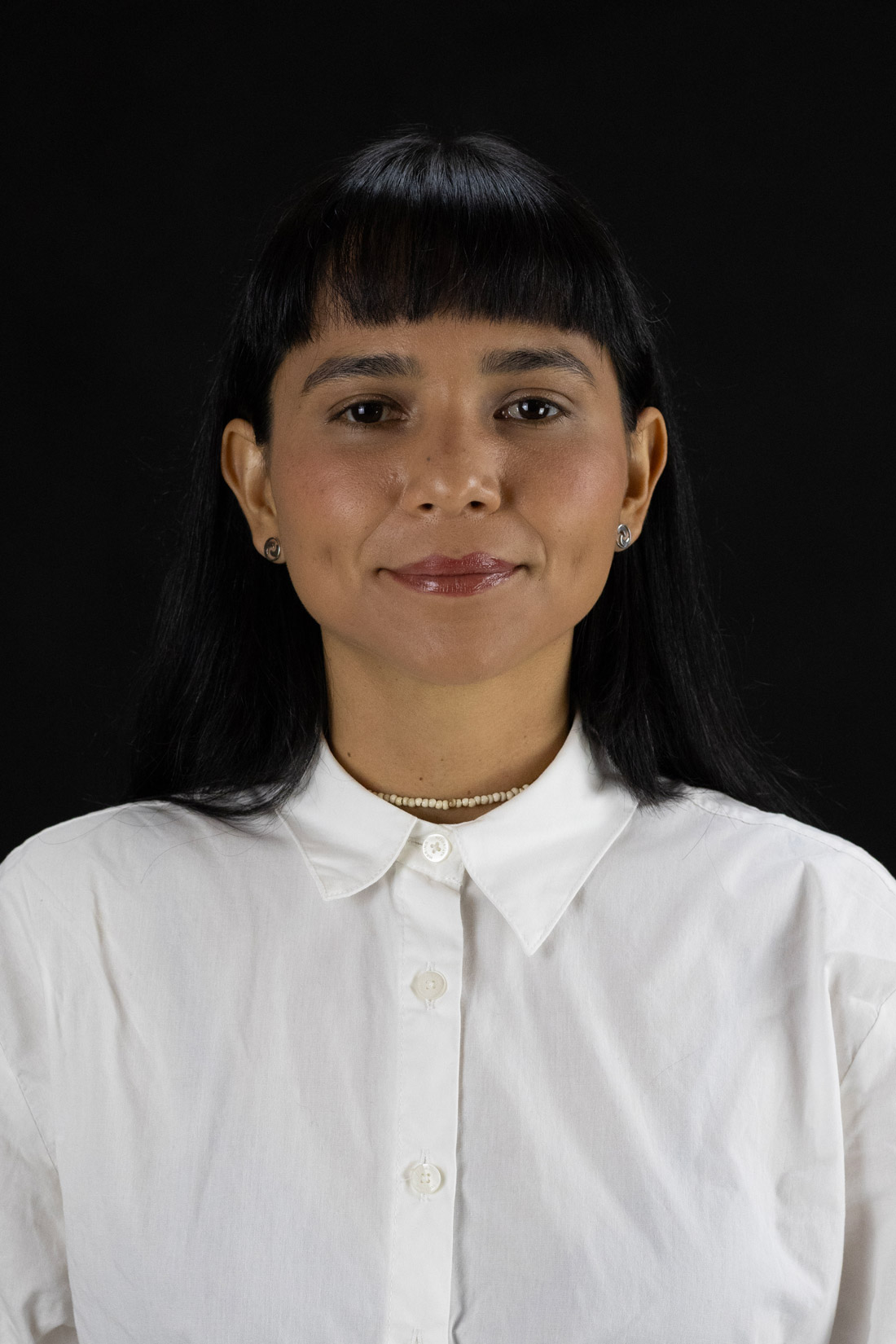
Taís Koshino is a Japanese Brazilian visual artist and researcher. She holds a BA in Social Communication (2015) and an MA in Visual Arts (2022) from the University of Brasília, and is currently a research assistant on the project “Reckoning with Historic Injustice: Exploring Nikkei Art in Canada, the US, Brazil, and Australia”. Working at the intersections of artistic and academic practices, her research investigates Japanese Brazilian diasporic identity, the in-between space, ancient and contemporary technologies, and critical fabulation. In 2024, she was part of Past Wrongs, Future Choices Spring Residency (UVic, Canada). She has participated in exhibitions, residencies, talks, and publications in Brazil, Africa, North America, Asia, and Europe.
Learn more about this project at https://www.nikkeiartproject.com/.