May 13, 2026
Tom Ikeda founded Densho in 1996 with a vision that was equal parts technological ambition and community commitment. Over more than two decades as executive director, he helped build the most comprehensive digital archives of Japanese American history in existence, conducting more than 250 oral history interviews himself along the way. As Densho celebrates its 30th anniversary, we spoke with Tom about the organization’s origins, its evolution, and what three decades of work has meant to him personally.
This conversation is part of our new “We Are Densho” series, which highlights the people—our staff, board members, supporters, partners, and community members—who have made Densho what it is today.
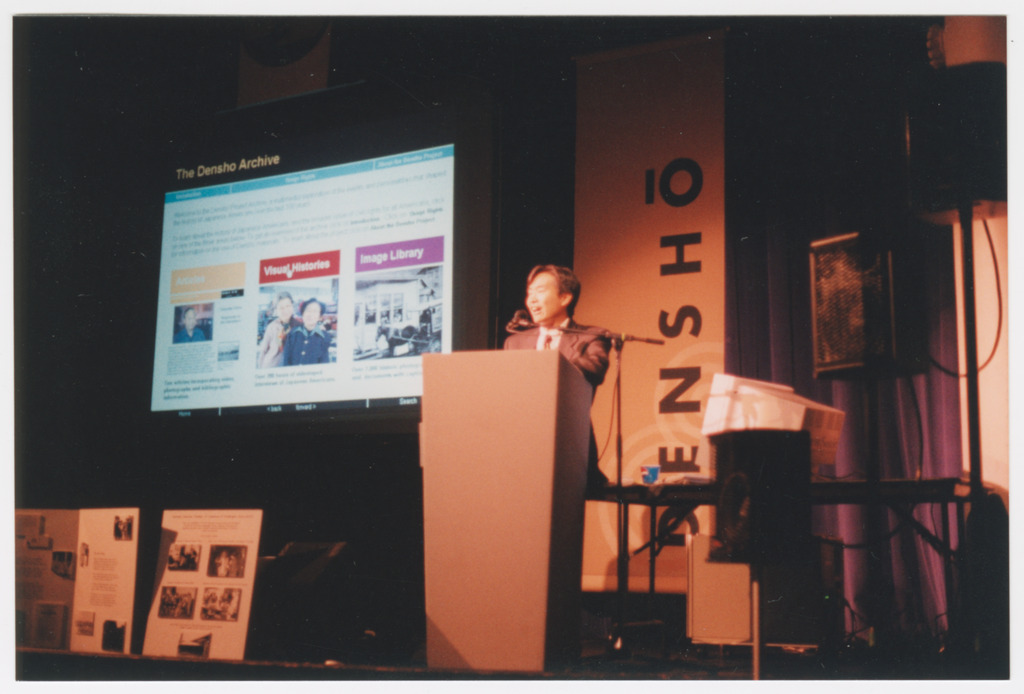
Jen Noji: Could you share a little about your background and the experiences that ultimately shaped your path toward founding Densho?
Tom Ikeda: I was in my late 30s, and I had recently left Microsoft developing what we called back then multimedia titles—CD-ROM products like encyclopedias and dictionaries that included sound, video, animations. So I just left an environment where everyone around us at Microsoft was very much thinking of all types of information going digital. There was a saying that we had at Microsoft—information at your fingertips—that with the combination of digital information and networks, the knowledge of the world would be at your fingertips.
Another important connection for me was that I grew up in Seattle in the Rainier Valley where there was a strong Japanese American community that helped raise me. I knew there were good stories in the community.
With this background it seemed natural to create Densho as a Japanese American community nonprofit with a strong technology-business perspective. The other co-founder of Densho, Scott Oki, who also grew up in the Rainier Valley, retired from Microsoft as one of the top executives at Microsoft. A large part of Densho’s success was because Scott brought incredible vision and personal connections to guide Densho as its initial board chair.
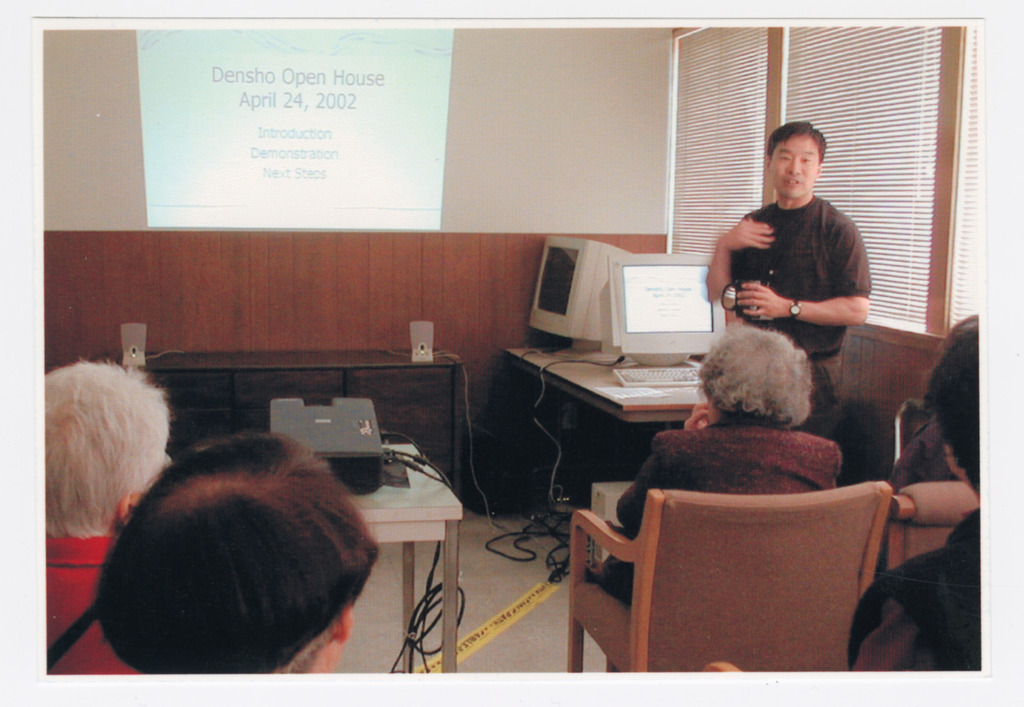
Jen: How did the actual idea for Densho come about?
Tom: I really have to credit the Shoah Project, now called the Shoah Foundation and a program with the University of Southern California. They had started about two or three years before Densho, after Steven Spielberg completed Schindler’s List. While he was making the film, people started coming up to him with their stories as Holocaust survivors. And so he had the idea: we need to film these testimonies.
There were some people in Seattle who got a copy of a short video about the Shoah Project, and they showed it to Scott Oki. Scott called me and asked me to go with him and two others—Penny Fukui and Bobbie Stern—to visit the Shoah Project in Los Angeles. So we flew down there. They gave us the red carpet treatment. Spielberg wasn’t there, but we got to eat in his private dining hall. The Shoah Project was based at Universal Studios and used a lot of film and TV technology. The interviews were recorded with expensive TV cameras, and the computers used to digitize the interviews were expensive Silicon Graphics workstations used in the film industry for special effects. Their three-year budget was, I think, $50 million. It was an immense and ambitious oral history project..
The aha moment for me came while sitting at one of their workstations, entering a search term, watching an interview show up, clicking on it, and then hearing that video testimony. My gosh, this is information at your fingertips. This is what I had been doing at Microsoft! I knew we could replicate what they were doing at a tenth of the cost—by using personal computers. After the flight home, Scott and I talked. Because of our experiences at Microsoft, we knew we could create a similar, but less expensive version for the Japanese American community. Scott pledged $2 million in startup funds, and I agreed to build the project as a volunteer.
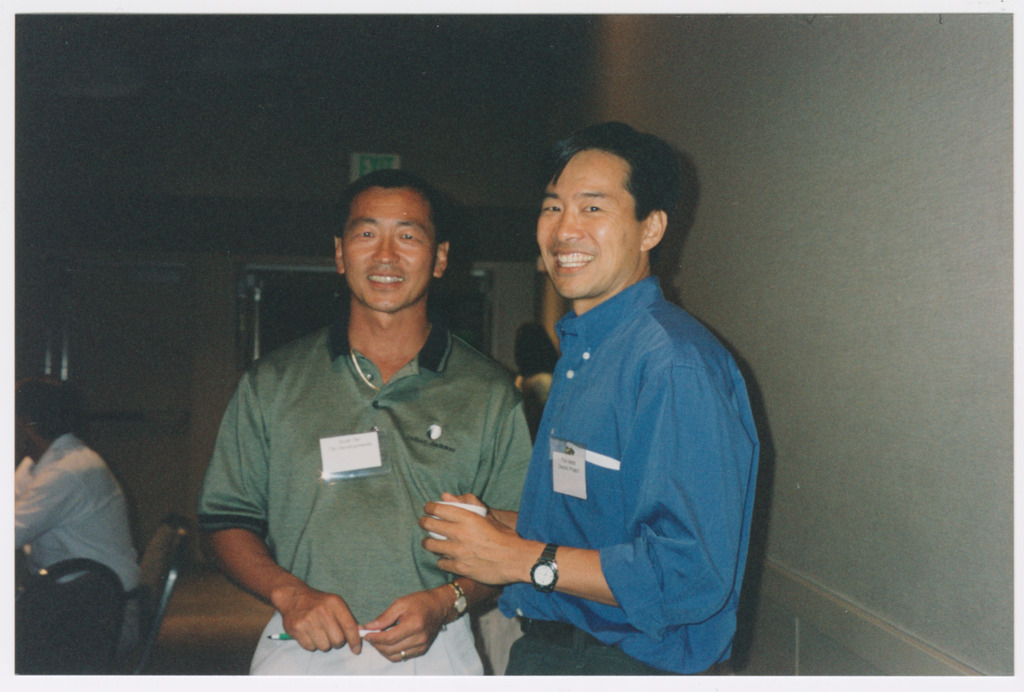
Jen: So what happened when you actually began the work? Did it unfold the way you expected?
Tom: How I viewed what we were going to do back then was very different from what actually happened. I came in thinking, okay, so we have technology, we have skills, we have resources. What was missing in the Japanese American community, especially around Japanese American [incarceration] history, was the personal stories—but not just the personal stories, also recording them in a way that people could have access to them.
We thought, if we did a couple hundred interviews, we could wrap it up within three to four years. That’s why we initially called ourselves “The Densho Project”—we thought of it as a three-to-five-year project.
But when we got started, it became very different. Very early on, there were a lot of Nisei in their 70s and 80s who had adult memories and were really good storytellers. Our initial training for interviewers was a 100-hour course—part interviewing technique and a substantial portion dedicated to Japanese American history, so that if someone mentioned a particular historical figure, the interviewer would know: oh, this is important, let’s slow down and really dive deeper.
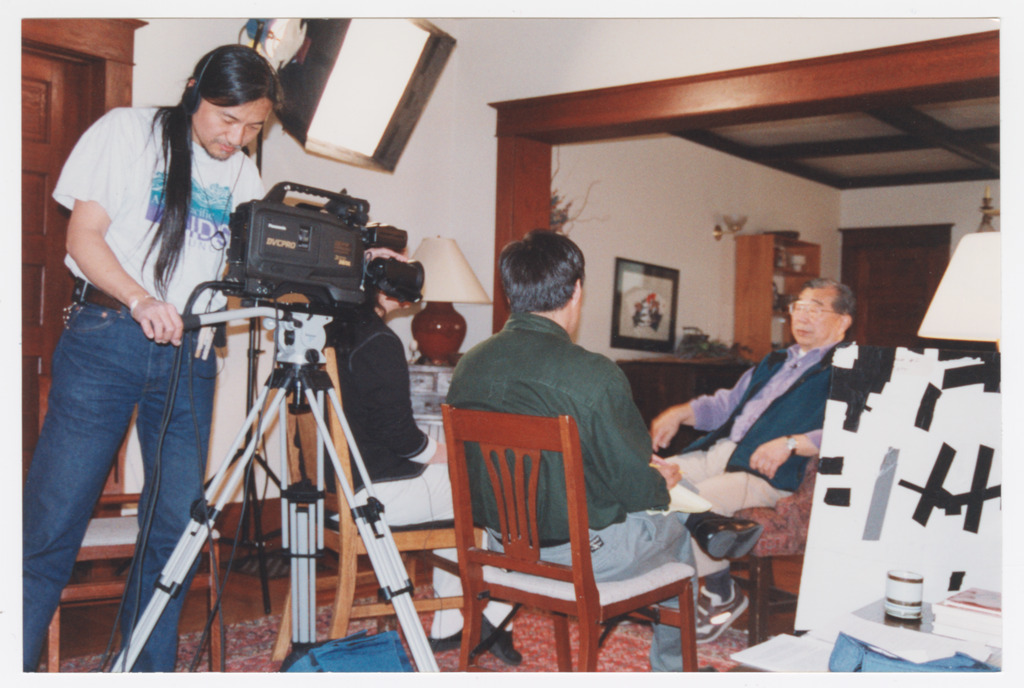
The thing that really shifted for me was when we did interviews with these 75- or 80-year-old Nisei. We found that some of them were telling, for the first time, what happened to them. And some of them would get emotional during the interview. But what happened afterward surprised me. After this sort of intense process—pre-interviews, on-camera sessions, sometimes two, five, ten hours depending on the person—they would seem like a changed person. You could tell they were just so much lighter from sharing their story. And I remember getting emails and phone calls from the relatives of the person I interviewed saying: what happened during that interview? Because all of a sudden, their dad or their mom or their grandfather, they’re changed. They’re actually sharing around the dinner table stories that the family had never heard.
What I recognized was the healing aspects of the interviews, something I did not expect. Before that, it was primarily identifying content to be preserved for future generations. But what it quickly became was: this project is actually healing individuals and families around the trauma that happened.
The other thing that struck me was—with people telling their story for the first time—they were really entrusting me as the interviewer and Densho to take care of their story. This was almost like a sacred gift that they’re giving the organization, which is a huge responsibility. People are really entrusting you to take care of their story, to be its steward.
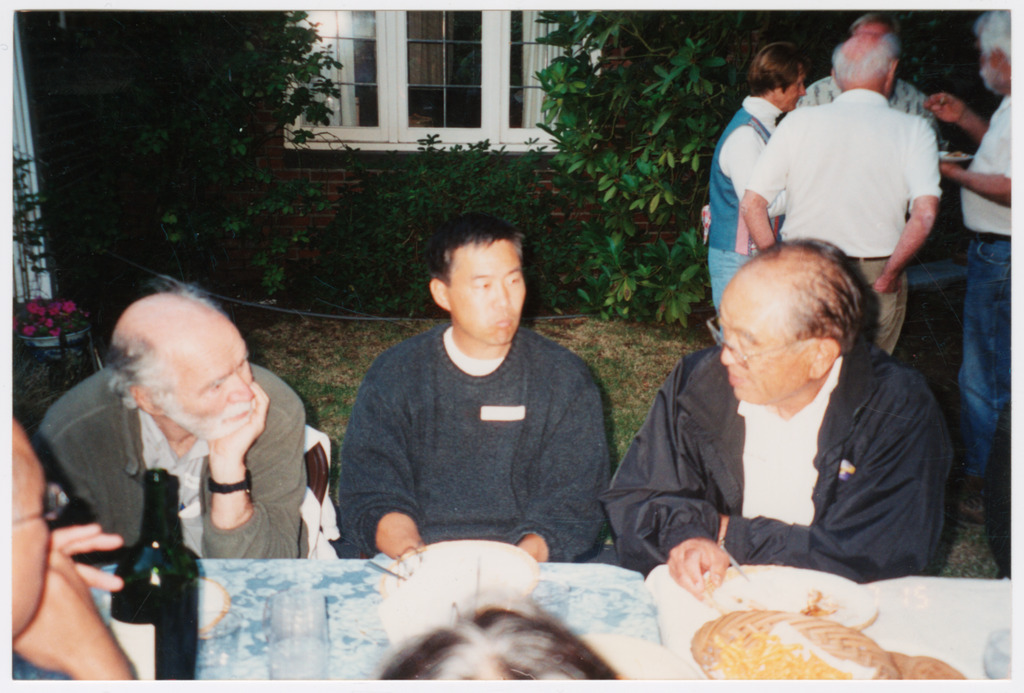
Jen: As you reflect on Densho’s evolution over 30 years, what stands out to you most?
Tom: For the first couple of decades, the core question was: how do we create a knowledge base for Japanese American history that is as strong as it can possibly be? We focused on three areas – the primary source materials which included interviews, photographs, and documents; the context provided by reference works like the encyclopedia and Sites of Shame; and the education program. In the early years, we focused primarily on oral histories, frankly, because of the age of the narrators who had direct World War II memories. We realized we had to put most of our resources there, because that resource will disappear.
The third area—education—was the one we struggled with. We developed several educational curriculum initiatives. For example, we worked with Harvard Project Zero, and we worked with other online educational curriculum groups, but we never found models that would work on a large scale. There were a lot of dead ends in this area for us.
Then there was this fourth element that emerged. Others could easily access the content and become their own content creator who could reach a lot of people. The recent Rachel Maddow podcast that is reaching millions of people is a good example.
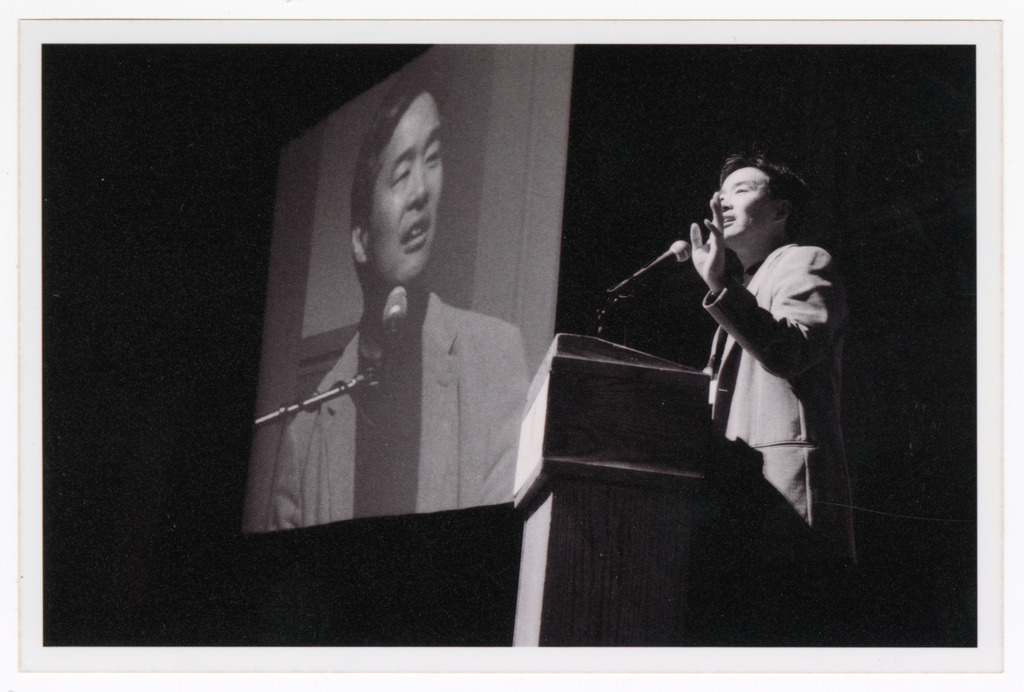
Jen: Why is Densho’s work especially important right now?
Tom: The only thing that we really had control over was what we did. So it’s important that we didn’t lose perspective on our role—not only with Japanese American history organizations but with American history organizations. This included our leadership in creating digital community repositories.
We thought of ourselves as an independent, community-curated knowledge base for the Japanese American experience, but we didn’t talk about the erasure of stories. We instead talked about making sure there was a community perspective with these stories. We felt there would be places like the Smithsonian, Library of Congress, the National Archives—they would have stories, but not necessarily from a community perspective. That’s how we differentiated ourselves. We always thought of ourselves as a repository, a node that existed alongside all these others.
But now it’s striking to see the possibility of erasure from these other nodes of Japanese American history. And this erasure increases the importance of Densho as an institution.
Something else that I see Densho doing that is important is staying focused. What I would sometimes witness is this mission creep—small organizations trying to do more and more, overlapping with what other organizations are doing. It’s important to stay true to yourself and your mission. You have to know who you want to be, what your role is, and stay focused on that.
Jen: What are some of your most meaningful memories from your time at Densho?
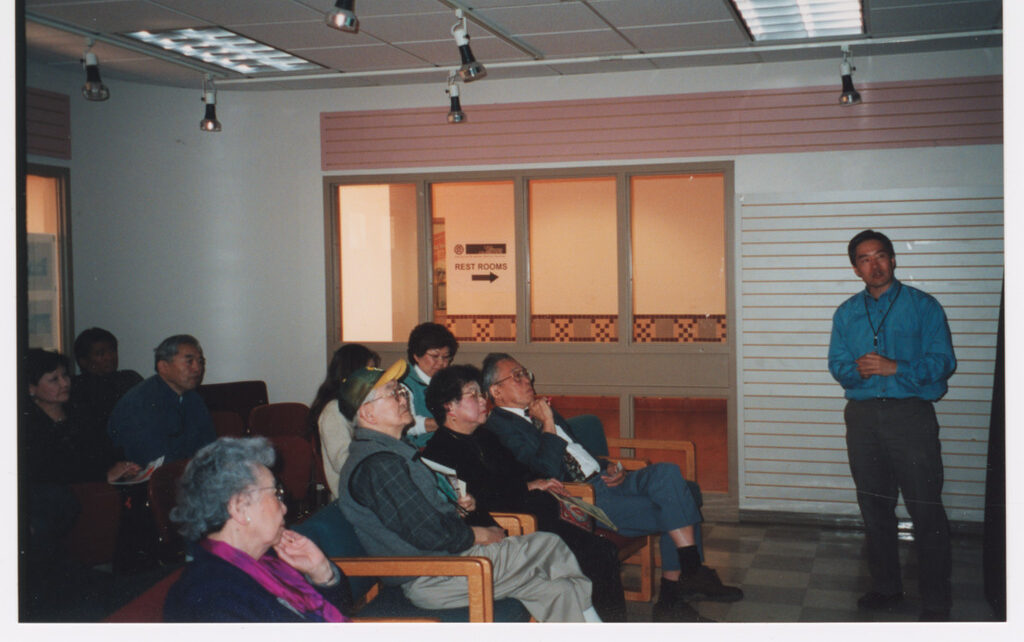
Tom: It’s the people. Almost all the people I interviewed have passed, but I think of the wisdom they shared and the connections we made. I’m older now, but when I was younger, the Nisei—I always felt like they would almost adopt me. I’d go to these different places, they’d take me to their favorite Chinese restaurants, and the food wasn’t that great. But it was just so endearing. People really brought me into their communities, their families, and shared in ways that they wouldn’t share with people outside the Japanese American community. There was a real specialness that I always felt when I would go out and do interviews, not only in Seattle but other places.
I also learned so much about myself because of Densho. Growing up, I felt a need to over-achieve, pushing myself to extremes in terms of how hard I worked. I’ve come to realize a lot of that was probably shaped by how I was raised—by parents who were young when they were incarcerated, who faced rejection, and who felt they had to conform or over-perform to be accepted. I’ve come to see how that was passed down to me. Sometimes I would put Densho or my work ahead of the family—not because they were less important, but because of this need to prove myself. From a community standpoint: oh great, Tom did all this great work, that’s wonderful. But there was a price. So learning this about myself has been important.
Miya Schilz: And finally, what advice or reflections would you want to share with the next generation of people doing this kind of work?
Tom: I think it’s a trap to place too much priority on material things or achievements. Looking back, I wish I had put more priority on relationships and people. That’s what matters most when you get to a certain point and look back. And I’m not just saying family—I mean your co-workers, the people you encounter. So often I was focused on my business-training mindset: what’s the objective, how do we get there, are you doing your job, accountability. And perhaps less on the relationships.
Another thing I’m exploring—part of the gift of having more time in retirement—is letting go of that very analytical, left-brain, linear way of processing. What I’m coming to realize is the importance of another way of thinking. It might sound strange, but I’m doing things like Ikebana, Japanese flower arrangement, and I can spend an hour or so on one piece. And the remarkable thing is, it’s not only engaging and fun, I come away from it feeling genuinely different.
When I think about Densho’s foundational pieces like the digital repository of primary sources and the reference materials like the encyclopedia, Sites of Shame, and Names Registry—these are very analytical, linear-thinking endeavors. The education piece, the most important, is more non-linear and difficult for me to grasp. And maybe that’s where I’m at in my life. The advice is this: don’t lose sight that there is something that you can sense and not fully understand. It is this uncomfortable not-knowing that can lead you to something important.
—
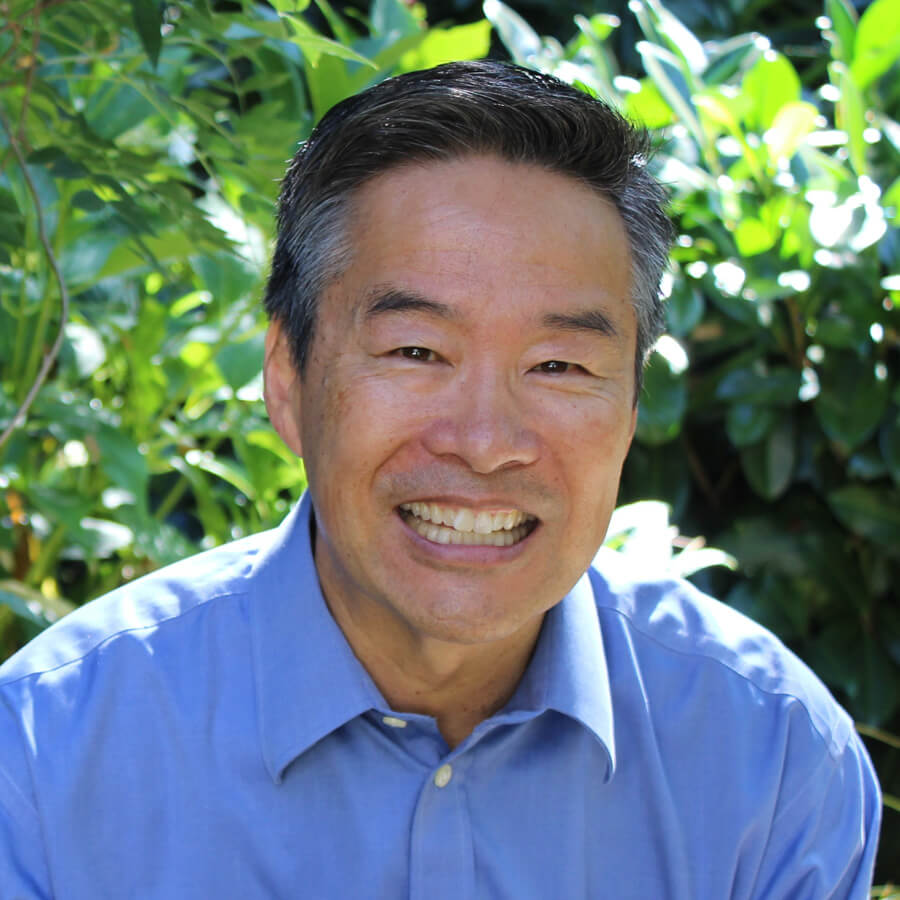
Interview with Tom Ikeda, Densho Founding Executive Director, conducted by Jennifer Noji, Densho’s Senior Development and Communications Manager, and Miya Shilz, Densho’s Digital Content Coordinator.
Tom Ikeda founded Densho in 1996 and served as its executive director for more than two decades. He conducted over 250 oral history interviews and continues to be involved in the work of preserving and sharing Japanese American history.