February 11, 2026
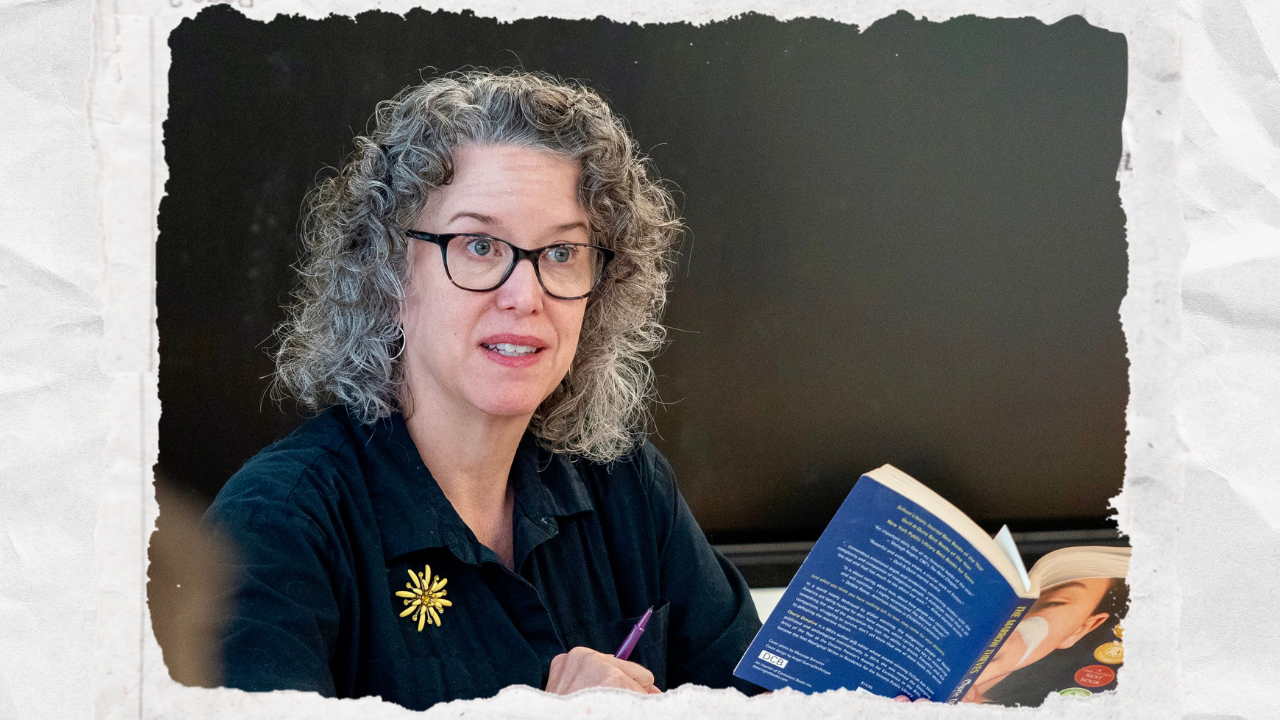
Tamara Bunnell is a high school History Teacher and Dean of Students in Seattle, Washington. She holds a Bachelor’s Degree from The Evergreen State College and a Master’s Degree from Columbia University Teachers College. In addition to her work in the classroom, Tamara has developed curriculum for museums and other organizations, worked with Atlas Obscura Seattle, and served as Producer and Education Director for the Seattle Historical Theatre Project. She is currently on the board of the Capitol Hill Historical Society.
In a conversation with Densho Education and Public Programs Manager Courtney Wai, Tamara shares insights from more than three decades in the classroom, discussing what it means to teach “difficult histories” in this political moment, how she helps students engage critically with oral histories and primary sources, and why educators must teach beyond false neutrality to help students examine national narratives with care and rigor.

Courtney Wai: Tell me about yourself and how you’re connected to Densho.
Tamara Bunnell: I have been teaching some iteration of History, English, or Humanities in secondary schools for more than 30 years. In my current job, I teach high school World History and Pacific Northwest History, and I am also the Dean of Students. I have mostly taught in Seattle, where Densho was founded, so I was lucky to encounter your work in its early years. Since the very beginning, I have found Densho’s resources and workshops to be endlessly inspiring, useful, and important. It’s really mind-blowing what you’ve been able to accomplish.
CW: Many educators and organizations, including Densho, are grappling with how to teach difficult histories with care. What do “difficult histories” mean to you, and how does that understanding shape the way you approach teaching and learning in your classroom?
TB: My first inclination is to say that “difficult histories” fall mainly into two categories. First, there are histories so dark they make us see that people aren’t always ultimately good, which leads to the fear the world isn’t the safe and sensical place most of us want to believe it to be, which can leave us and our students feeling unsettled and vulnerable and sometimes traumatized.
The second thing that comes to mind, and I think this comes with increasingly high stakes for many teachers of late, are those histories that are interpreted differently, sometimes dramatically so, by different people, often because of political or other divides. Through an American lens, these are often those moments and events where we as a nation did not do the right thing, and some people don’t want to hear about that, feel it is unpatriotic to approach those topics, or want to say such things are in the past and we’ve “moved on”. This is both dangerous and short-sighted. It’s dangerous because it can lead to the erasure of knowledge. It’s a cliche to say those that don’t know history are bound to repeat it, and I don’t think that phrase is entirely true, but at least those who don’t know history cannot learn from it and do better.
Not teaching difficult histories is short-sighted to me because, though they need to be treated with great care, difficult histories often come with uplifting elements in that, even as we continue to struggle with so many issues in our nation and sometimes experience two steps back, there have also been moments of progress and resilience. And those moments grew out of intentional, focused actions and movements we can learn from and build on today. These stories can serve as a kind of antidote to despair, and it is worth noting that many of those movements were driven by young people, and so I look for ways to bring the stories of young people who have taken actions that made a difference into my curriculum.
CW: As the United States approaches its 250th anniversary, commemorations often emphasize celebration and patriotism. What concerns you about how national history is being framed in this moment, and how do you help students critically examine those narratives in your classroom?
TB: I’ve not yet seen much about the plans for the 250th anniversary, so time will tell there, but I have been disturbed by what seems to be an attempt to erase particular histories from official national sources and to cut funding to professional development programs in history and the humanities. Fortunately, many individuals and organizations continue to preserve and provide access to information through independent channels.
As a teacher, I feel I am still able to provide a range of materials to students that can help them see aspects of history from a 360 viewpoint and lead them toward interpreting for themselves. In that regard, and thinking more broadly, I think one key challenge for students – for all of us, really – is to look critically at the information that reaches us, whether that’s through official commemorations, social media, certain news sites, or other sources. I find today’s students are very ready to critique materials that seem obviously designed to manipulate their thinking, but they aren’t as aware that they themselves often already exist in specific media bubbles designed to reinforce their existing viewpoints. For that reason, building skills and habits of research and critical thinking, and asking students to interrogate how they know what they know, is especially imperative in these times.
CW: Oral histories and primary sources are central to your teaching. How do you help students engage with them critically and with attention to perspective, power, and silence?
TB: One key is providing context so students can ask better questions and interpret sources more accurately. I also want students to understand that primary sources are complex. For some reason, students sometimes come to primary sources with the assumption that they are the most “true” sources. Maybe a primary source is 100% accurate, but often a primary source is more of a clue or a piece of a larger puzzle.
I recently had my students do research into First Nations students from our area who had been sent far from home, to the Carlisle Indian Industrial School in Pennsylvania, with the intent of assimilation. The school kept meticulous records on certain things, many of which have been digitized in an extensive archive housed at Dickinson College, where the team there is doing incredible work to make these records widely available and accessible. My students were quick to note that many of the student records from Carlisle were largely positive in regard to the Carlisle experience, and while I think some people did have some positive experiences there, this was also a school whose goal was cultural erasure—or, in the words of their founder Richard Pratt, “to kill the indian to save the man”. With time and focus, my students began to notice and think about what is not represented in the files, leading them to important queries about those missing pieces. Understanding the larger historical context, as well as the goals of the school and its funders, helped my students ask deeper questions about the lens and intent of the record keepers and seek out additional sources to provide a fuller story.
CW: You’ve also taught Japanese American wartime incarceration through an original play based on oral histories, including sources connected to Densho. What did that experience reveal about how students engage with this history, and why do you see oral histories and creative interpretation as especially powerful for teaching it with care and honesty?
TB: One thing to note is that I had an incredible partner with the play, Laura Ferri. While we collaborated on the research, and I wrote the curriculum that accompanies the play for schools, Laura wrote and directed the play and was the driving force behind it. The play, Friends Across the Wires, is based almost entirely on oral histories and additional primary sources from the time, which Laura wove into a script with the goal of educating both a school and general audience about the time period.
Much of the dialogue comes directly from the interviews, so the story is not an imagined one, but rather one told by the real people on whom the play is based: primarily two graduates of Broadway High School in Seattle, Louise Tsuboi Kashino and Patsy McEniry Love—lifelong friends who participated in the process of the play’s creation. Louise was incarcerated at Mindoka. Patsy, who was not of Japanese descent, remained in Seattle during the war, but she and Louise stayed in touch throughout the war years and into their nineties.
We also incorporated publications from the time, elements of the Constitution, and resources and recommendations from Densho as part of our research in building out other elements of the play and in designing the accompanying curriculum. There are characters in the play who aren’t perfect; there are points of tension and disagreement, and there are moments of inspiration, just like in real life.
The version of the play linked above is for use in classrooms, but was also a necessary format because our original plan was to tour the play live in 2020, which was prevented by Covid-19. Once we were able to take a second iteration of the play on the road, one thing that felt especially powerful was that we nearly always had someone in the audience who had never encountered information about the Japanese American Incarceration before. We also had a lot of people who were drawn to the play because of their own personal experiences or connections to the Incarceration. That led to very moving post-play conversations and, I think, some moments that speak to the healing power of art and human connection.
I think the student audiences, in particular, were able to connect to the story because it focuses on young people attending school in Seattle in a way that is relatable. Students can know the facts of history, even to the point of having a clear understanding of when, how, and even why the Incarceration occurred. Some students might have a personal connection to those facts because of their own histories, which can give them a different and deeper understanding. Other students might not have that personal connection, however, and so view the information more from the “outside.” But when they think through the lens of, and relate to, the characters in the play, they might start thinking, “Wait, what if that was my best friend, or the editor of my school newspaper, or the star quarterback on my school football team that was being taken away because of their racial identity?” That feels more personal.
Given recent events, when so many people are vulnerable in their communities and being taken away, often despite their status as citizens, I can imagine today’s students might see even more to relate to when studying the period of Japanese American wartime incarceration.
CW: In this political moment, you are explicit about the importance of educators avoiding the false lure of “neutrality.” Why do you believe that taking a clear stance matters when teaching difficult histories?
TB: It has always been my goal as a teacher to assist students in developing critical thinking skills and determining their own viewpoints. I don’t ever want to, nor would I, tell students what to think or believe. That said, I don’t find it ethical to present “both sides” when it comes to some elements of history. Nazis were Nazis, and Nazis are bad. There is no other side to that, though we might engage in some more nuanced conversation around what led to the movement, and what drew, and continues to draw, people to ally themselves with such ways of thinking.
I think there’s a connection here to your earlier question about patriotism and teaching American history, in that I think we can err when we lean so hard toward neutrality that we end up teaching inaccuracies. There is a lot of conversation around immigration and the constitution right now, for example, and some of the information being disseminated is false. The question of birthright citizenship has begun to circulate again, as it has cyclically throughout our nation’s history, but the constitution is very clear on this matter. The question has been asked and unequivocally answered; we do not have tiers of citizenship in this country. To me, it is unpatriotic and inaccurate to teach otherwise.

CW: You often teach histories in relation to one another, such as connecting the Carlisle Indian Industrial School archives to the Chinese Exclusion Act. How do you help students see these histories as intersecting rather than isolated?
TB: This is a question of timelines and of understanding that the “units” we often teach in isolation in history classes actually overlap chronologically. These topics, and others, are both central to my Pacific Northwest history course, and though we initially study them separately, it’s important to note that they were also happening at roughly the same time. The “Seattle Riot,” in which hundreds of Chinese men were forcibly expelled by a white mob in Seattle, took place in 1886. Students from Washington began to arrive at Carlisle and other schools in notable numbers in the 1890s. Understanding the chronological proximity of these events helps us form a bigger-picture understanding of our region and nation at the time that tells us a lot.
CW: You teach 11th grade Pacific Northwest history, connecting the local with national and global contexts. How do you help students understand that systems like slavery, exclusion, and empire have legacies that shape the region they live in today?
TB: Though this is changing, it’s not been uncommon to observe a certain mindset in the Northwest that centers racism and its associated horrors and policies as something that happened elsewhere, which can serve as a kind of excuse for not diving into aspects of our own history. In ways, this is similar to the way some white Americans remove themselves from the conversation around race. As a white person myself, I can think of a time in my own understanding of race where I saw myself as distanced from certain histories because my personal family story didn’t overlap with those times, places, and actions. It wasn’t until I understood the legacies of racism as continuing systems, and began to understand how I may have benefitted from those systems, that I was able to begin to move into deeper phases of learning.
Similarly, and back to Washington State history, it’s true that slavery did not exist as a system here in the way it did in the American South, and most of our schools did not employ segregation in the way we might think of it in the years leading to Brown v. Board of Education. We did, however, have entrenched systems like redlining and restrictive housing covenants that created racially segregated neighborhoods and schools, and continue to impact housing values, population patterns, and generational wealth in our region today.
The contemporary Seattle housing market is insanely expensive across the board for many reasons, but a comparison of the old redlining maps with the average house value by neighborhood today can reveal how deeply the past continues to inform the present. Giving students the opportunity to look at the history of such systems in their own neighborhoods and draw comparisons to today can help them make profound and personal connections between the past and the present.
CW: Teaching difficult histories can be especially challenging given our current political climate and recent events. How do you sustain yourself in this work, and what continues to give you hope?
TB: I work with incredibly cool kids. They are informed, engaged, and compassionate, and I’m excited to see the positive impact they will have on the world. That alone gives me hope and helps sustain my energy. Teaching is very hard work, and unfortunately we are living in a time when the profession is more challenged and less seen and supported than perhaps it has ever been. Even in the best of times, it often takes years to know the impact you’ve had or to see how the seeds you have planted will grow. I am fortunate to have been teaching long enough to get that feedback, and there’s nothing better than hearing from a former student or coming across some awesome thing they are doing.
To younger teachers who still love, but might be beginning to doubt, their work, I say hang on and stick with it. Pendulums do swing. That, and there’s nothing wrong with a little mindless TV now and then.