May 26, 2026
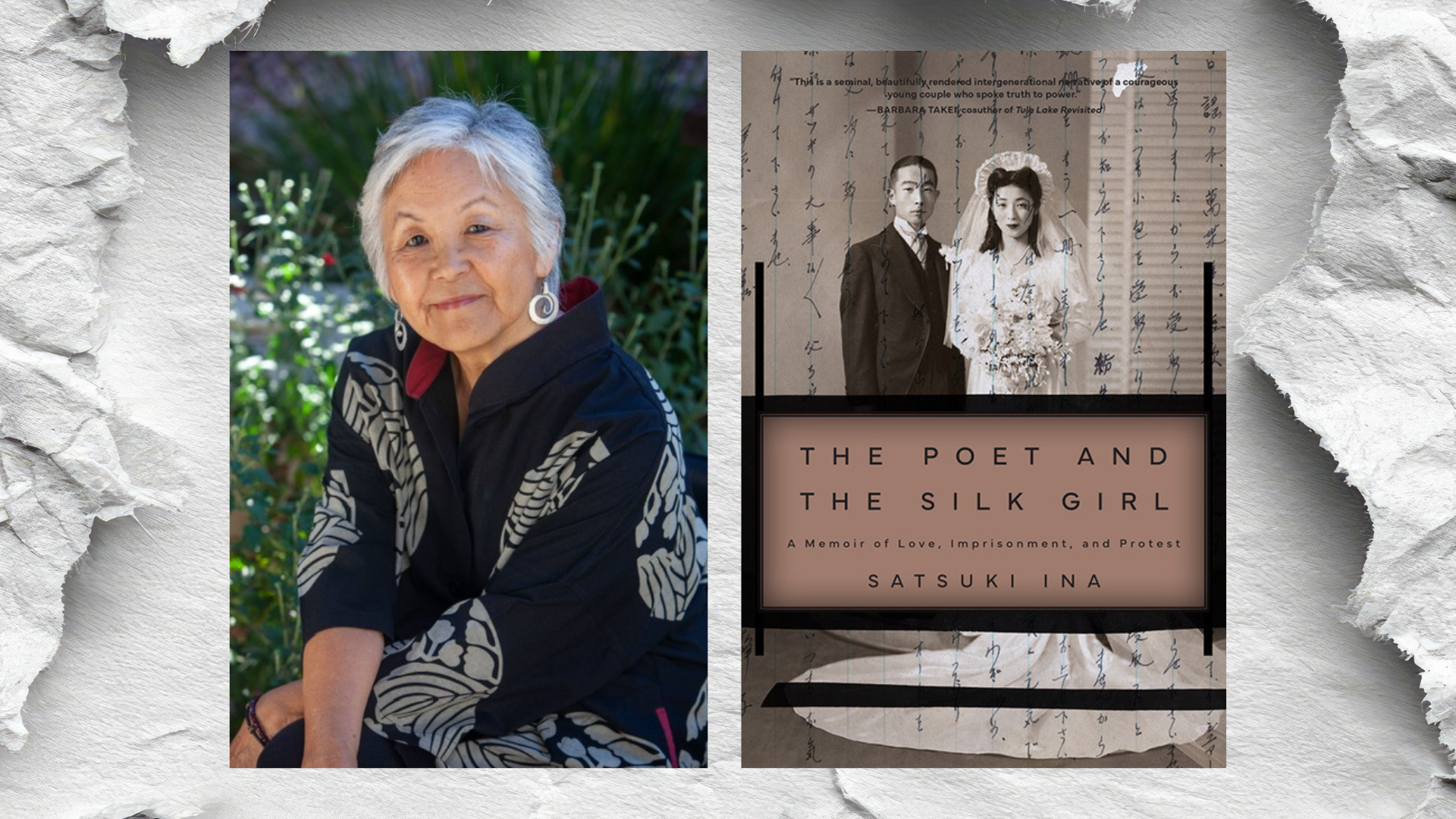
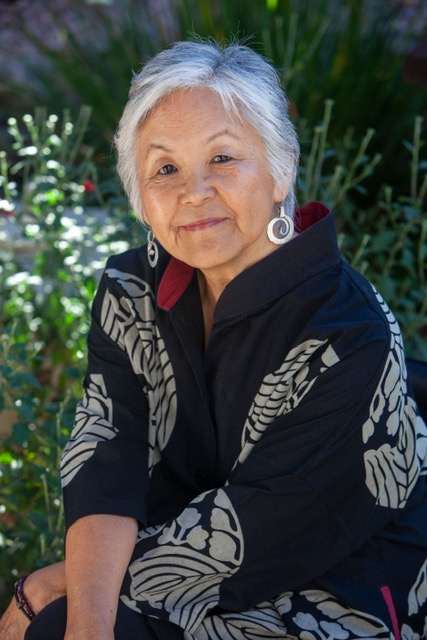
Dr. Satsuki Ina is a licensed psychotherapist specializing in community trauma and author of The Poet and the Silk Girl (2024). She helps victims of oppression to claim not only their voice but also their power to transform the systems that have oppressed them. Her activism has included cofounding Tsuru for Solidarity, a nonviolent, direct-action project of Japanese American social justice advocates working to end detention sites. Ina has produced two documentaries about the World War II incarceration of Japanese Americans, Children of the Camps and From a Silk Cocoon. She has been featured in the New York Times, the Los Angeles Times, TIME, Democracy Now! and the documentary And Then They Came for Us. A professor emerita at California State University, Sacramento, she lives in the San Francisco Bay Area.
In a conversation with Densho Education and Public Programs Manager Courtney Wai, Satsuki shares what teachers should know about her book, including how her memoir provides a unique perspective on the incarceration and helps students connect this history to present-day immigration enforcement. As a psychotherapist, she also offers suggestions for how educators can create a safe space for students learning about incarceration history and how she hopes students will connect activism with healing.
Courtney Wai: Can you share a little about your background and what led you to write The Poet and the Silk Girl: A Memoir of Love, Imprisonment, and Protest?
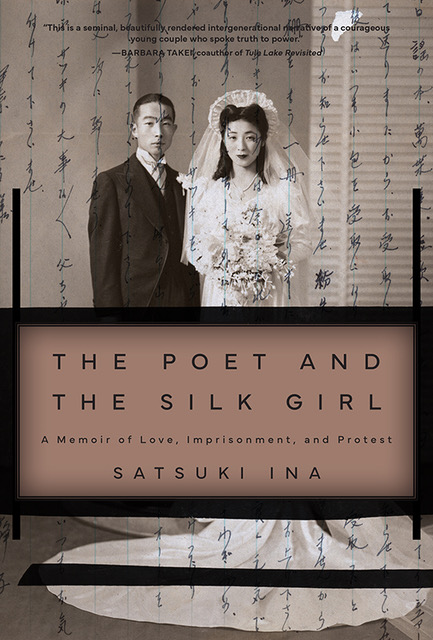
Satsuki Ina: Sometime after my father passed away in 1977, my mother and I discovered a packet of letters wrapped in twine in the back of his desk. My mother immediately recognized the letters she had written to him while they were held in separate prison camps during WWII. After pausing to push back her tears, she said, “Somewhere around here, are the letters he wrote to me.” Without examining the discovered letters, she handed them back and quietly left the room. The next morning, without saying a word, she had placed the letters my father had written to her alongside the ones we had found. It was clear she wasn’t ready to open the letters, nor was she ready to talk about her experience.
There were 182 letters, still in their envelopes, stamped “Internee of war. No postage necessary,” written from 1944 to 1946. Over time I gathered together my mother’s diaries, and my father’s haiku poetry journals, mostly written in Japanese. Possibly impacted by the fear and silence that shrouded my parents’ war time trauma, it took me over twenty years before I had the courage to begin translating my parents’ story. It was clear that they had intended for me to tell their story.
CW: Your memoir draws deeply from your parents’ letters, your father’s poetry, and your own reflections as a psychotherapist. What do you think these personal materials help readers understand that a traditional history text might not?
SI: To have the opportunity to read very personal, first person accounts of WWII Japanese American prison camp life is rare. My parents’ own words describing their daily experiences and their fears and anxieties as they navigate and succumb to prison life elicits a multitude of emotions, and possibly even empathy, which is very different from reading facts and figures from a third person perspective.
Learning about historical injustice is not just about helping students gain “knowledge” but, at its most meaningful, it is about learning how it happened and what consequences were suffered that can lead to questions about what can be done to avoid having it repeated. When authentic personal experiences are shared, the reader is invited to identify with the story and its characters and circumstances to retain not just facts, but the deeper meaning embedded in the historical facts.
CW: Many educators are trying to teach Japanese American incarceration history with honesty and care. What guidance would you offer teachers who are helping students process histories of family separation, incarceration, trauma, and state violence?
SI: I think it’s important for educators to teach the Japanese American incarceration history, not as a single aberrant story about the failure of democracy, but as part of a broader perspective about the ways in which white supremacy and its concomitant ethos of racism has long been a part of American history. From the genocide of Native Americans, enslavement of Black Americans, disenfranchisement of LatinX communities, exclusion of Chinese immigrants, etc., race-based policies and practices are deeply embedded in our history as America simultaneously strives to pledge its allegiance to democracy. To inspire hope and create possibilities moving forward, students can benefit from this broader historical perspective as well as gain inspiration from stories about real people who suffered the consequences of oppression, and yet reclaimed their dignity and agency through their resistance.
CW: Throughout the book, you pay close attention to language and euphemisms. Why is language so important when teaching and learning about Japanese American incarceration?
SI: The justification for the mass incarceration of Japanese Americans was falsely based on the concept of protecting the American public from the national security risk posed by those who had the face of the enemy, whether immigrant or citizen. To justify incarcerating thousands of people without due process of the law, the euphemistic language used by government officials was intended to distort, minimize, and hide the truth of what was being done. Words such as “relocation,” “evacuation,” even “internment” changed the narrative from the truth of the race-based arrest, incarceration, and indefinite detention of all people on the West Coast who had 1/16th Japanese blood. The question of “loyalty” was manipulated by the authorities to justify imposing the military draft requiring young Japanese American men to fight for democracy in Europe, while the “renunciation” of citizenship was a means to take away birthright citizenship and deport so-called “trouble makers.” The language shaped the narrative, making way for the perpetrator to justify their unconstitutional actions. To undo the false narrative, it’s important to hear from the directly impacted victim.
CW: Your book brings forward the experiences of Tule Lake renunciants and their long fight for recognition. Why is this an important, and often undertold, part of Japanese American incarceration history for students to learn?
SI: The Tule Lake renunciants suffered the consequences of the false narrative imposed upon them by government officials. To justify the removal and deportation of people who challenged the illegality of their incarceration and/or the right to protest the draft, dissidents were labeled as “disloyal” but authorities could not find legal justification to be rid of them. The Renunciation Act was passed quickly in an effort to strip dissidents of their birthright citizenship to then justify mass deportation to Japan.
Ultimately, it was determined that said “renunciation” while imprisoned, was made under “duress” and therefore deemed null and void. But as often happens in conditions of mass incarceration, prisoners, as well as the general public, internalized the perpetrator’s intent to stigmatize dissidents as “disloyal,” thereby erasing not only the story of dissent, but also, the machinations of a government attempting to justify racist and unconstitutional policies. It is important for students to know whose narrative represents history. Regarding the Japanese American incarceration, first person narratives make it possible for students to consider the underlying racism that informed government policy during WWII.
CW: Many teachers are looking for meaningful ways to connect Japanese American incarceration to present-day immigration and detention. How has your work with Tsuru for Solidarity and immigrant communities shaped the way you understand these connections?
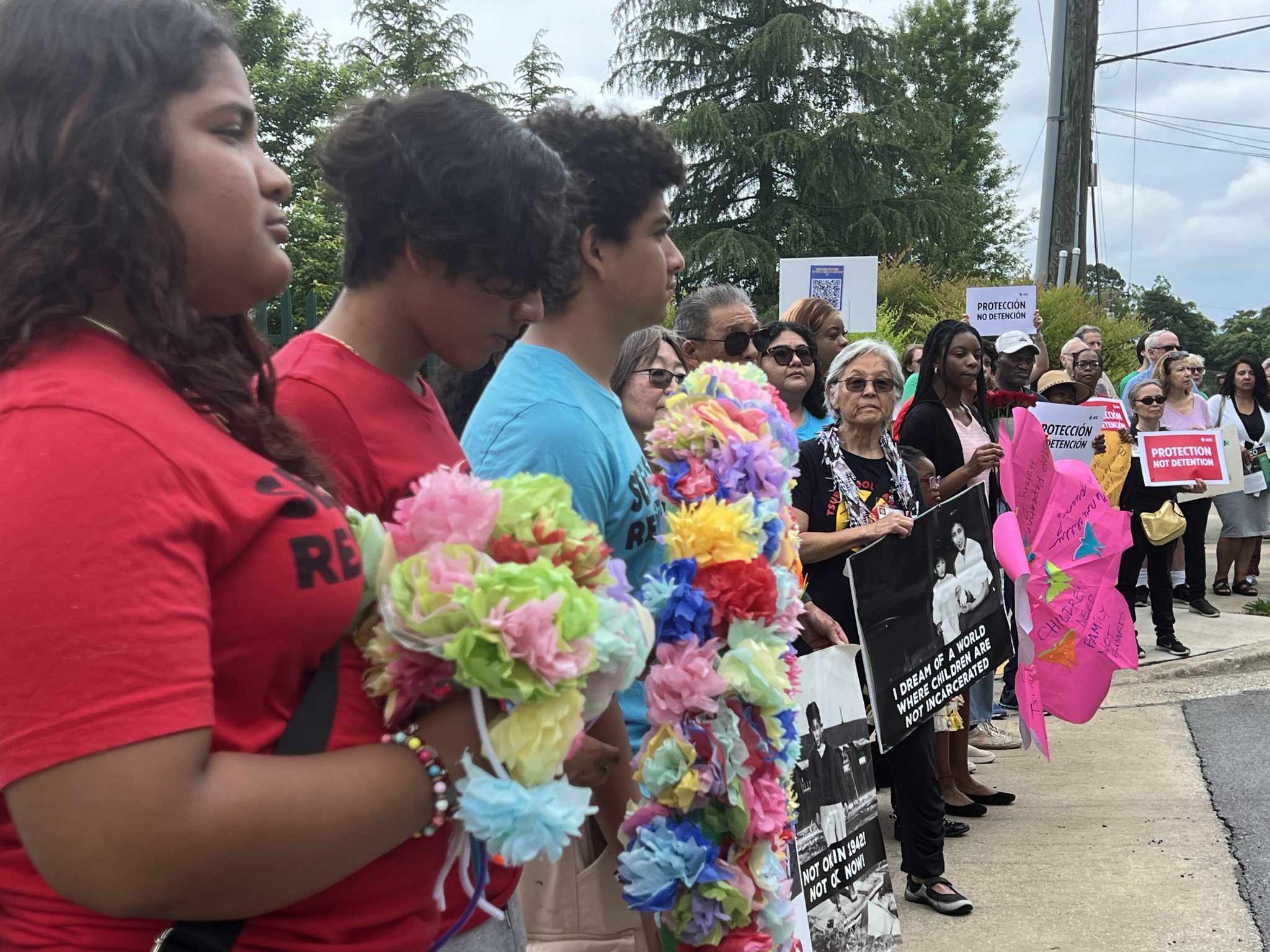
SI: Tsuru for Solidarity, a non-violent, social justice organization comprised of Japanese American WWII prison camp survivors, descendants, and allies, came into being when the language used to describe the “problem at the border” could no longer be ignored as echoes of our own historical experience. Increasingly, words such as “national security risks,” “murderers and rapists,” “economic threats,” were used to describe people seeking asylum from across the Southern borders; the news caught our attention. But when words such as “detention as deterrent,” “residential family centers,” and “separation of families” became precursors to indefinite detention and deportation, we had to respond.
Learning that thousands of children, some ripped from the arms of their parents, were being housed in cages in defiance of human rights laws, we knew we had to show up to protest in ways nobody showed up for us in 1942. Using our moral authority as victims of racist exclusion policies, we organized to protest at detention facilities and to challenge legislators to demand that the government Stop Repeating History!
When speaking to high school students, I begin by saying I’m going to tell them about what happened to my family in 1942, and if they hear anything that sounds like something that is happening today, feel free to snap their fingers. I was pleasantly surprised to hear and see how easily students could make the connections from my story to today. Further discussions about how other communities of color have experienced similar circumstances has been a powerful way for students to understand how racism has long been a part of American history. My hope is that such discussion will not only inform, but will also inspire ways to change the future.
CW: You write about the importance of being a “compassionate witness.” What does that mean to you, and how might educators help students practice compassionate witnessing in the classroom?
SI: To be a “compassionate witness” means to care…to care enough to speak up, stand with those who are targets of cruelty and dehumanization. To practice compassionate witnessing requires empathy, the ability to identify with the person being targeted and recognize that my presence could be a powerful force in protecting someone from harm. It doesn’t require heroism, it just requires that we see the victim as another human being like myself and the circumstance calls for me to offer support and strength.
To help students develop this capacity, they need opportunities to get to know one another, to identify ways we are similar, and appreciate the ways we are different. It requires having a sense of agency, that helps me believe that my action, my words could make a difference. Learning history through the lens of personal storytelling is a powerful way to encourage empathy. I often ask students to have a conversation about what they might choose to bring if they were forced to leave their home and take with them only what they could carry.
CW: As educators approach the 250th anniversary of the United States, many are thinking about how to teach constitutional ideals alongside histories of exclusion and civil rights violations. What do you hope teachers and students take away from your family’s story about the Constitution, democracy, and dissent?
SI: I hope that teachers and students will see that the Constitution, democracy, and right to dissent can easily be taken for granted or easily taken away from them; that protecting those rights is up to each of us; that those rights taken away from one person or group means it can be taken away from all of us.
CW: What resources, activities, or questions from your study and discussion guide would you especially recommend for teachers using this book with secondary students?
SI: Any activity that personalizes the issues, makes it relevant for everyday life, will serve to increase empathy and help to close the divide that separates and thus dehumanizes us. We need to focus on real life incidents happening today that makes a student stop and think and care when someone says, “We need to get rid of those dirty Japs/immigrants!”
CW: The final chapter of your book reflects on how working toward justice can be part of healing from trauma. What do you hope readers–especially students–might learn from this part of your story?
SI: During our first protests, we often found ourselves laughing and crying at the same time while we chanted and gave speeches, while we sang children’s songs in Spanish and Japanese, when we gathered afterwards exhausted and inspired. Speaking out, allowing ourselves to feel outraged, allowing ourselves to remember our own stories, empowered us. We found that by standing up in protest on behalf of others, using voices we didn’t have when we were the targets, gave us strength and affirmation. We didn’t know it then, but we were experiencing a healing from our own trauma. We were experiencing our own humanity as caring, righteous people taking action to make a difference.
Learn More
- Satsuki Ina (personal website)
- Watch Satsuki Ina’s Oral History on the Densho Digital Repository
- ‘Stop Repeating History’: Plan to Keep Migrant Children at Former Internment Camp Draws Outrage, The New York Times, June 22, 2019
- “‘Remembering Is a Form of Protest’: Psychotherapist Satsuki Ina on Internment Trauma Yesterday and Today,” MindSite News, May 22, 2026
Watch Satsuki Ina’s Films
- Children of the Camps, 1999 (about the film)
- From a Silk Cocoon, 2005 (about the film)