March 9, 2026
How did Densho’s digital archives begin, and how have they evolved over nearly three decades? Densho Archives Director Caitlin Oiye Coon traces the journey from the creation of Densho’s first “Digital Archive” in 1998 to today’s “Densho Digital Repository,” highlighting the people, technologies, and ideas that shaped how Japanese American history is preserved and shared online.
Introduction
As the Archives Director at Densho, I have been working with our digital archives program for 14 years. My first task here was to help develop a new version of the Densho Digital Archive from an archivist’s perspective. The resulting Densho Digital Repository (DDR) has been present in my work life almost every day, and I often take it for granted.
But in celebrating Densho’s 30th anniversary, it seems appropriate to look back to the beginnings of our digital archive and to remember how far we’ve come.
Where It All Started
Densho’s first Digital Archive dates back to 1998. The organization was only two years old, but the staff and volunteers had already recorded 75 oral histories and digitized 1,000 historical photographs and documents. Preserving stories of the WWII incarceration was well under way, and the next step was to provide access to these digital stories.
The technology landscape was quite a bit different back then. Google was born that year, Internet Explorer was only a few years old, and the vast majority of households still used dial-up. How then would Densho provide access to their new oral histories and digitized photographs and documents while still taking advantage of cutting edge technology?
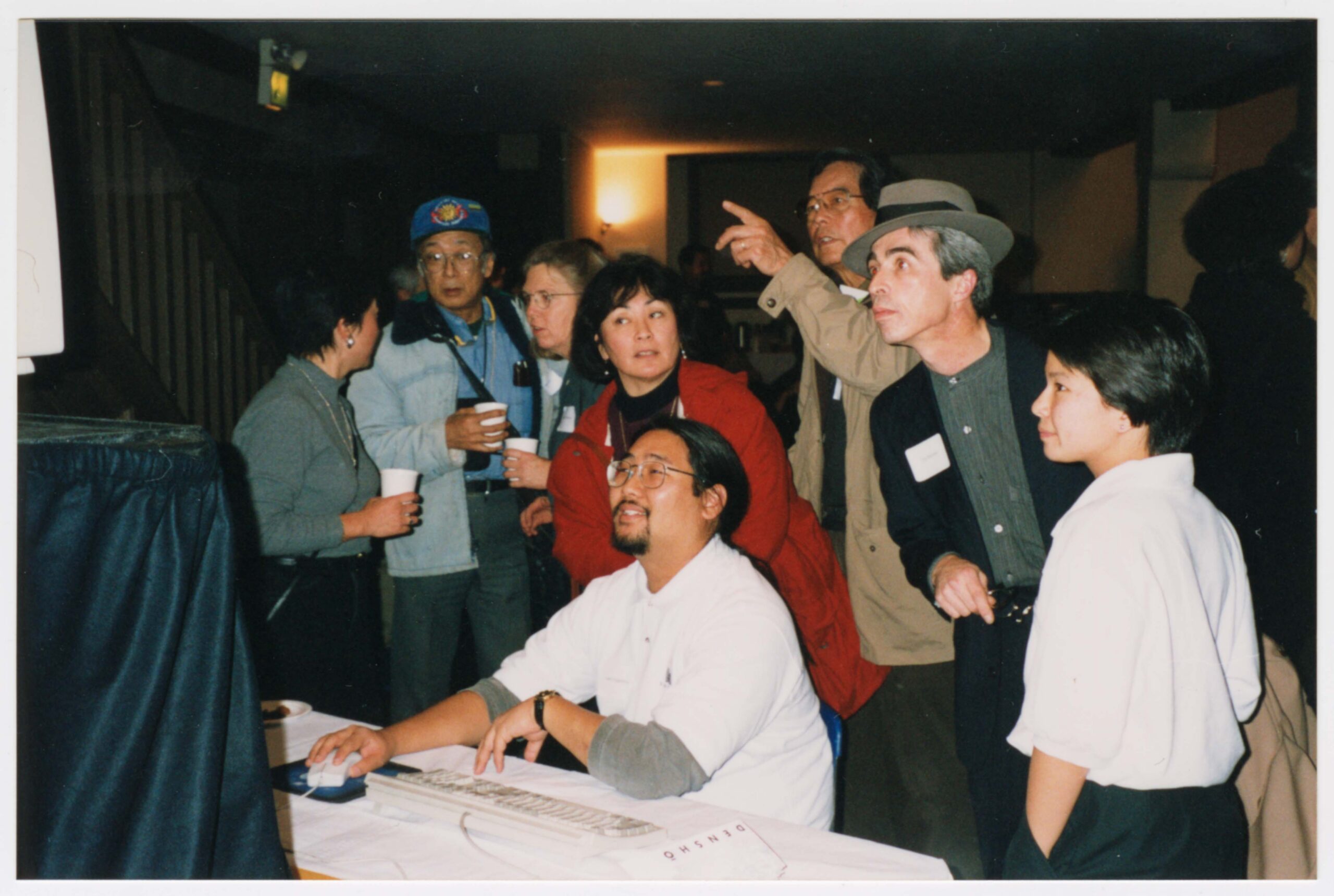
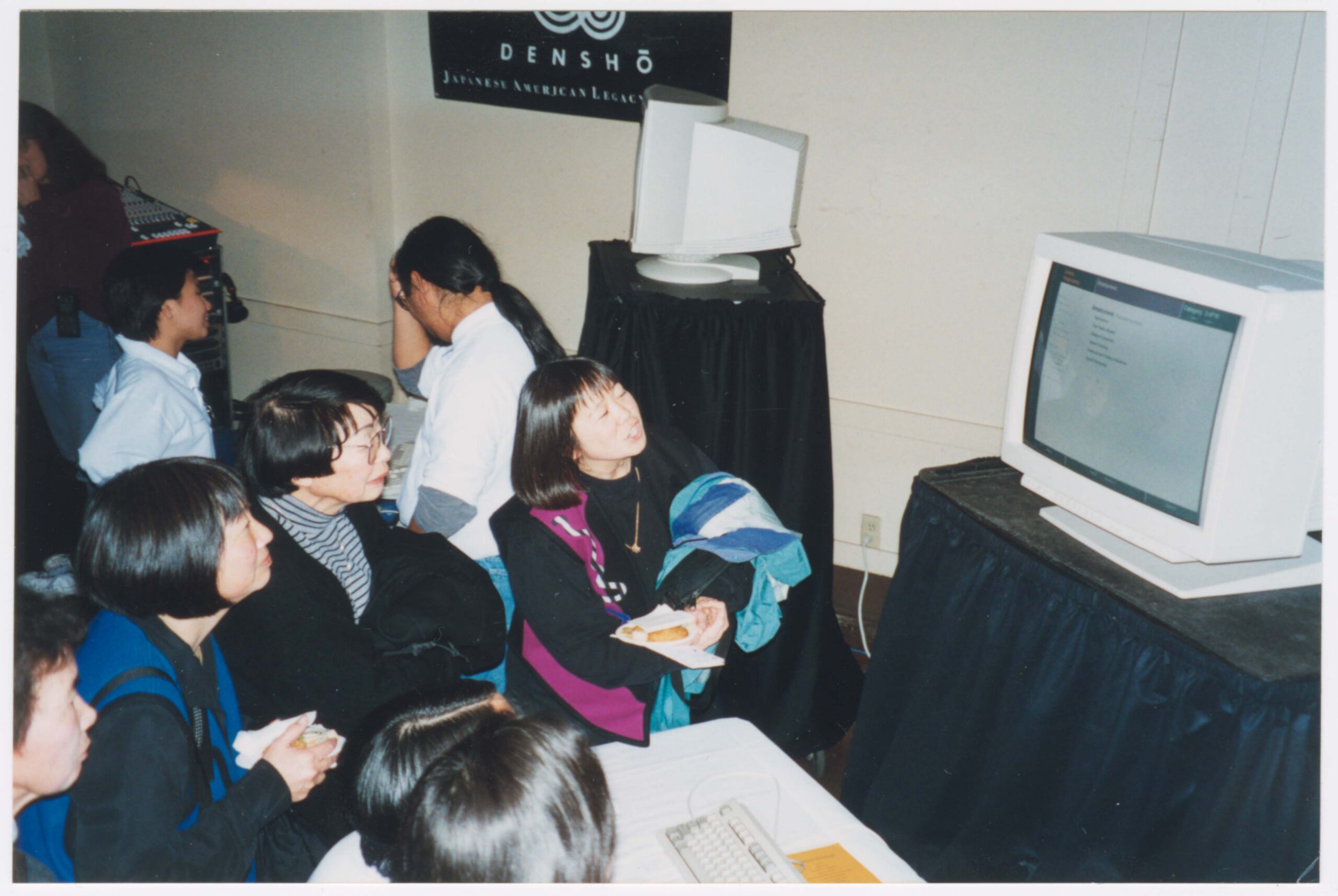
The initial answer came in the form of computer kiosks hosted at the Wing Luke Museum in Seattle. Those computers are long gone, but we still have evidence of those early days with photos of the initial Digital Archive launch event at the Wing Luke in 1998.
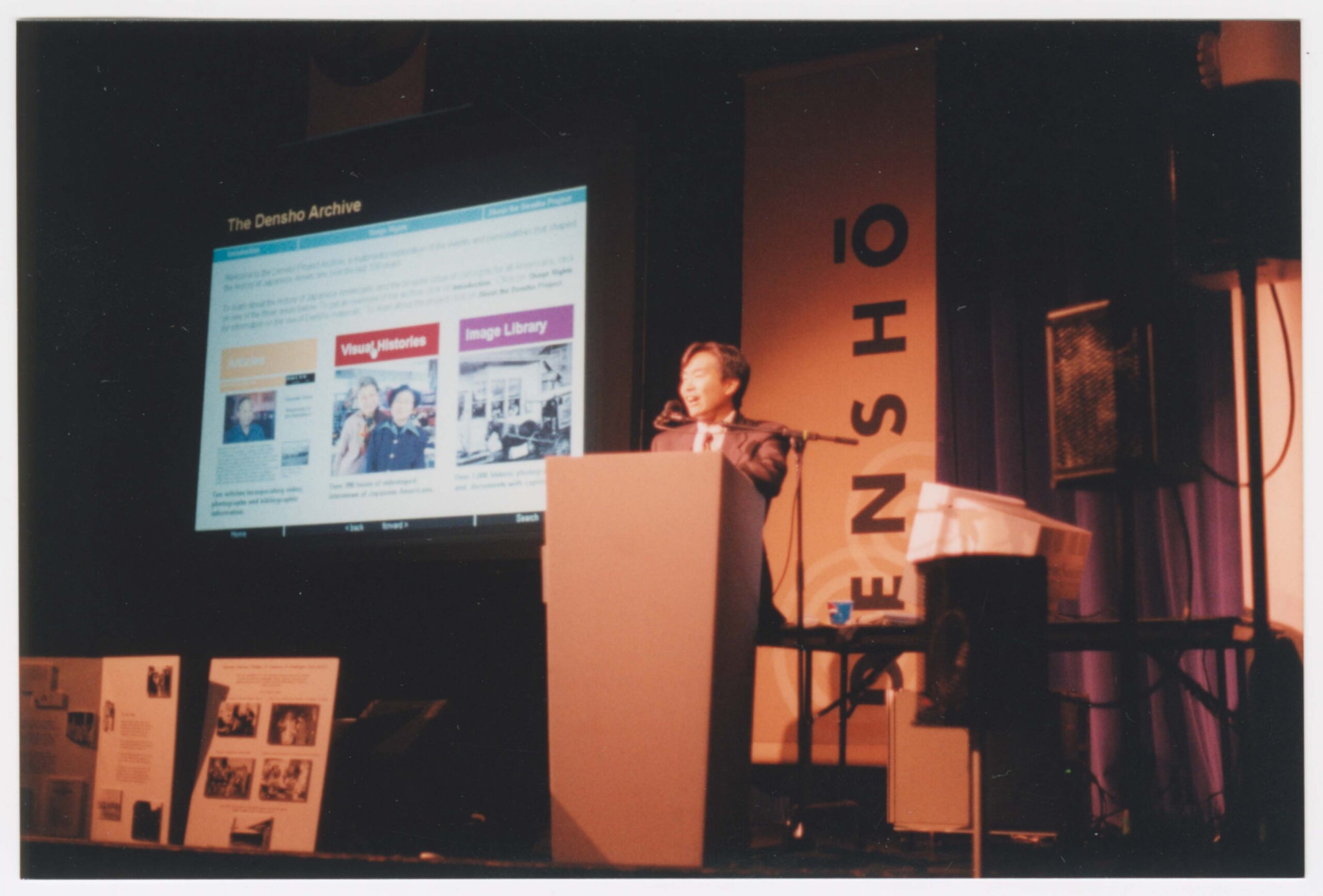
In the photo above, we see Tom Ikeda, our founding Executive Director, presenting the Digital Archive home screen to the gathered audience. You can see the content includes “Articles,” “Visual Histories,” and “Image Library.” It is incredible to think that Densho’s focus has stayed so consistent for 30 years. We can easily see the continuity in today’s Encyclopedia and Digital Repository.
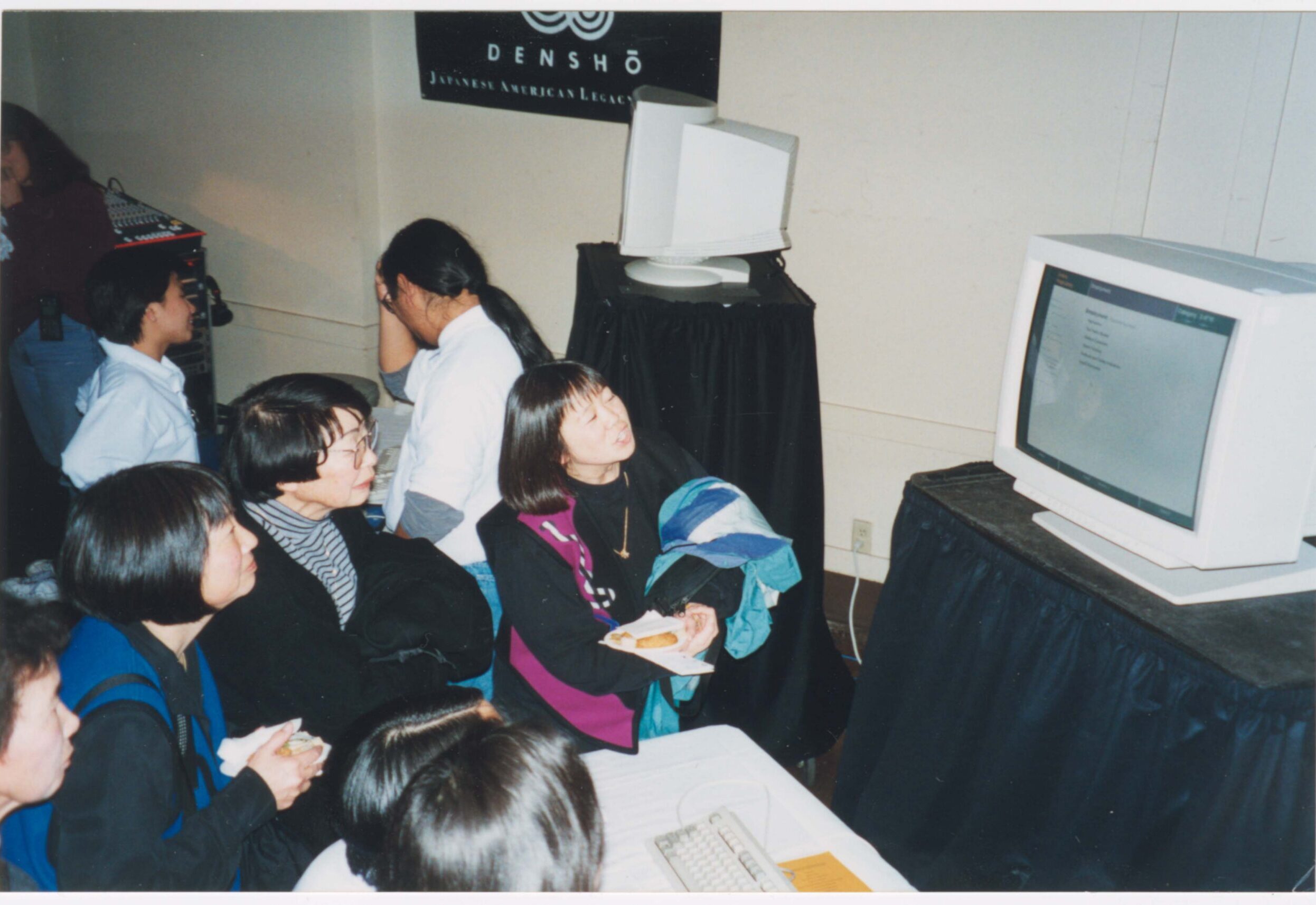
The next photo, below, shows an audience interacting with the Digital Archive computer kiosks. Everyone looks truly engaged in exploring the collected interviews, photographs, and documents.
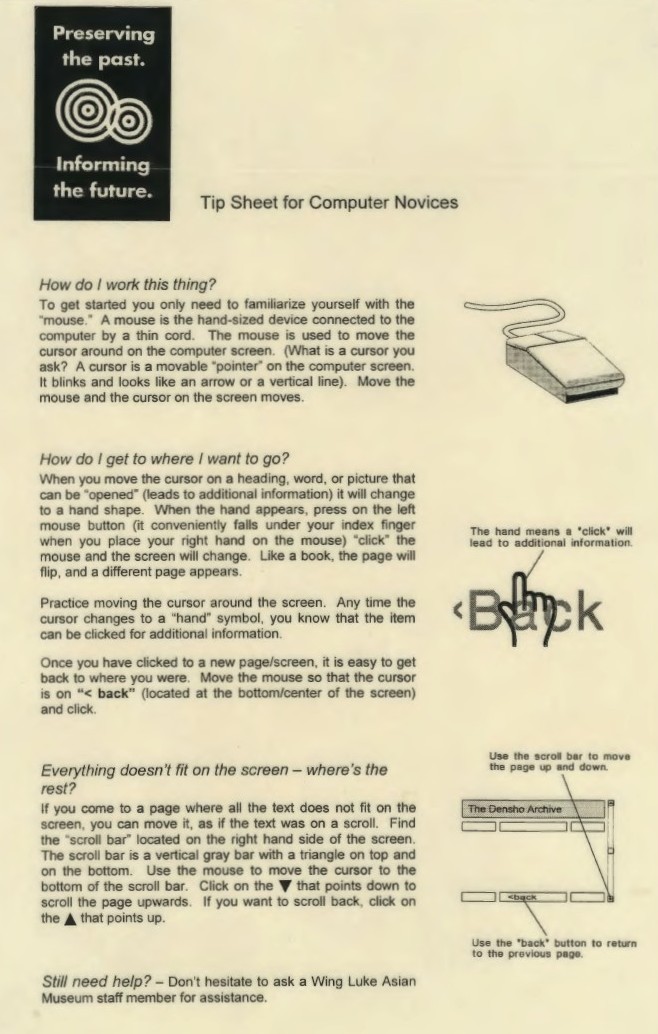
The Archives Team recently came across a “Tip Sheet for Computer Novices” to help community members interact with the Digital Archives. It is a true artifact of the time, explaining that a mouse “is used to move the cursor around the computer screen,” and noting that if the “text does not fit on the screen, you can move it, as if the text was on a scroll.”
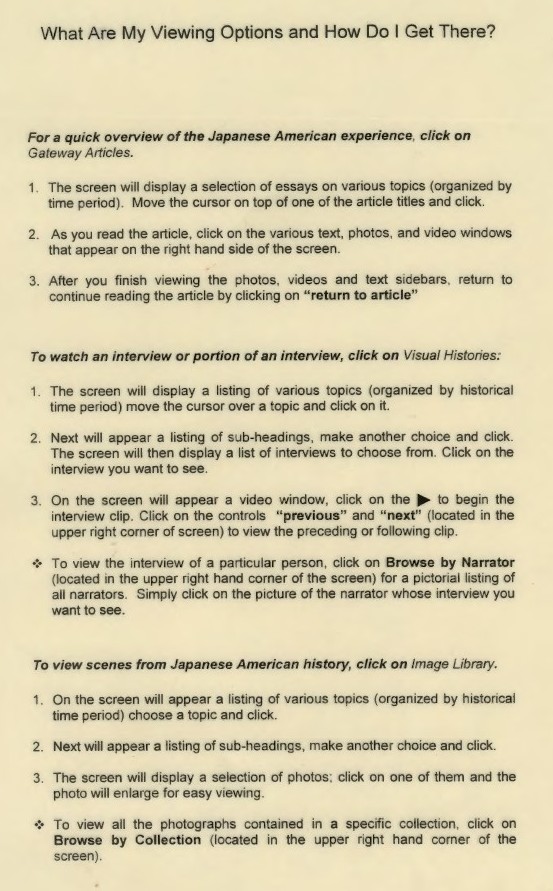
But beyond reminding us of those early personal computer days, we again see the basis for all of Densho’s work over the next 30 years, with guidelines on accessing articles, interviews, photos, and documents.
Reaching a Broader Audience
Even with the success of the Digital Archive kiosks at the Wing Luke, we knew we could reach a broader audience through a web-based site. This would allow people to access the oral histories, digital photographs, and documents from anywhere at any time.
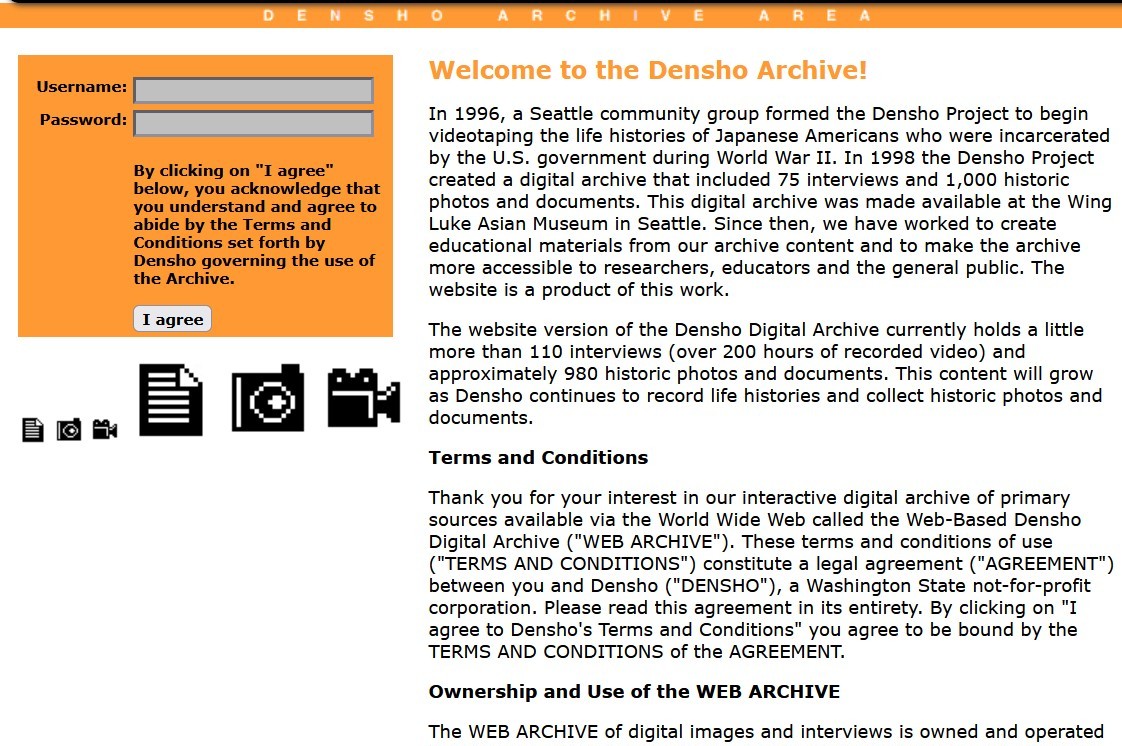
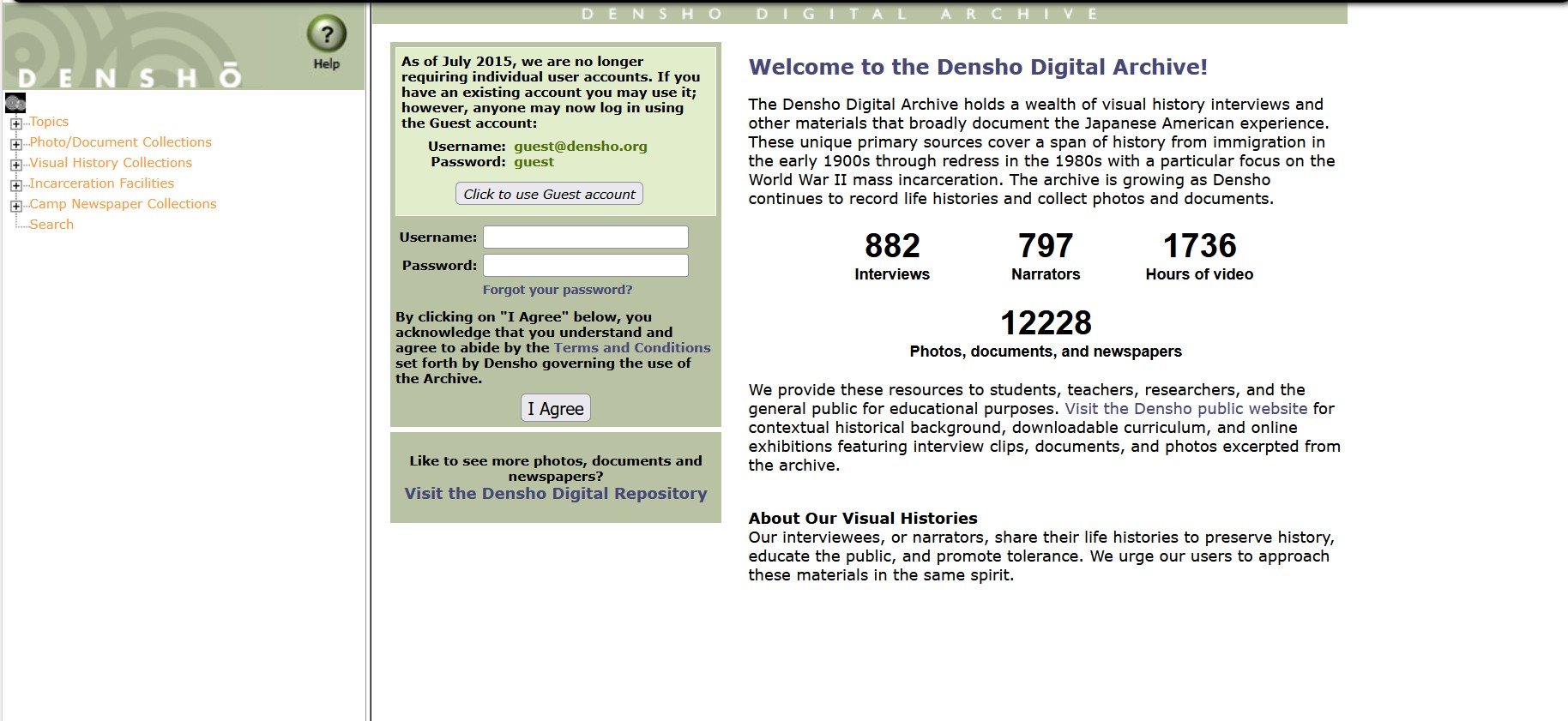
The Densho Digital Archive (archive.densho.org) launched in 2002 with 110 oral histories and 980 photographs and documents. It was free to use the site and download materials, but it did require users to register and log in. The site is no longer available but can still be seen in Internet Archive’s Wayback Machine.
The first iteration was basic but clean with a log in box and information about the site.
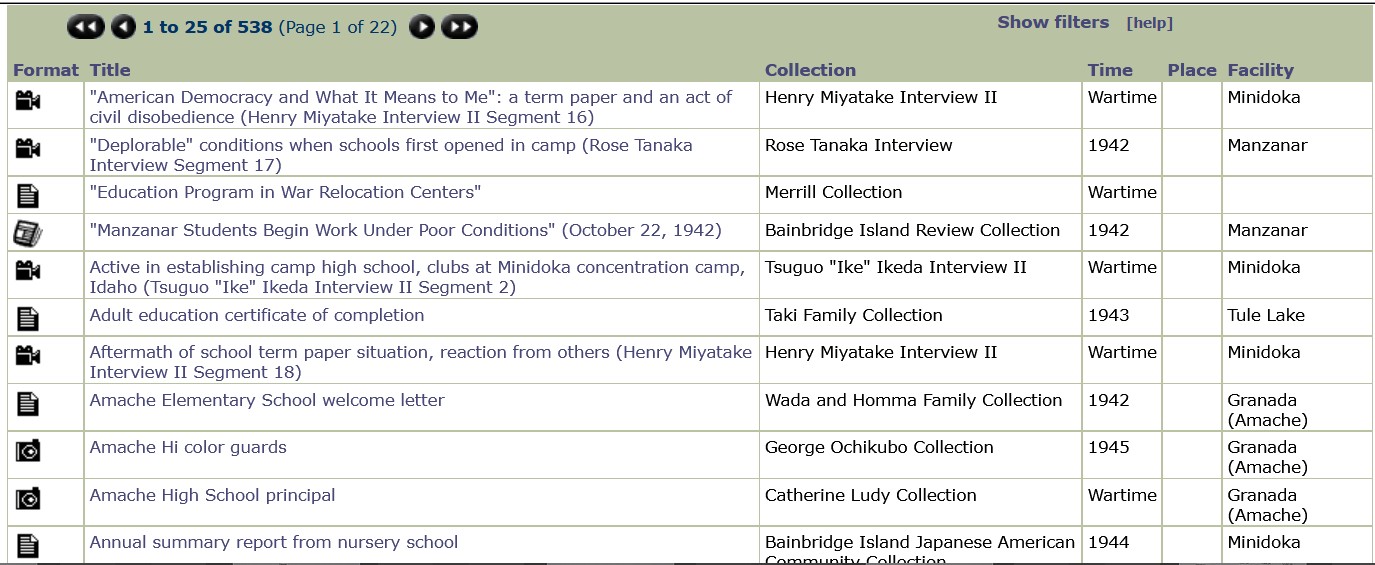
By 2006 the site got a slightly new look, and it did not change much over the next 10 years. Some of you may remember this version of the Densho Digital Archive. Users navigated the site through “Topics,” “Photo/Document Collections,” “Visual History Collections,” “Incarceration Facilities,” “Camp Newspaper Collections”, and a basic search.
Depending on how you chose to explore the site, results would populate at the bottom of the screen with hyperlinks to each oral history segment, photograph, or document.
A New and Improved Version
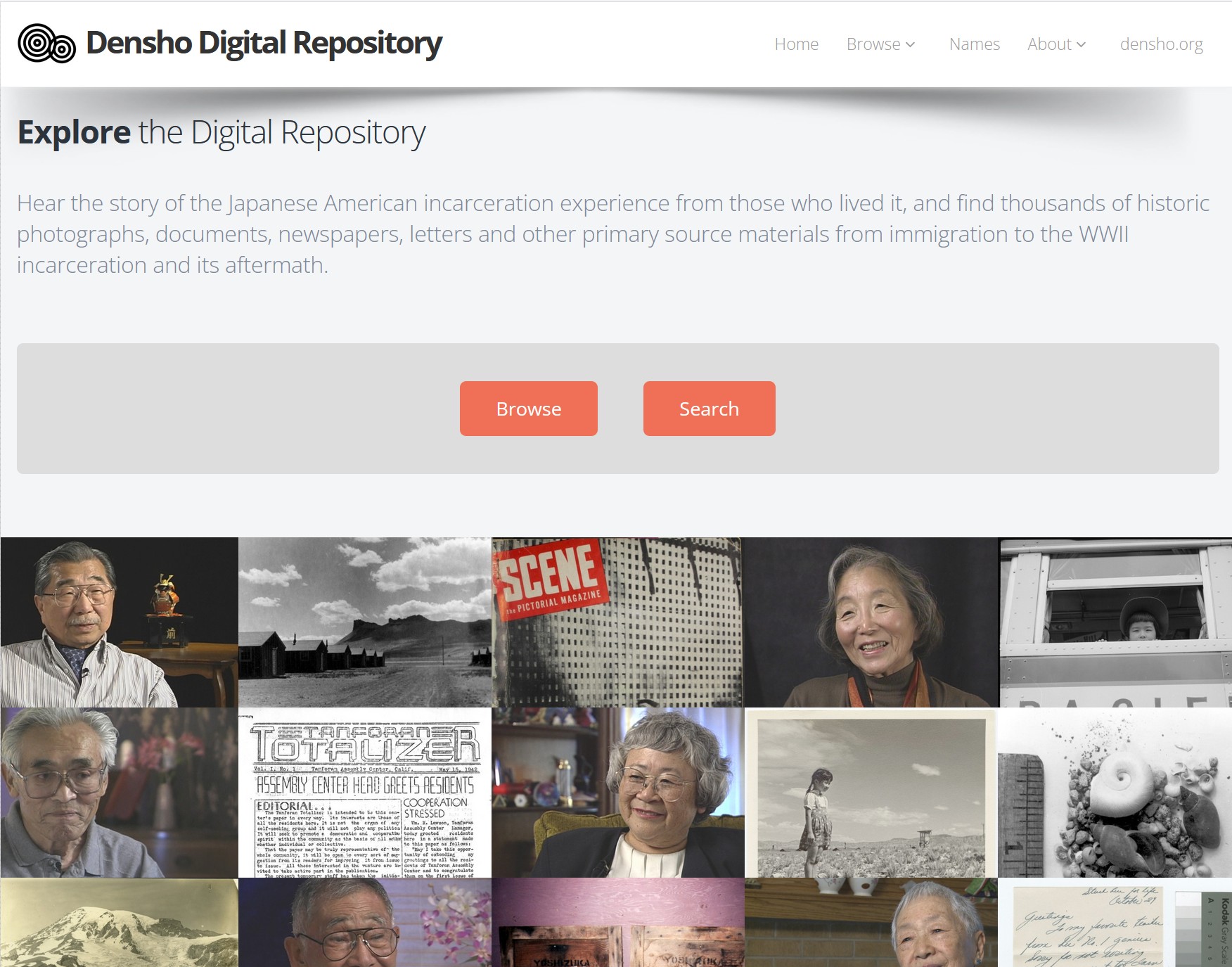
The original Densho Digital Archive served the community well for over a decade. But the tech world moves quickly and we knew we would need to build a new, more robust system that could address technical preservation needs and user expectations. The new and improved Densho Digital Repository (ddr.densho.org) launched in 2013. The user interface was more modern, and the backend management system was based on archival digital preservation standards.
The new website maintained all of the oral histories, photos and documents, and other information contained in the Densho Digital Archive. But the look received a significant upgrade.
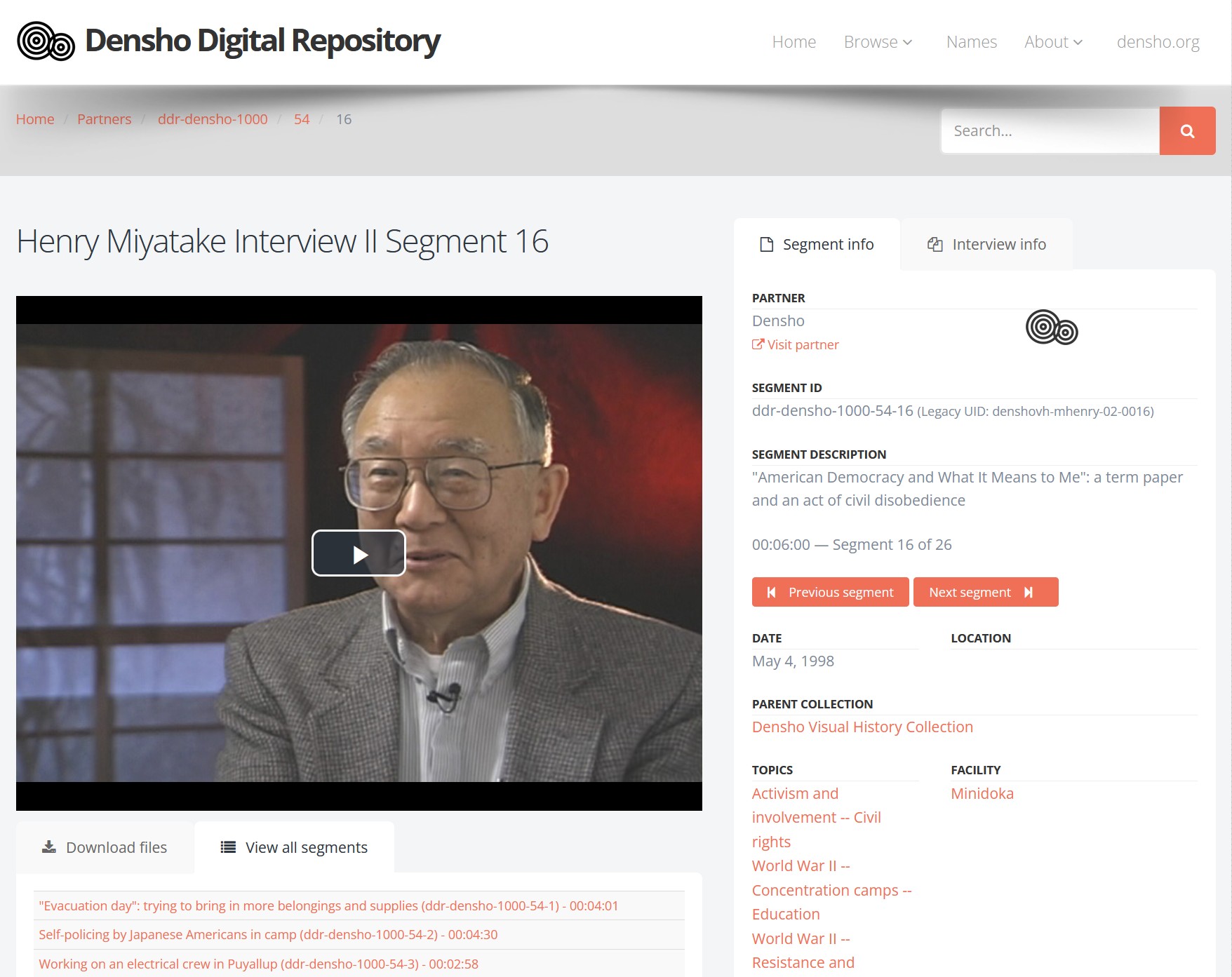
Beyond the visuals of the new website, we improved the site’s searchability and accessibility. The Densho Digital Archive did not come up in Google search results, which limited the number of people who might come across our materials. We were able to change that with the DDR.
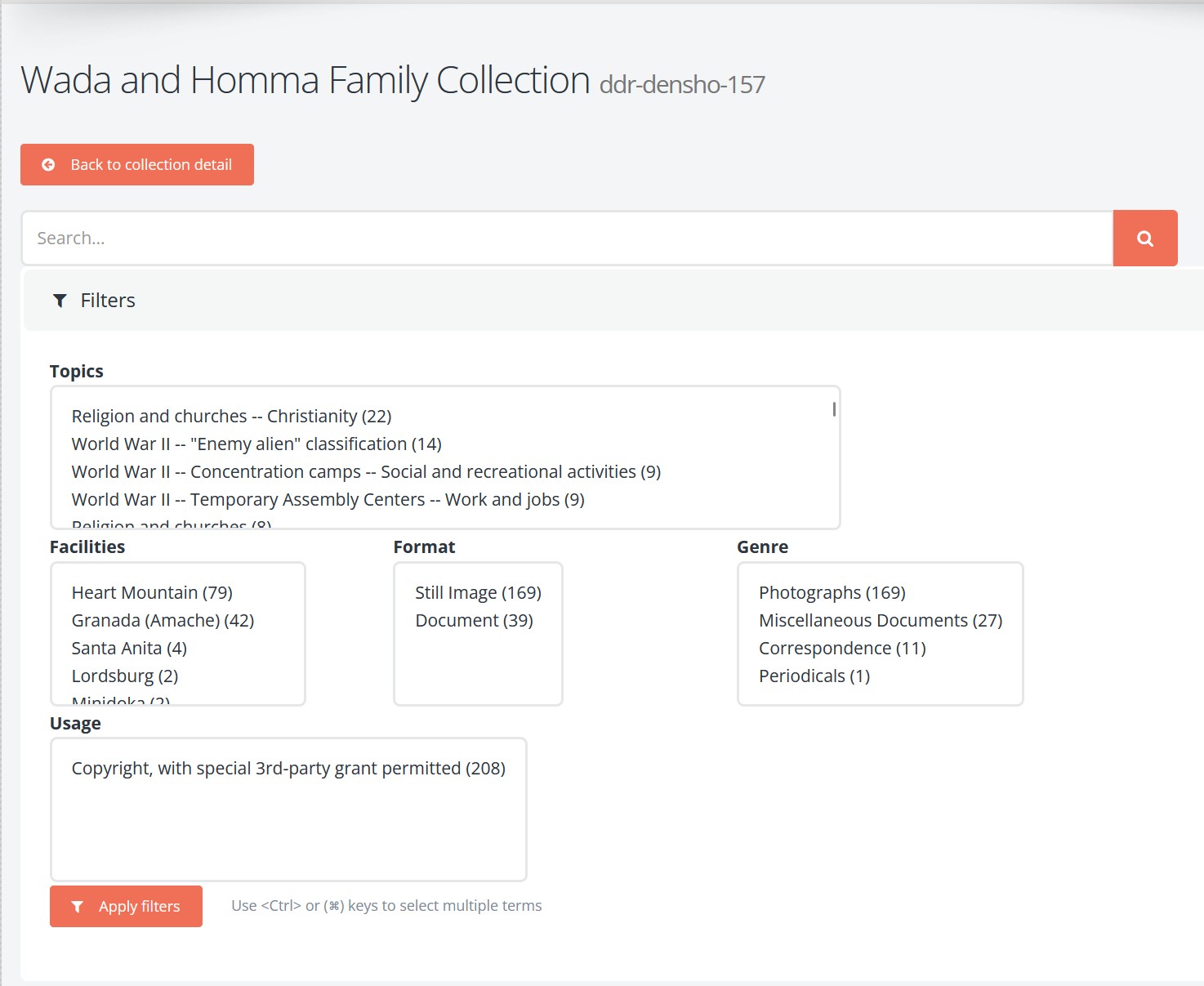
Another improvement came with our search capabilities within the DDR. Before, it was a straight keyword search. Now there are ways to filter and do other advanced searches. This is especially important now since we have increased our holdings to over 1,000 oral histories and over 150,000 historical photographs and documents.
Closing Reflections
In the process of looking back through the different iterations of our digital archives, I was struck by Densho’s steadfast commitment to our original mission: to preserve and share the stories of the WWII Japanese American incarceration.
For three decades, we have pursued this mission, building on our first Digital Archive as well as those early oral histories, photos, and documents. At the same time, we have continued to serve as leaders in the field, using technology in digital archives and continually adapting our core work to an ever-changing technological landscape.
—
By Caitlin Oiye Coon, Densho Archives Director.