March 3, 2026
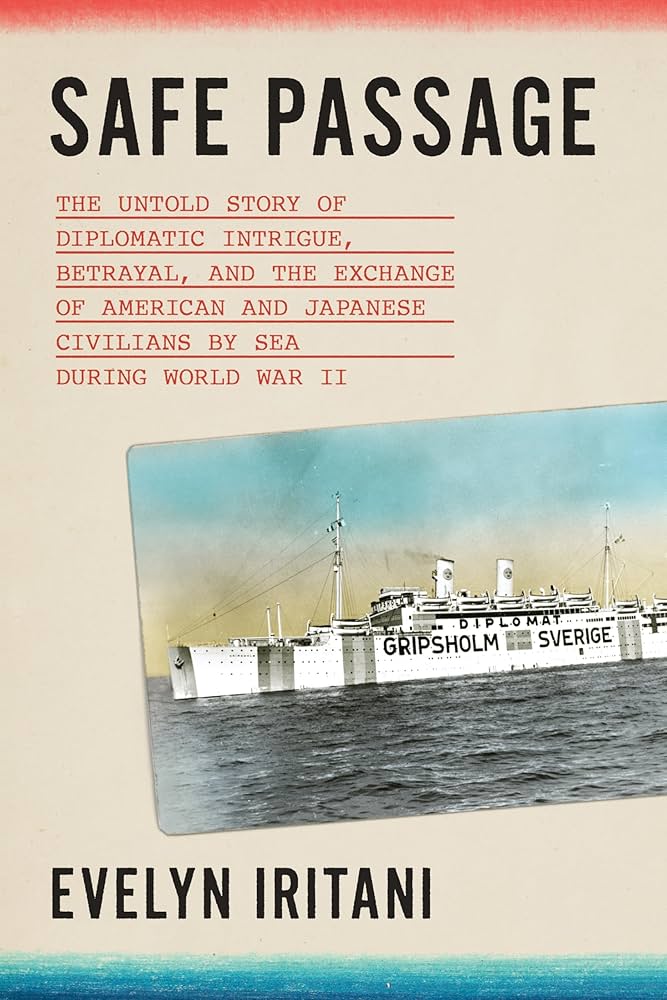
Evelyn Iritani’s new book, Safe Passage: The Untold Story of Diplomatic Intrigue, Betrayal, and the Exchange of American and Japanese Civilians by Sea During World War II, uncovers a little-known chapter of World War II history: the secret negotiations and perilous sea voyages that led to the exchange of thousands of American and Japanese civilians. Through the stories of diplomats, imprisoned families, and community leaders, Iritani traces how international treaties and diplomatic norms were tested as the U.S. government sought to rescue Americans captured across the Pacific, while simultaneously incarcerating Japanese Americans at home. The book sheds light on the painful choices faced by families behind barbed wire, the debates over “repatriation,” and the little-known role of Japanese Latin Americans who were brought to the United States and used as bargaining chips in these exchanges.
Iritani joins Densho Senior Development and Communications Manager Jennifer Noji to discuss the book’s revelations, how it complicates prevailing narratives about wartime incarceration, and why this history remains urgently relevant today.
Jennifer Noji: Can you please briefly summarize your book and describe the central story or argument of your work?
Evelyn Iritani: In the early months of the Pacific War, the Japanese army captured more than 10,000 Americans in places like Japan, Hong Kong, the Philippines, and Singapore. U.S. officials were desperate to free them.
Through a half-dozen fascinating characters, Safe Passage tells the story of a little-known chapter in WWII history: the problem-plagued diplomatic coup that rescued 3,000 Allied civilians, mostly Americans, from a warzone, their dangerous trade by sea, and the painful choices facing the people of Japanese descent who were sent to a country that was no longer, or never had been, their home.
The fate of these people depended on diplomatic norms and international treaties designed to protect innocents in wartime. State Department officials relied on those treaties to secure better treatment for civilians in the U.S. and Asia. But when the Roosevelt administration violated its own laws and commitment to humane behavior – starting with the illegal incarceration of more than 120,000 Japanese and Japanese Americans – it gave its enemies a powerful propaganda tool in their war against white imperialists. It also gave them an excuse to retaliate against civilians in their control, while complicating America’s efforts to bring its people home.
When I started this research a decade ago, I wondered whether people would believe or care about these long buried stories. But unfortunately, we are seeing this history repeated today as the Trump administration wages a war against immigrants based on their skin color and nationality, and as it attacks the constitutional rights that are the foundations of our democracy.
JN: How does your work expand, complicate, or challenge existing narratives and scholarship about Japanese American incarceration?
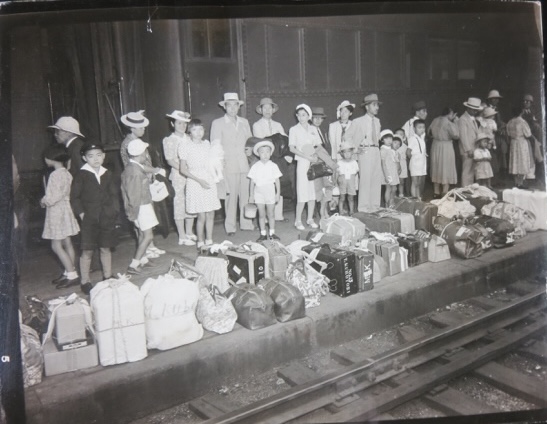
EI: There has been very little written about these WWII civilian exchanges, and even those who participated have questions about why they were chosen. The logistics were agreed on surprisingly quickly: the governments agreed to put their enemy civilians on ships and send them to a neutral port, where they would be traded and taken to their home countries. But this was a one-to-one exchange, and while most Americans were anxious to escape the battlefield, the U.S. government had trouble finding enough Japanese to fill the ships.
Within the prisons and camps across America, there were impassioned debates over whether to participate in the exchanges, and people changed their minds multiple times, much to the dismay of the American negotiators.The talks were conducted in secret, and many people assumed the families who were selected for the exchange were siding with Japan, which led to feelings of resentment and guilt. But that was far from true.
There were certainly people in the camps, particularly among the Issei, who felt betrayed by their inhumane treatment, who jumped at the opportunity to be repatriated. Some agreed to go because they had ailing parents or Kibei children (sent to Japan to study) who were trapped in Japan. Many others opposed going – particularly those with American born spouses or children. They would be Americans traded for Americans. But the government had accused them of disloyalty and forced them from their homes and businesses, and they had no idea what would happen to them after the war. And for those families separated behind barbed wire, it soon became clear that the only way they could be together was on an exchange ship.
To complicate matters further, many of the people who were on the Japanese government’s priority list for the exchange were the Japanese community leaders and others who were arrested in the early days of the war under the Alien Enemies Act—those declared dangerous enemy aliens. But U.S. military leaders wouldn’t allow them to be sent to Japan, claiming, without evidence, that they would aid the enemy.
As the negotiations dragged on, the U.S. scoured the world for people it could trade. Prior to the war the Roosevelt administration had struck a security deal with Latin American countries to help protect America’s southern border, with a dozen countries agreeing to round up their so-called dangerous Axis civilians and ship them to the U.S. More than 2,200 Japanese Latin Americans, mostly from Peru, were shipped to the U.S., where they were imprisoned and used as barter in the two exchanges that took place in 1942 and 1943.
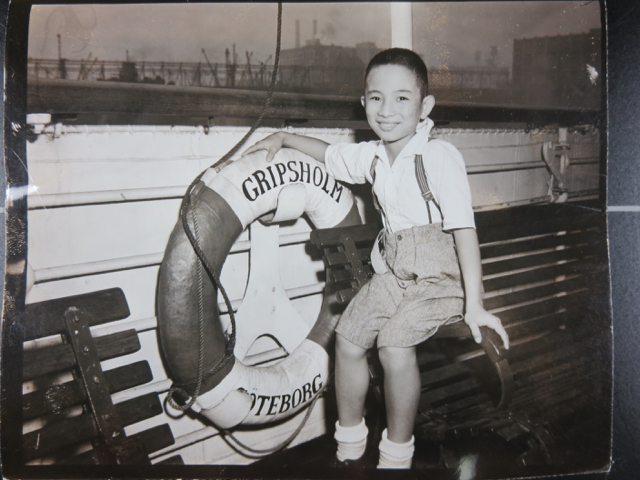
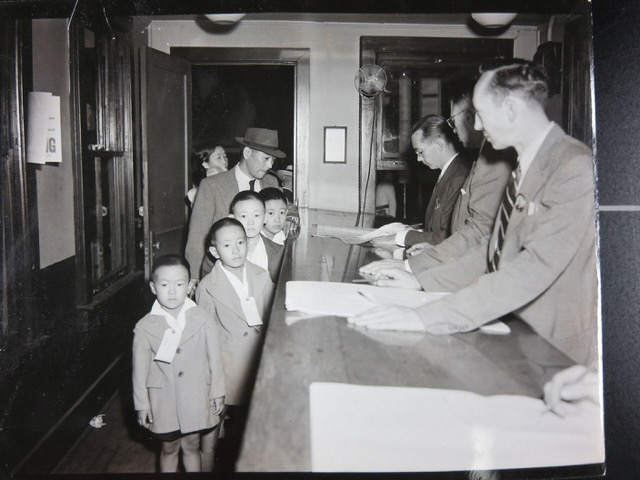
The Japanese returnees were not always welcomed in Japan with open arms. By 1943, the Allied embargo had cut off most basic supplies, and the Japanese people could barely feed and clothe themselves. The Japanese American children, who couldn’t speak or read the language, were treated with suspicion. They were enemies in two countries.
JN: What motivated you to write this book, and what kinds of research, experiences, and activities shaped its development?
EI: I first learned of these WWII exchanges more than 30 years ago, when I was working at the Seattle Post-Intelligencer and wrote an article that inspired a book, An Ocean Between Us, about the centuries-long relationship between Japan and the Pacific Northwest.
I interviewed Richard McKinnon, a University of Washington expert on Japanese culture, who told me he was born and raised in Hokkaido, and he and his father were caught in Japan when the war broke out and traded to the U.S. I had never heard of these exchanges and wanted to learn more. But life intervened and it would be many years before I could return to the story.
Over the decade it took to finish this book, I visited the National Archives and other government archives and libraries and tracked down survivors and their families in the U.S., Japan, and Peru. Many of the Americans traded were missionaries, who were meticulous chroniclers of their lives in Asia. Densho, the Japanese American National Museum, and other Japanese American organizations provided oral histories and other critical pieces of the Japanese side of the exchange. The family of Brian Niiya, Densho’s Content Director, was on the second exchange, and I was able to interview his mother before she died.
Unfortunately, many important documents were destroyed in the war or confiscated by the governments before passengers boarded the exchange ships. I was fortunate that a few key characters – Archie Miyamoto, the son of a California farmer, Hisa Aoki, a popular columnist for a Japanese newspaper in LA, and Emily Hahn, a New Yorker writer trapped in Hong Kong – had written about their experiences. Don Hasuike and his sister, Sumiye Jean, whose father owned a large LA produce company, spent many hours with me and shared a trove of government documents detailing their family’s tragic experience.
JN: What were the most challenging, surprising, or enriching aspects of the writing process for you?
EI: I was raised in a cross-cultural environment – my father was Nisei, born and raised in Colorado, and my mother was born and raised in Japan. So throughout my life, I felt the influence of both cultures, which were often but not always in harmony. As a journalist covering Asia, I looked for stories that could help bridge the gap in understanding across the Pacific. That’s what I hoped to do in this book.
Initially, inspired in part by Eric Larson’s book, Dead Wake, on the sinking of the Lusitania, I wanted to tell this story by shifting back and forth between the American and Japanese passengers on board the exchange ships. But I was unable to find the captain’s logs for the ships, and reports from the passengers about the voyages were limited. Readers will discover what happens when you throw an eclectic mix of people – birdwatchers and nuns, businessmen and sailors – onto a crowded boat in wartime. But I also included the diplomatic wrangling because it helped explain the toxic combination of racial prejudice and wartime hysteria that determined peoples’ fates on both sides of the Pacific, in particular, the imprisoned Japanese and Japanese Americans.
Finally, I had to identify the half-dozen key characters who best illustrated this story, and then figure out how to weave their experiences together with the diplomacy. It took me a number of years, and the help of a great class at Seattle’s Hugo House, a wonderful writing cohort, and a supportive editor, to nail that piece of the puzzle.
JN: Who do you see as the primary audience for this book, and what do you hope readers will learn, question, or carry forward after engaging with it?
EI: I hope there is a large audience for this book starting with people interested in WWII diplomacy and maritime history, as well as those who care about U.S.-Japan relations and the Japanese American story. Over the years, we have learned a lot more about the fascinating people involved in fighting WWII, including the Japanese Americans who were among the most-decorated units in the war. But we know far less about the war’s impacts on civilians, particularly those caught in Asia or traded to Japan. The Pacific War was not a race war, but it was a war where race played a critical role in defining the stakes and the victims.
Which brings me to my final, and most important point: the disturbing parallels between this piece of history and what is happening today. Once again, we see a government resurrect a centuries-old law – the Alien Enemies Act – to wage a war against immigrants based on their skin color and nationality, hunt them down and imprison them without due process, and then pressure them to self-deport, or deport them against their will.
The Trump administration claims its campaign to cleanse America of people who pose a security threat has led 1.9 million people to voluntarily self-deport or migrate. But those decisions are no more voluntary than the ones made by the people of Japanese descent who agreed to “repatriate” to Japan during WWII.
JN: What other hopes do you have for the book’s impact?
EI: Safe Passage offers a clear example of what happens when a government loses its moral compass and the impacts on Americans at home and abroad. I hope my book can help people understand what they have at stake in today’s battle to preserve our basic rights. In WWII, U.S. officials believed they could have rescued more Americans and gotten them out sooner if they weren’t dealing with the consequences of the prejudiced and illegal actions taken by the Roosevelt administration.
Today, the Trump administration is waging a racist campaign to cleanse America of people it claims are a threat to our security, while pursuing a domestic and foreign agenda that violates its own laws and international obligations. The consequences of the U.S. government’s decision to abdicate its commitment to a rules-based international order are still unfolding. But the world is already a less stable and more dangerous place.
JN: What projects or next steps are you currently working on?
EI: I always have a few ideas noodling around in my brain. But right now, I’m trying to figure out how to get this story to as many people as possible, and what I can do to help ensure our democracy survives for our grandchildren.
JN: Is there anything else you would like to share?
EI: Resistance matters. Whether it is escorting immigrant children to school or donating to legal aid groups or documenting the historical records at U.S. government institutions before they are purged. It’s all important. Terrible things happen in wars. But if President Roosevelt had listened to the concerns of his wife, his attorney general, and others, and not approved the mass incarceration of the Japanese and Japanese Americans, my book would have had a much better ending for many more people on both sides of the Pacific.
—

Evelyn Iritani is a Pulitzer Prize-winning journalist and author of An Ocean Between Us: The Changing Relationship of Japan and the United States Told in Four Stories From the Life of An American Town and the soon to be published Safe Passage: The Untold Story of Diplomatic Intrigue, Betrayal and the Exchange of American and Japanese Civilians By Sea During World War II (releasing March 10, 2026 FSG). Publisher’s Weekly called Safe Passage“gripping and immersive” and the book is on Lit Hub’s list of most anticipated books of 2026. A graduate of the University of Washington, Iritani began her career at the Seattle Post-Intelligencer and moved to the Los Angeles Times in 1995 to cover international economics. Her reporting garnered numerous awards, including the 2004 Pulitzer Prize for National Reporting and the George Polk Award for Economics Reporting for a series she co-authored on Wal-Mart.
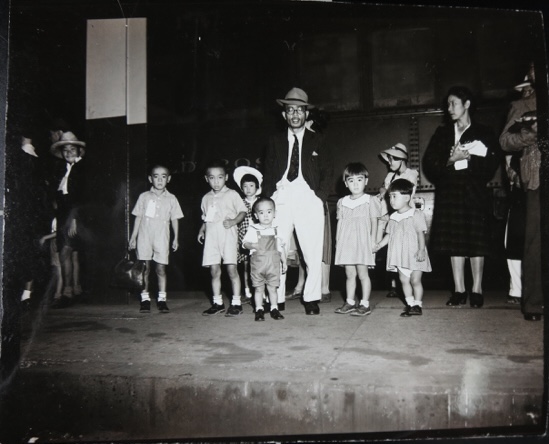
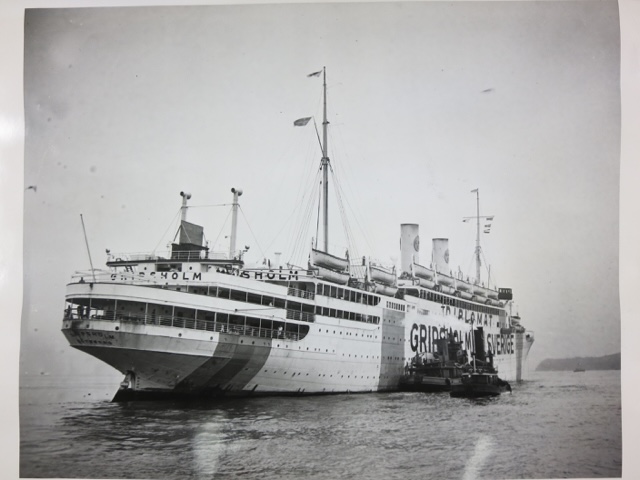
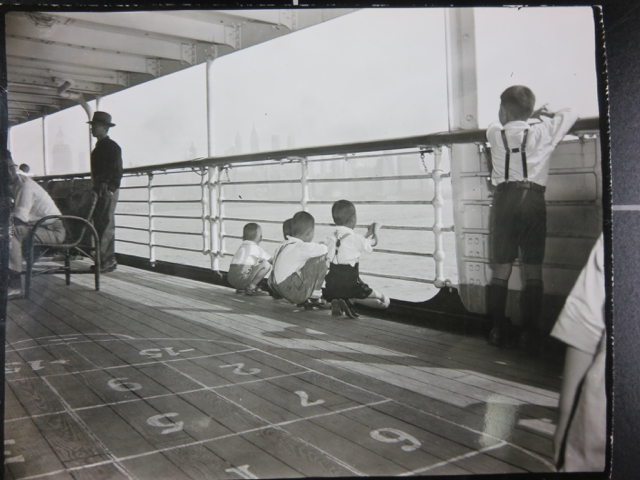
Image credits: The included photos are U.S. Navy Official Photos located at the National Archives at College Park, Maryland. The photos depict the processing and loading of the M.S. Gripsholm at the Port of New Jersey/New York on September 2, 1943.