February 27, 2026
The popular MS NOW podcast Rachel Maddow Presents: Burn Order is the latest retelling of the Japanese American exclusion and incarceration story to draw a large mainstream audience. While a generally well-executed production that can serve as a good introduction to the topic for the uninitiated—many perhaps drawn to the story by current events—there is little new here for those well-versed in the story. At the same time, the show has struck a chord with many Japanese Americans, who are excited to have this story told in times that can feel bleak.
This article by Densho Content Director Brian Niiya is part of a short series of Densho Catalyst posts reflecting on Burn Order. Read Eric Muller’s article for more historical context, and a collective contribution featuring the opinions of various community members. Gain more historical information and insights for each episode in our Listening Guide.
Spreading the Word
A while back, Densho set an “audacious” goal of insuring that all Americans know about the Japanese American exclusion and incarceration story by the 100th anniversary of Executive Order 9066 in 2042, just sixteen years from now. While this was certainly noteworthy, it begged the question of just how many people know about that story now. Depending on who you ask, the story seems to be both well-known and little-known at the same time, with no real way to know for certain.
One reason to suspect that many have at least heard of the story is the number of times mainstream media productions have referred to it over many decades. One could start in any number of places, but one milestone was certainly the 1965 episode of CBS’s Twentieth Century documentary series titled “Nisei: The Pride and the Shame” that saw Walter Cronkite lamenting the treatment of Japanese Americans during World War II and that included interviews with the likes of Mike Masaoka, Miné Okubo, and Dan Inouye. Seven years later, NBC’s Guilty By Reason of Race took viewers to Santa Anita, Amache, and to a Manzanar Pilgrimage and featured Edison Uno and his family. After the success of Jeanne Wakatsuki Houston and James D. Houston’s camp memoir Farewell to Manzanar, an NBC made-for-television movie based on the book, and featuring an almost entirely Asian American cast, aired nationally in 1976.
Multiple episodes of network TV shows from the 1970s onwards—including Wonder Woman, Magnum P.I., Lou Grant, 7th Heaven, and most recently The Baby-Sitters Club—include Japanese American incarceration centered episodes, along with a handful of Hollywood movies. There have been multiple best-selling novels with WWII incarceration plotlines, including one by Danielle Steel (Silent Honor, 1996), the best-selling living author and supposedly the 4th best selling author of all time (behind Shakespeare, Agatha Christie, and Barbara Cartland), along with a Broadway musical.
In the last decade, with the dawning of the first Trump administration, we’ve seen even a higher rate of such projects, including multiple high-profile commercial press books, a popular comic book series (Bombshells United, 2017–18), an entire season of a cable/streaming TV series (The Terror: Infamy, 2019), multiple documentaries that enjoyed national PBS airings, and even an NFL Films documentary, along with too many children’s books, graphic novels, and museum exhibitions to count.
In writing about most of the productions noted above—as well as many others—I have generally taken the view that, even if they are flawed, they probably have had a positive overall impact in exposing a larger audience to the Japanese American incarceration story, since almost without exception, they portray that event as an injustice, something not to be repeated in the context of their time. I take this tack in part because, despite all of the above, it is also true that the story is likely still little-known and little-understood by large segments of the population. There hasn’t been a lot of research on this, but anecdotally, Densho staff who have done presentations in parts of the country other than the West Coast have reported widespread ignorance of the topic even among school teachers. One recent master’s thesis that explored this question found almost comically misguided impressions of the incarceration even among people who know something about it. So I see more media that might reach these types of audiences as a good thing. At the same time, I try to point out any historical inaccuracies and to provide the type of larger context that is often missing. This was sort of the impetus for Densho’s Resource Guide to Media on the Japanese American Removal and Incarceration.
The Latest
All of this serves as a long introduction to the latest mainstream production, the podcast Burn Order by popular political commentator Rachel Maddow and her team, which debuted in December 2025.
In the context of all that came before it, there is a good deal to like about Burn Order. The podcast is generally engaging and well presented and uses audio clips well, including many from Densho’s archive. In fact, if there were an annual award for best use of Densho materials (the award would be called “The Densho” of course), Burn Order might win, and those of us familiar with the highlights of the oral history archive will recognize many of our “greatest hits.” Maddow and her team also engaged with the Japanese American community in producing the podcast and features largely Japanese American commenters, perhaps to a fault. She also gives Densho a generous acknowledgement.
But there are some issues. While Burn Order covers the incarceration story in general, its main focus is on how the federal government came to the decision to exclude all Japanese Americans from the West Coast, and how it subsequently had to suppress and falsify evidence presented to the Supreme Court in defending legal challenges to that exclusion. In doing so, it draws heavily on Peter Irons’ classic 1983 book Justice at War, where the story of governmental duplicity is first told.
As many of you reading this will know, this is a very complicated story involving a conflict between the Justice and War Departments, each of which were filled with multiple figures who played key roles in the process; multiple agencies that surveilled Japanese American communities in the decade prior to war; and a plethora of West Coast based nativist and business organizations, political figures, journalists and many others who pushed for exclusion for their own various reasons and who influenced the decision makers in various ways. It is in some ways not the best story for a six-episode podcast because of its complexity.
To tell such a story in a podcast, the Burn Order team largely reduces the story of the road to Executive Order 9066 to four main characters who are broadly painted as heroes or villains: Kenneth Ringle and Edward Ennis (good), and John DeWitt and Karl Bendetsen (bad). In taking this approach, the complex story is made deceptively simple, with many other key figures mentioned only in passing or omitted completely, and the key figures portrayed in a one-dimensional fashion. Legal historian and friend-of-Densho Eric Muller has detailed the problems with this approach in an excellent essay we are publishing separately, so I won’t repeat the rest of what he says, but if you are at all interested, you should read what he has to say.
Beyond what Eric mentions, I also have to note one other similar issue. There is a segment that lionizes wartime Colorado Governor Ralph Carr. While Carr indeed took a politically risky position that vividly contrasted that taken by governors of neighboring states, his words and actions were a bit more complicated than is presented here, and the oft repeated claim that his stand cost him his political career has been questioned by historian Greg Robinson and others. Again, the podcast flattens the complications of history into a binary “good” vs. “bad” framework.
There are a couple of other instances where the shortcuts taken in the storytelling lead to misleading conclusions. While the story of the Supreme Court cases and government cover up is handled well, I suspect that the singular focus on the Endo case might lead the listener to conclude that the Endo decision alone led to the closing of camps, since the the War Relocation Authority and that agency’s long standing push to close the camps is not mentioned at all.
Similarly, while Burn Order does a really good job in telling the story of the coram nobis cases, largely through the eyes of key participants Aiko Herzig, Peter Irons, and Lorriane Bannai, its coverage of the Redress Movement suffers from some of the same issues as earlier segments in that it focuses largely on one person, Congressman Norman Mineta. Again, telling a complex story largely through the eyes of one person ends up flattening it, and we lose the Japanese American social movement that led to the legislation Mineta championed.
The other overarching critique I have of Burn Order is that the producers seemingly didn’t consult with any of the living scholars—Muller and Robinson chief among them—who have relevant expertise on the events leading to EO 9066. And while another, Peter Irons, is featured in the podcast, it is entirely in the later episodes having to do with the coram nobis cases and the role his own personal story played, and not in the key earlier episodes.
Additionally, while highlighting Japanese American voices throughout is admirable, the producers may have gone a bit overboard in ways that may not have been fair to those voices. Such community leaders and friends-of-Densho Frank Abe, Lorraine Bannai, and Satsuki Ina represent Japanese Americans well in the podcast, so I want to make it clear that this is not a critique of them. But there are instances where Japanese American subjects are asked questions that might have better been asked of scholars, or where older interviews (with Japanese Americans old enough to have adult memories of the incarceration), or perhaps contemporaneous sources, might have been better suited for conveying information about the details of exclusion or the conditions in the concentration camps.
There are also some places where the writers try too hard to connect events from the 1940s to current events. And given the complexity of the events depicted, there are some erroneous statements that a professional historian might have caught if consulted.
Given these issues, I’ve created a listeners’ guide that includes summaries of each episode, additional resources on the various topics covered in each, and a discussion of omissions or errors in the storytelling.
As noted above, I tend to be forgiving with projects like this as long as any issues are not too egregious and that its heart is in the right place, given the potential to reach broader audiences with the exclusion/incarceration story. Whatever its flaws, Burn Order certainly seems to have reached a broad audience, and it has also been greeted with enthusiasm by many Japanese Americans, providing a jolt of energy in times that can seem bleak. Time will tell how we come to view this latest mainstream telling of the Japanese American exclusion and incarceration story.
—
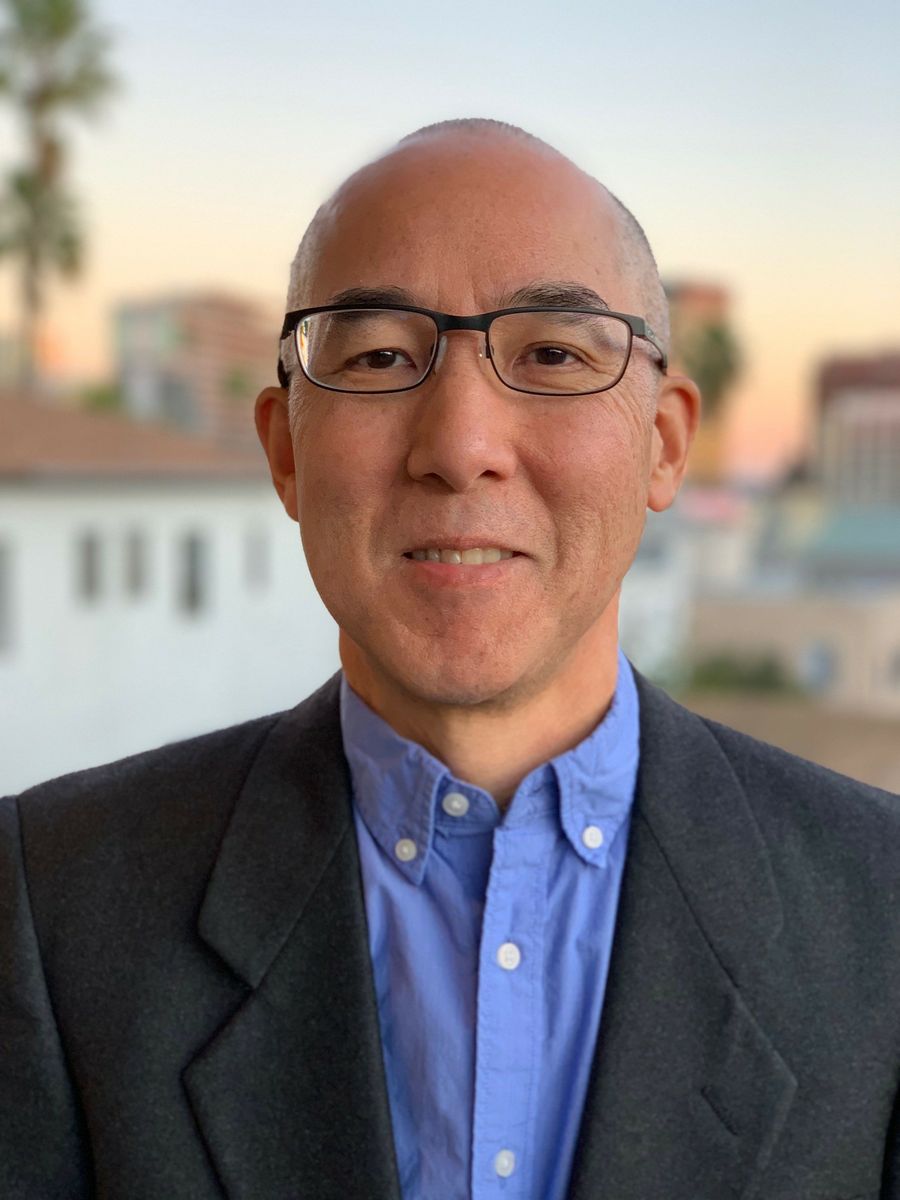
By Brian Niiya, Densho Content Director.
Read Eric Muller’s article for more historical context, and a collective contribution featuring the opinions of various community members.